





































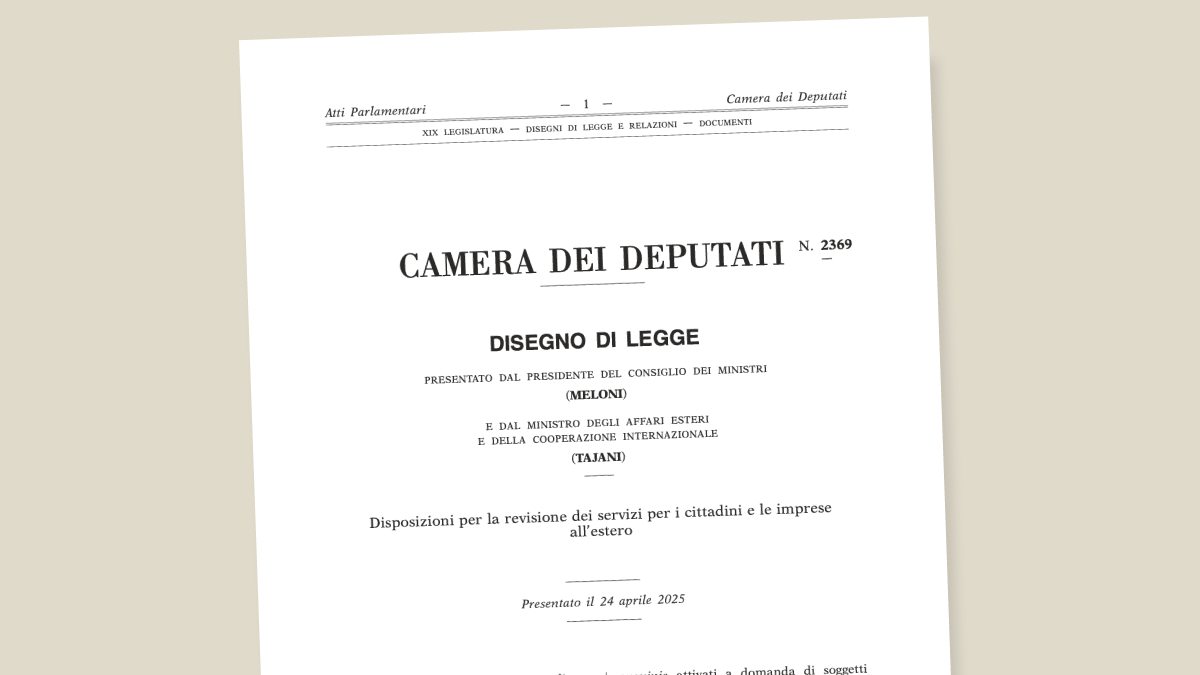
Após a recente conversão do Decreto-Lei n.º 36/2025 em lei, que modificou regras sobre cidadania italiana por descendência, o governo italiano apresentou um novo projeto de lei que pretende reformar profundamente os serviços consulares e administrativos destinados aos italianos no exterior.
A proposta A.C. 2369, registrada em 24 de abril de 2025, que havia sido adiantada pelo vice-primeiro-ministro e Ministro das Relações Exteriores, Antonio Tajani, em março, prevê a centralização dos pedidos de cidadania iure sanguinis e altera regras do AIRE (Registo dos Italianos Residentes no Estrangeiro), documentos de identidade e passaportes.

O DL (desenho de lei) – assinado pela primeira-ministra Giorgia Meloni, e Tajani – está em análise na Câmara dos Deputados e integra a estratégia financeira do governo.
Centralização de processos
A principal mudança é a centralização do processo de reconhecimento da cidadania italiana iure sanguinis (por sangue). Caso a lei seja aprovada, as atribuições dos consulados serão limitadas às certificações de cidadania já reconhecida e ao reconhecimento de cidadania para menores.
Adultos deverão enviar os pedidos diretamente ao novo “Serviço para a Reconstrução da Cidadania Italiana”, a ser criado no Ministério dos Negócios Estrangeiros (MAECI), em Roma.
Esse novo órgão central terá competência exclusiva para processar as solicitações de cidadania de maiores de idade residentes fora da Itália. O envio das solicitações será feito exclusivamente por via postal, com documentação original em papel e comprovante de pagamento da taxa consular. O MAECI poderá contratar operadores especializados para digitalizar, arquivar e auxiliar no trâmite desses pedidos, com custo a cargo do requerente.
As comunicações entre o cidadão e o MAECI ocorrerão por e-mail, inclusive para notificações. Caso a cidadania seja reconhecida, a informação será encaminhada ao Comune italiano competente e ao consulado da circunscrição do requerente. Se a solicitação for negada, a devolução dos documentos também será de responsabilidade do requerente.
O prazo para a conclusão do processo será de 48 meses, contados a partir do recebimento da documentação, substituindo o antigo prazo de 24 meses. O limite anual de pedidos a serem aceitos nos dois primeiros anos será igual ao total de solicitações tratadas pelos consulados no ano anterior.
Durante o período de transição, os consulados continuarão recebendo pedidos, mas dentro do limite da capacidade de conclusão do ano anterior, com um mínimo de 100 processos por sede.
O artigo também detalha ajustes no AIRE (Anagrafe dos Italianos Residentes no Exterior), que passará a integrar a Anagrafe Nacional da População Residente (ANPR). Estão previstas atualizações de normas, exclusão de artigos obsoletos e novos critérios para inscrição e exclusão.
Carta de identidade
Este trecho do projeto de lei trata da documentação para viagem. A carta d’identità será considerada válida para o exterior, salvo em casos com impedimentos semelhantes aos do passaporte. Também há ajustes na legislação sobre passaportes, em linha com regulamentos da União Europeia.
Melhoria nos consulados
Por fim, o projeto define medidas organizacionais e financeiras. Está prevista a contratação de novos funcionários para o MAECI, com dotação orçamentária específica. O fundo arrecadado com taxas consulares será redistribuído para reforçar os serviços nos consulados e manter a nova estrutura central.