

















Taking a course and having the long-awaited proficiency in Italian, online and free, may be closer than you think.
This is because several digital platforms offer personalized study plans that meet the needs of students.

Among them, the virtual course 'Tell, Fare, Leave!', offered by the University of São Paulo (USP), is one of the options that brings together interactive teaching material that ranges from basic to advanced levels.
Totally free, the course was created through academic research linked to the Postgraduate Program in Italian Language, Literature and Cultures at the Faculty of Philosophy, Letters and Human Sciences (FFLCH) at USP.
The free access platform allows interested parties to advance or return to previous lessons as many times as they wish on a periodic basis.
However, the platform warns that as it is not a distance learning course, there is no limit on access and no daily monitoring by teachers, which requires a certain amount of dedication and organization from the student. There is also no certificate issued.
Teaching modules
In total, 16 multimedia classes are offered (leziones), which feature interactive videos about the main difficulties faced by Brazilians in Italy and interviews about linguistic and cultural differences.
The audio in Italian reinforces the importance of familiarizing yourself with the language. After each class, the student can put into practice what they learned through exercises provided in each unit.
To access the course's virtual platform, simply go to the University of São Paulo's extension course website and search for the course 'Dire, fare, departe!'. In bocca al Lupo (expression that means good luck, in Italian)!
Why learn Italian?
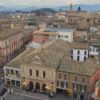
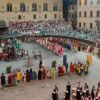
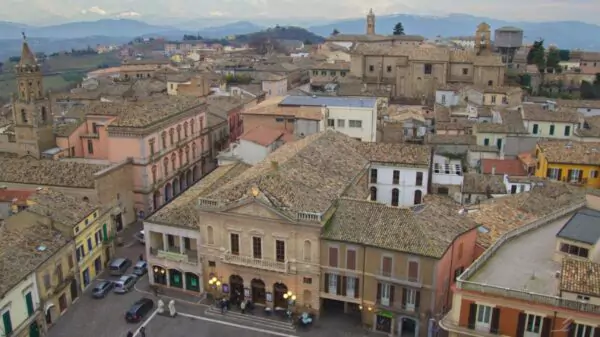
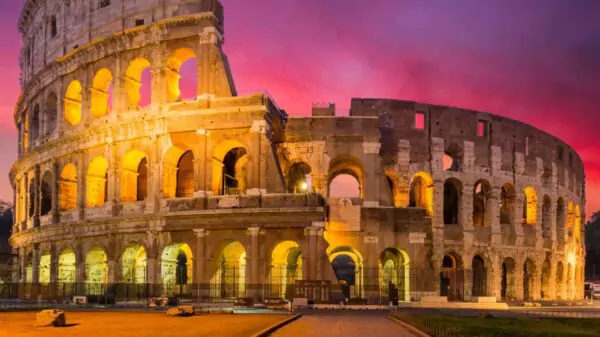
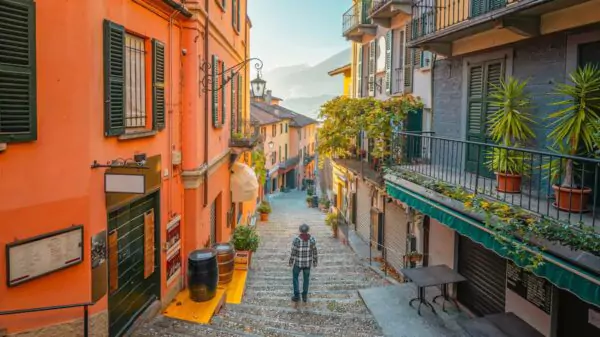
It is inevitable to associate Italy with the historical and cultural wealth that is omnipresent from north to south of the country. The region of Tuscany brings to mind poetic beauty mixed with a touch of Provençal romanticism.
Art goes through a renaissance marked by the perfection of the line and is mixed with imposing works of the Gothic style, which do not go unnoticed on the streets of Milan. Italy inspires art and art inspires us.
According to the international organization União Latina, around 65 million people around the world speak Italian. In other words, we cannot discard its enormous relevance, whether in literature, culture, art, poetry, cinema or theater.
Another positive point concerns the linguistic issue. Like the Portuguese language, Italian was born from the slow transformation of Latin, which dates back to the 3rd century and the mid-12th century.
For many centuries, Latin served as the basis for creating new Italian words. Therefore, many words are phonetically and semantically similar to Portuguese, which makes learning easier compared to other languages.
The second attraction is the job market in Italy. This year alone, more than 4 thousand job vacancies are distributed in the city of Milan.
Furthermore, agreements between Brazilian and Italian universities have expanded opportunities for exchange programs, such as at the University of Bologna. (Camila Teixeira)