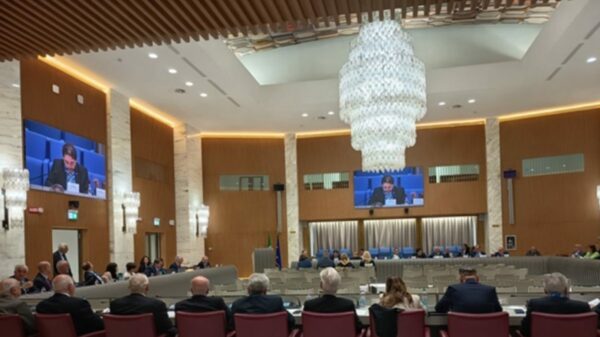

























A meeting of the General Council of Italians Abroad (CGIE) ended with open confrontation on Thursday afternoon (14) at the Farnesina, the Italian diplomatic headquarters in Rome. The trigger was the speech of the councilor. Daniel TaddoneThe representative from Brazil criticized the new citizenship law and the recent ruling by the Constitutional Court. The response from other council members, especially the Deputy Secretary for Latin America, Mariano Gazzola, generated more controversy than the speech intended to contain.
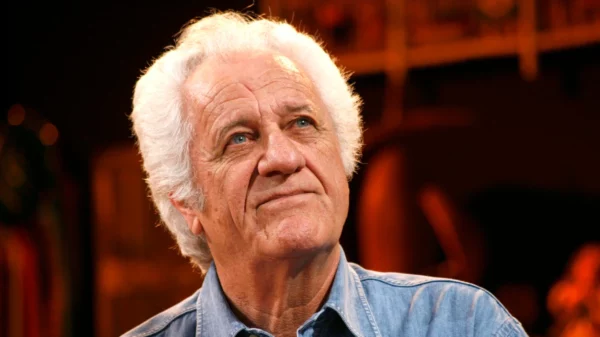
Taddone stated that the recent Constitutional Court ruling was “a serious blow to each of us” and accused the new law of creating “five categories of citizens,” with those of Trentino and Giuliano origin being the most penalized. According to him, the reform “not only prevents new applications but is starving communities in South America.” The phrase that resonated most was direct: “They want to starve us to death of citizenship.”

Gazzola's response and the comparison that backfired.
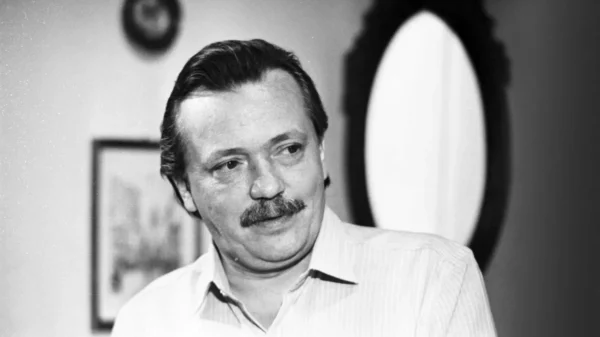
The Deputy Secretary for Latin America, Mariano GazzolaHe asked Taddone for “language more appropriate” to his role as advisor to the CGIE and went further. To justify the need for careful word choice, Gazzola said: “I come from a country that has suffered, from a community that has suffered the history of…” Disappeared".
“To say that the government wants to ‘make us disappear’ because it modifies a citizenship law is to disrespect those who have truly disappeared in our communities.”
The comparison, intended to moderate the tone of the debate, had the opposite effect. By invoking the political disappearances to reprimand a council member who was speaking about difficulties in accessing citizenship, Gazzola transformed his intervention into the most talked-about episode of the plenary session.
Gazzola added that Italian communities suffer “not only from the change in the law, but also from the deceptions of lawyers and intermediaries who promise things that cannot be achieved.” This caveat, legitimate in itself, was overshadowed by the mention of the disappeared.
Gazzola is also MAIE coordinator (Associative Movement Italiani all'Estero) to Latin America.
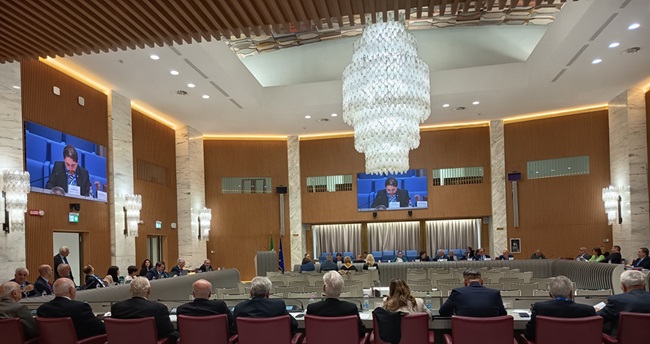
Taddone had support
Deputy Luciano Vecchi, responsible for Italians Abroad in the Democratic Party, took the floor in defense of Taddone and freedom of expression within the Council. "The General Council has always respected and protected the freedom of each member to freely express political positions," Vecchi stated. According to him, "it was not Taddone's words that were offensive, but the criticisms made against his intervention."
Taddone's statement, far from being rhetorical exaggeration, described a concrete reality. The new citizenship law has created a situation where parents holding Italian passports will need to apply for a residence permit to bring their children to Italy if the recognition of their citizenship has not been initiated before the decree. "Parents can use their passports, while for the children it would be necessary to apply for a residence permit at the police station," the advisor explained.
What the meeting revealed
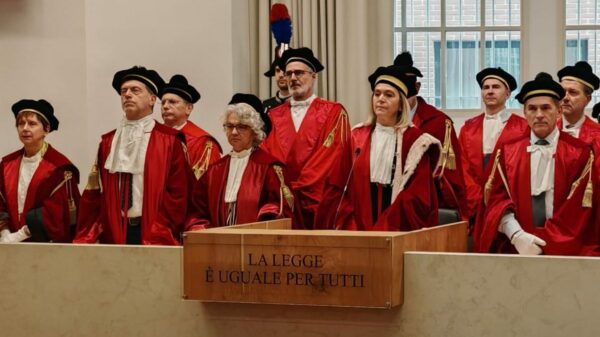
The confrontation at the Farnesina exposes a real tension within the representative bodies of Italians abroad. On one side, advisors like Taddone and Vecchi speak openly about the effects of the new law on South American communities. On the other, members of the CGIE, while acknowledging the suffering of these communities, prefer a more institutional tone and avoid direct criticism of the Constitutional Court.
The Deputy Secretary for Europe and North Africa, Giuseppe Stabile, was the most emphatic in this second group. "It is not correct to criticize the Constitutional Court, because its decisions must be respected," he stated, also criticizing parliamentarian Fabio Porta, who had lamented the Court's ruling and the state of the Farnesina's computer systems for consular services.
Secretary-General Maria Chiara Prodi concluded the session with a more constructive tone, without addressing the merits of the confrontation between the council members. According to reports, the plenary session was held hostage for about half an hour by internal discussions that had little to do with the main agenda.
FOLLOW ITALIANISM