






























In an Italy marked by linguistic diversity, dialects are fundamental elements of cultural identity. A recent survey by the platform Prely reveals how Italians perceive their regional variants, with some being preferred and others, such as Neapolitan, facing greater resistance, especially among young people.
Less appreciated dialects and the case of Neapolitan
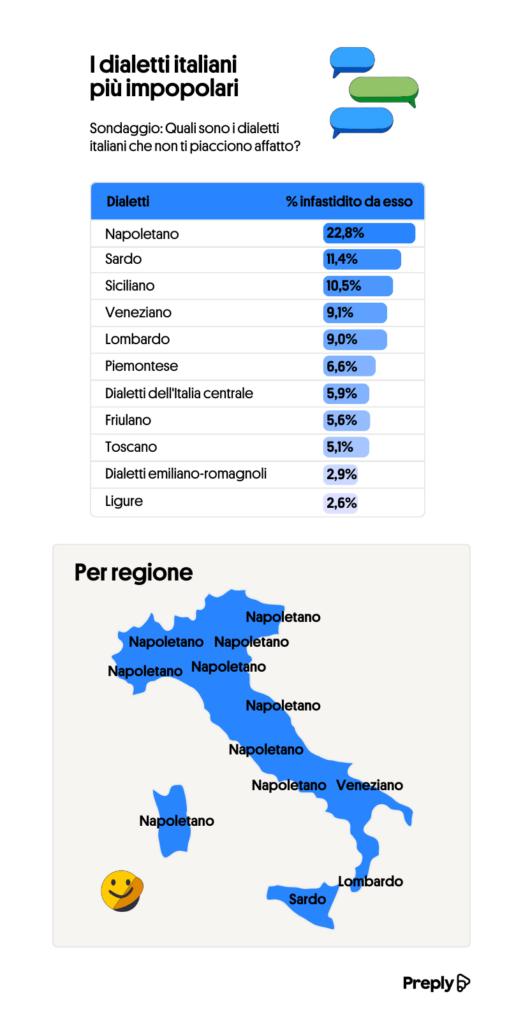
Among the Italian dialects least popular, Neapolitan occupies the last position. Approximately 25% of those interviewed consider it the least pleasant, being the most rejected among young people aged 18 to 24.

Em Nápoles, resistance to the dialect itself is notable, with 25% of local residents declaring little sympathy for the city's traditional speech. On the other hand, Neapolitan seems to appeal more to adults over 55, evidencing a strong generational divide in preferences.
The Sicilian and Sardinian dialects also face difficulties in acceptance. Sicilian, the third least appreciated, registers high rejection in cities such as Rome and Trieste, as well as Palermo. Sardinian, in turn, finds little receptivity even in Cagliari, the island's capital, as well as in northern cities such as Milan and Florence.
Regional preferences: Ligurian at the top
Despite the difficulties faced by some dialects, others such as Ligurian and Emiliano-Romagnalo stand out positively. Ligurian dialect, with a rejection rate of just 2,6%, is the most well-accepted among Italians.
The Emiliano-Romagnalo and Tuscan dialects, with rejection rates of 2,9% and 5,1% respectively, complete the podium of the most appreciated regional variants. The cities where these dialects are most common maintain a strong attachment to the local language, demonstrating a strong cultural identity in cities such as Genoa and Bologna.
Dialects and culture: a treasure to be protected
Preply’s research also reinforces the importance of Italian dialects as elements that enrich the national language and culture. Dialect words such as “cazzimma” (a Neapolitan expression) and “abbiocco” (from central Italy) are used in everyday life and contribute to the country’s linguistic mosaic.
Recognizing this cultural heritage is essential to preserving the variety and authenticity of regional expressions, which also serve as a means of connection between generations and regions.
Research methodology
A Prely surveyed 1.000 people, both male and female, over the age of 18. Participants were encouraged to choose up to three dialects that they found least pleasant, and the results, which include 11 main dialects, provide a snapshot of language preferences in the country.
Thus, even with the popularization of the standard Italian language, dialects continue to represent the essence of Italy's cultural diversity, reflecting the contrasts and nuances that make Italian society unique.
FOLLOW ITALIANISM