




































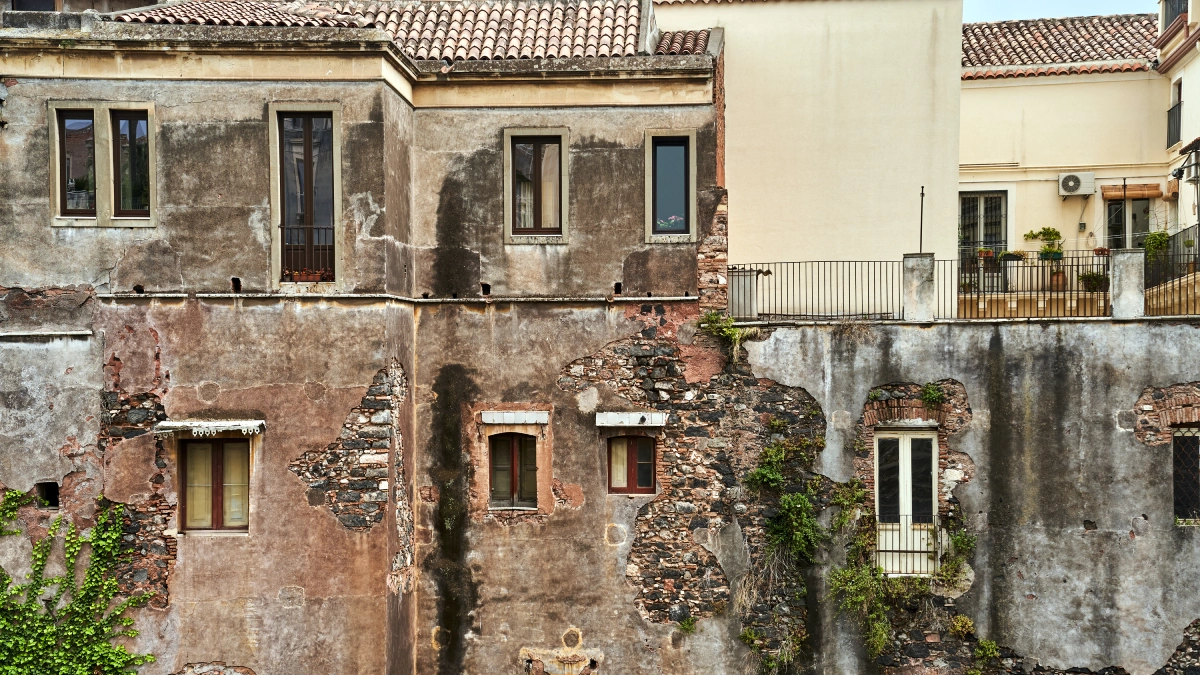
If you’ve ever visited Italy, you’ve probably come across countless abandoned properties, many in ruins, even in charming villages. But why are there so many properties in such a state of disrepair in a country known for its rich history and architectural beauty?
For tourists, the sight of these decaying buildings raises an inevitable question: why don't the owners renovate or sell these houses? And why don't local authorities tear down these buildings and sell the land?

These buildings, in addition to being abandoned, end up damaging the landscape, being true 'pugni nell'occhio' (literally, 'a punch in the eye'), an expression used in Italy to describe something that is an aesthetic affront.
The exodus of the original owners
One of the main reasons for the large number of abandoned properties in Italy is the exodus of the original owners.
Many Italians, in search of better opportunities, migrated to other countries, leaving their properties behind. Furthermore, in recent decades, Italy has faced several economic crises that have drastically affected families' ability to maintain their properties.
The loss of income, the difficulty in obtaining credit and the decrease in purchasing power made it impossible for many owners to cover maintenance costs, leading to the abandonment of these homes.
In other cases, natural disasters such as earthquakes, volcanic eruptions and landslides have forced residents to flee, resulting in ghost villages.
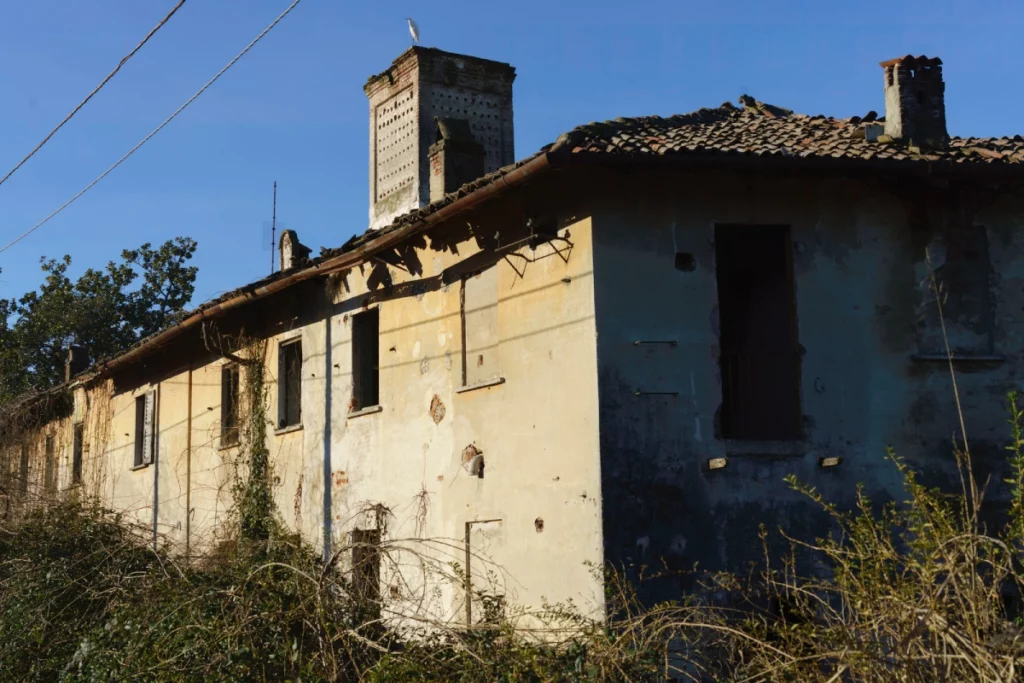
Without maintenance, abandoned houses end up being taken over by vegetation, with broken windows and damaged doors, creating an image of total abandonment.
Lack of infrastructure
In some regions of Italy, a lack of basic infrastructure, such as passable roads, schools and health services, makes areas less attractive to new residents.
The absence of essential services contributes to the isolation of these areas, making it difficult to revitalize local communities. Without attractions, these regions see their populations decrease, resulting in more abandoned properties.
Inheritance and labyrinthine bureaucracy
The sale of abandoned properties is also complicated by bureaucracy and the issue of inheritance.
It is often difficult to locate the heirs, who may be scattered around the world or simply have no interest in dealing with the complex bureaucracy and substantial costs of renovations necessary to restore these buildings.
As a result, these buildings remain abandoned, deteriorating over decades or even centuries.
Intervention by local authorities
In extreme cases, when properties are in ruins and pose a danger to public safety, local authorities may intervene. However, this action is rare and usually only occurs in emergencies. In places affected by natural disasters, specific laws allow local governments to take possession of these properties to ensure the safety of the population.
For example, in the Campania region, devastated by the earthquake in Irpinia in 1980, many villages today have ghost neighborhoods under the control of municipal authorities.
In cities like Zungoli and Bisaccia, dozens of old houses were sold for just one euro, facilitating the process of transferring ownership by city halls.
A similar case occurred in Sambuca, Sicily, where, after the earthquake in Belìce Valley In 1968, dozens of abandoned buildings were sold at symbolic prices, attracting great interest from buyers.
FOLLOW ITALIANISM