

































We are living through a time when, if we don't pay attention to the flow of information coming from Italy, we risk being excluded from decisions that, although made in general silence, profoundly affect the lives of Italians abroad.
Those living abroad often lack access to complete information: news programs and television shows rarely dedicate airtime to issues concerning the nearly 8 million Italian citizens residing outside of Italy.
Thus, while public opinion remains focused on internal affairs, legislative mosaics and reforms that directly concern the diaspora are being assembled, but about which little or nothing is said.
Some of my reflections lead me to have doubts about procedures that are ready to be adopted or already imposed, such as in-person voting at consulates: an obstacle disguised as reform.
In this context, news is circulating persistently that, for the referendum on constitutional reform relating to justice, scheduled, according to various sources, for March 2026, the Italian government is considering reintroducing exclusively in-person voting at consulates.
Such a choice would be devastating for millions of Italians who live hundreds or thousands of kilometers from the nearest consulate. In many countries, consular structures are few and insufficient to accommodate large influxes; many workers would not be able to leave, and the elderly, people with disabilities, and families with children would have no alternatives.
A fundamental constitutional right, the right to vote, would in practice become a privilege for the few.
And it's hard not to see in this proposal a possible "general experiment," a preliminary test to assess the reaction of the Italian community abroad to the reform considered by the government as the mother of all reforms: the Premiership (or "de facto Presidentialism").
At such a delicate political stage, limiting the electoral participation of Italians abroad would be tantamount to excluding a significant portion of the electorate, which often votes differently from the domestic trend.
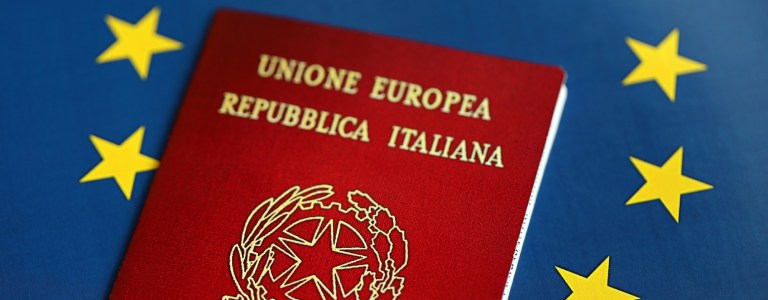
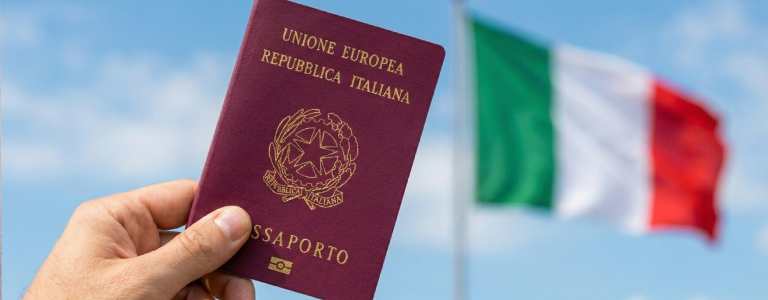
Since May, we have been highlighting the impact of the new law on Italian citizenship for those born abroad. The new rule establishes that those born outside Italy who hold another citizenship do not automatically acquire Italian citizenship, and that citizenship can only be recognized through an application process linked to descent and certain requirements.
But the law also introduces some exceptions: it provides for the possibility of acquiring citizenship "by benefit of law" for minor children born abroad, provided that at least one of the parents is an Italian citizen by birth.
For years, there have been interventions that progressively reduce or limit resources for those registered with AIRE. From Italian language courses to cultural activities, and including deficiencies in the services of some consulates around the world, mainly due to staff shortages, the picture is one of progressive disinvestment.
Even elected institutions, such as the Committees of Italians Abroad (Com.It.Es.) and the General Council of Italians Abroad (CGIE)They are suffering deeply from this incomprehensible behavior of the government towards Italians living abroad.
Representative institutions, such as Com.It.Es. and CGIE, have been denouncing this drift for years, but are frequently ignored or consulted only formally, without genuine political engagement.
The implicit message seems clear: Italians abroad are valuable when they are useful, but become invisible when it's time to invest in them.
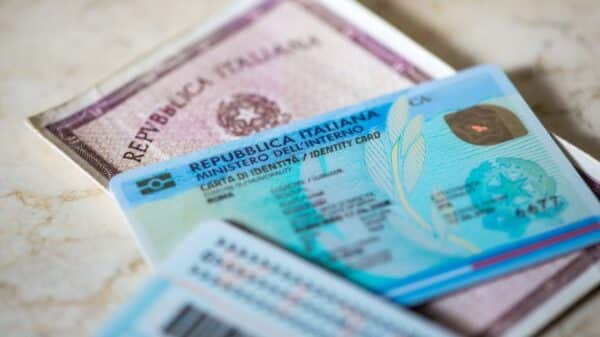
Some small, though insufficient, advances have been made thanks to the efforts of some parliamentarians elected in the overseas constituency, especially Deputy Toni Ricciardi: the exemption from IMU (Municipal Property Tax) for approximately 100.000 Italians registered in the AIRE (Registry of Italians Residing Abroad) who own a home in Italy, and the possibility of requesting or renewing the Electronic Identity Card (CIE) in Italian municipalities during temporary stays. These are positive steps, but insufficient to offset the general trend of disinvestment and disinterest.
Italy seems to forget that the number of Italians living abroad registered with AIRE exceeds 7,3 million and continues to grow. They represent one of the largest transnational communities in the world and generate economic, cultural, and diplomatic wealth for the country. They promote Italy everywhere, often more effectively than many institutional policies.
However, given their recent choices, they seem to be seen as a burden, a problem, a negligible chapter in national life. This perception fuels frustration, emotional detachment, a sense of abandonment, and even a weakening of Italian identity abroad.
Italy celebrates its cuisine, but forgets who made it global.
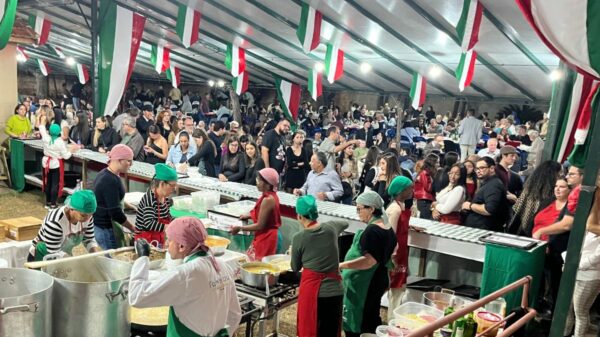
Today we celebrate the inclusion of Italian cuisine in UNESCO's Intangible Cultural Heritage of Humanity, an extraordinary achievement.
But it is rarely acknowledged that the global spread of Italian cuisine is not due to Italian politics, but rather to the work of Italians abroad: restaurateurs, entrepreneurs, merchants, regional associations, and emigrant families who for decades have carried, defended, and valued our gastronomic culture across five continents. If Italian cuisine is known throughout the world, it is above all thanks to them.
I sincerely hope that my reflections are merely suppositions and not anticipations of what is to come. But one thing I know: Italians abroad will not stand idly by.
They will defend their rights, their identity, and their connection to the Italian nation.
Because being Italian is not just a matter of geography, but of belonging, memory, and cultural continuity.

Carmelo Vaccaro He is a journalist and advisor to the CGIE in Geneva, Switzerland..