



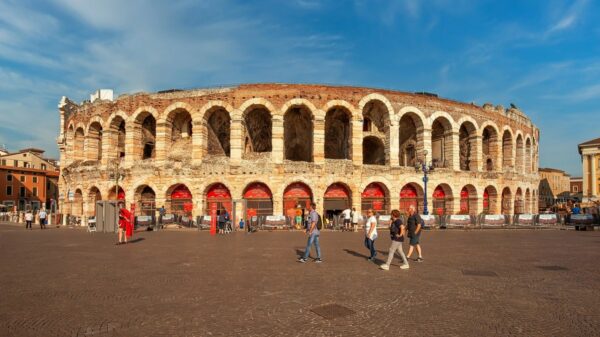








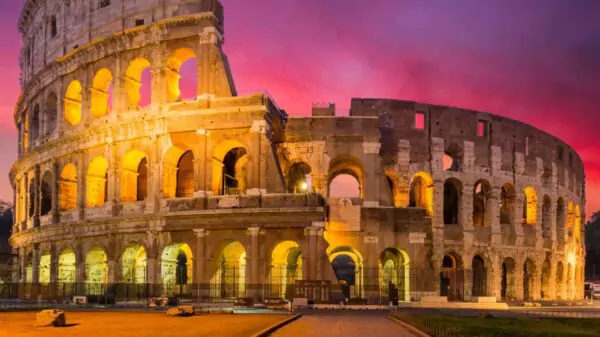















The town of Milan too has its own Coliseum: an amphitheater built in the first century and which over the years was looted, buried and forgotten.
Now, however, it will be reborn thanks to the project “Pan-Parco amphitheatrum naturae” that will bring ancient Roman Milan to light, in the vast archaeological park in the heart of the city.

From underground emerges the Milan Coliseum
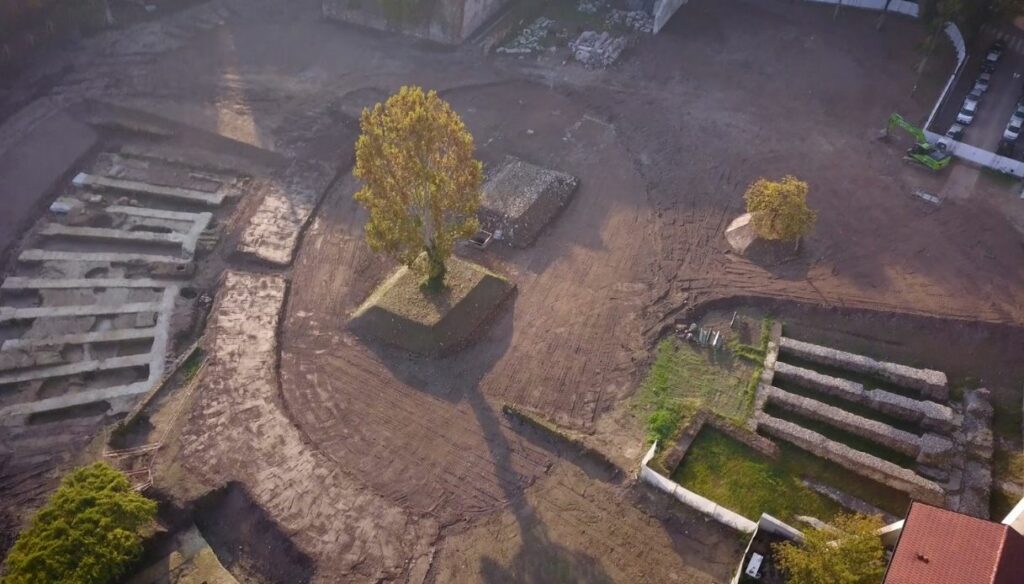
During excavations, the foundation: 14 radial walls of the steps of the cavea (underground cells), in addition to the seven discovered in the 1970s in the North sector.
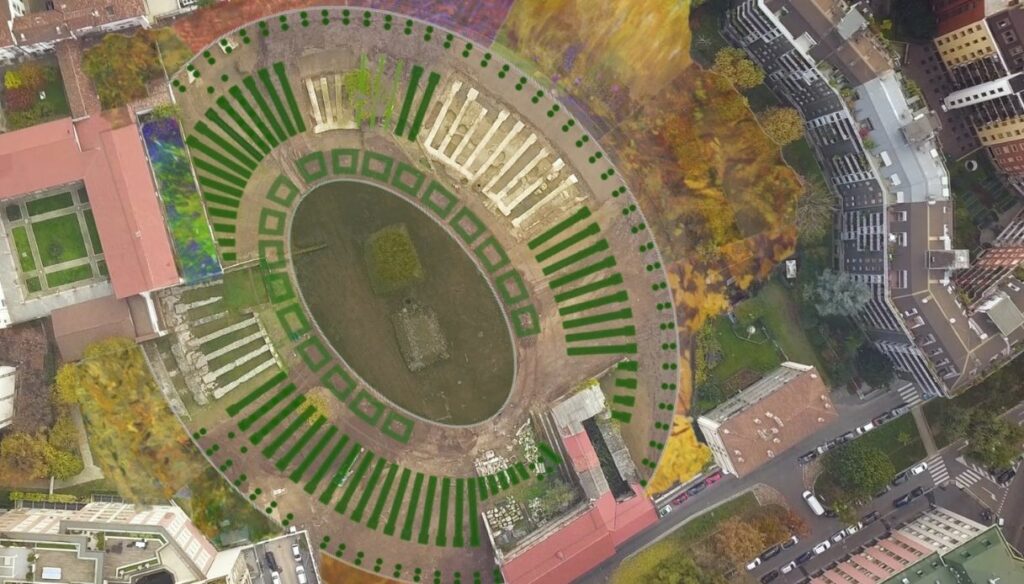
The walls unearthed from underground in Milan will remain visible. There will also be, as part of the landscaping, a double row of cypress trees which will trace the external and elevated ellipse, which will become a passage that will allow you to admire ancient Milan.
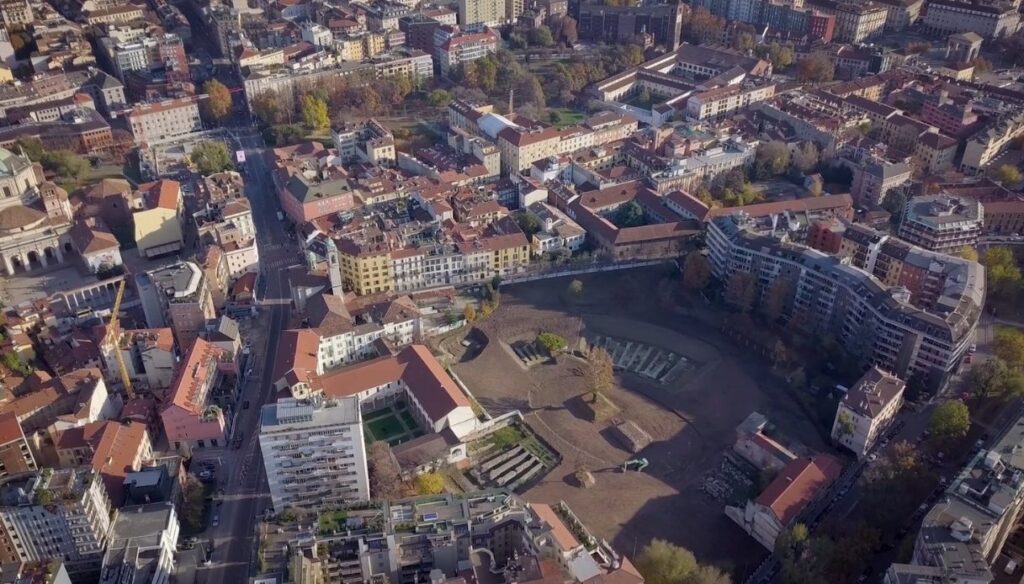
Excavations of the Milan Coliseum began in 2018
Excavations began in December 2018 and will end at the end of 2022. The work carried out so far has shown the brick-paved underground structures.
Archaeologists believe that they belonged to a gallery from which the amphitheater's main animals came out, or served as a water drainage channel.
Originally, the area was very similar to the Coliseum in Rome in size and appearance. The major axis of the amphitheater was 150 meters long, while the minor axis was 120 meters.
The structure was developed in height with overlapping arches: Spectators were protected by a curtain on the facades up to 40 meters high.
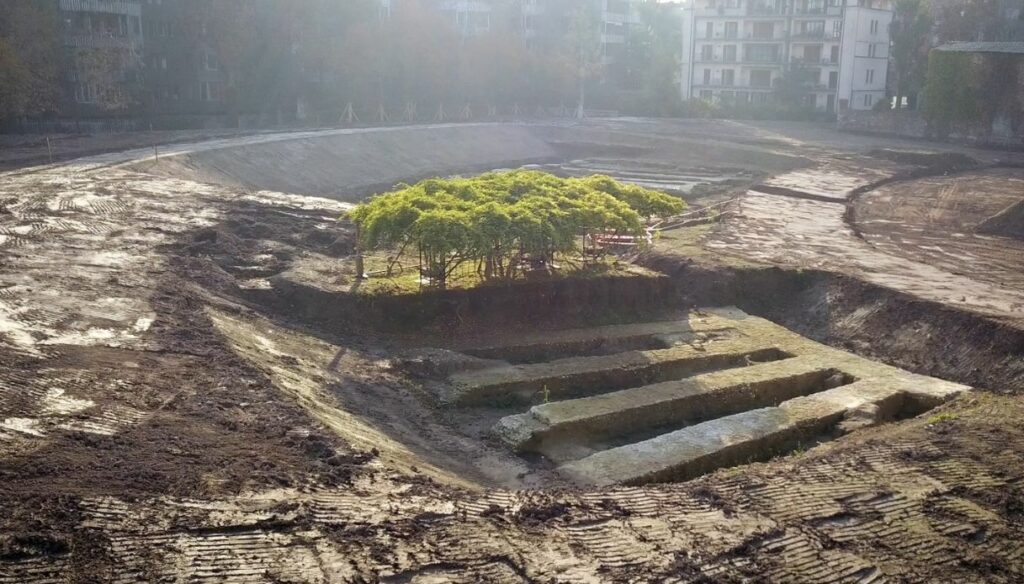
Milan Coliseum is one of the city's oldest symbols
Bringing it back to the light means returning it to Milan one of its oldest symbols.
In addition to the amphitheater, archaeologists also found a series of finds further old that date back to pre-Roman times.
It is a set of ceramics from the Celtic era. They are cups, vases, mortars and bowls that should belong to a period from the fifth to the first century BC
Milan's amphitheater was located near the ancient Porta Ticinese, next to what is now Via Arena.
It was one of the largest in Europe, but was later destroyed by barbarian invasions.
The demolition materials were later used to reinforce the city walls and to build the Basilica of San Lorenzo, which is the setting for one of the most beautiful parks in Milan.
Now the Milan Coliseum will be revived in a green way: trees will be planted in place of the walls, as if it were an embrace between history and nature.