








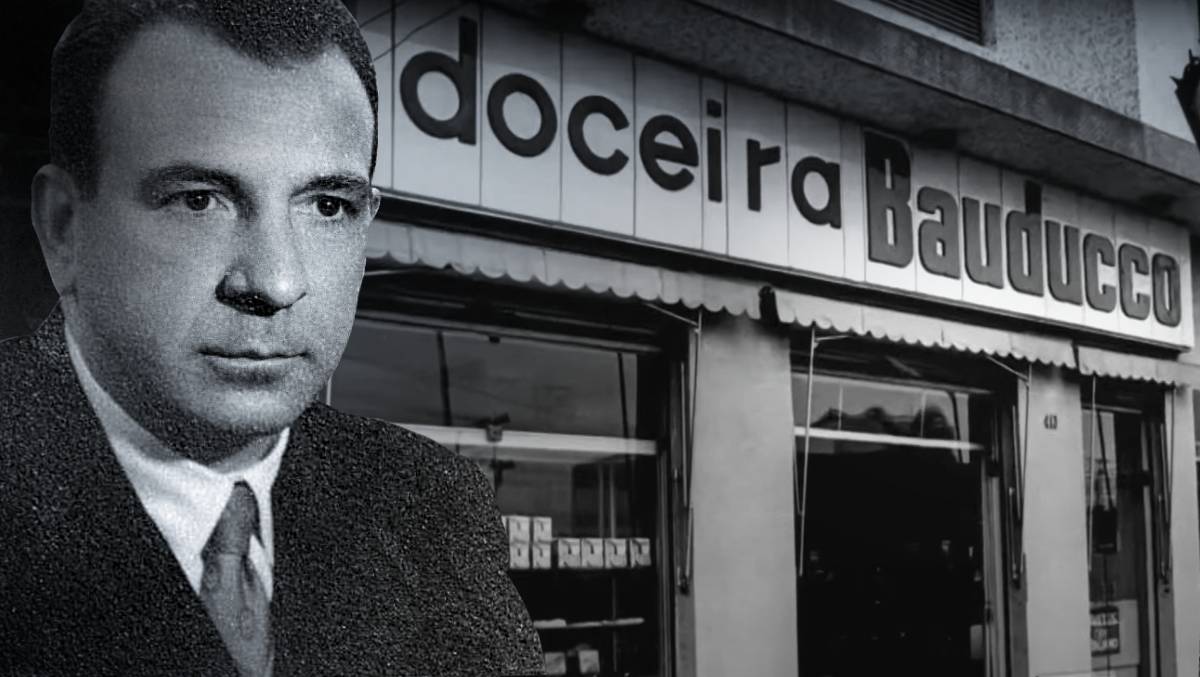
The brand Bauducco became synonymous with panettone in Brazil. It all started with the arrival of the Italian immigrant Carlo Bauducco to the country in 1948, coming from Turin.
At the age of 42, sales representative Carlo Bauducco arrived in Brazil to collect a debt for bread-shaping machines. The machines had been sent to Brazil by an Italian friend.
“Despite not speaking a word of Portuguese, my father recovered part of the money”, said Luigi Bauducco, Carlo’s son, in an interview with Veja São Paulo, in 2009.
Luigi was the only son of Carlo Bauducco e Iris Margherita Constantino, also from Turin, and was 17 years old in 1949, when his father decided to stay in Brazil.
Carlo felt at home in São Paulo. The city's two main newspapers were State of Sao Paulo: , in Portuguese, and the fanfulla, in Italian. Both sold the same number of copies.
With a keen eye for business, he decided to sell everything in Italy and move to Brazil, to introduce panettone to Italian community in the country.
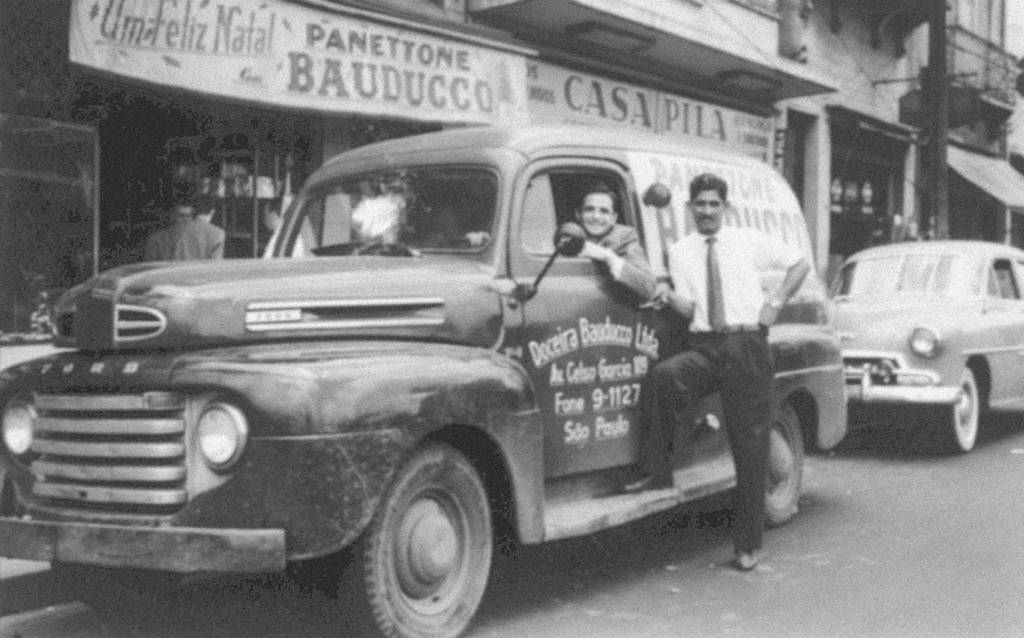
Fermented dough, “mother of all panettone”
In 1950, Carlo Bauducco returned to Brazil, bringing his old confectioner friend Armando Poppa and a fermented dough wrapped in a wet cloth, considered the "mother of all panettone".
As Brazilian law only allowed foreigners to open a firm with Brazilian partners, Carlo teamed up with the three Lanci brothers, sons of an Italian who produced 3 Abruzzi pasta.
The first experimental panettone was called Panettone 900 Lanci. The name 900 came from the machine that produced the pasta and the first store in the food sector was Panettone 900, on Rua Afonso Pena, Bom Retiro.
In 1952, the law that forced foreigners to form partnerships with Brazilians was abolished. Thus, Carlo Bauducco inaugurated the Bauducco Bakery, small pastry shop in Brás. In addition to panettone, Carlo produced Champagne-style cookies, both sweet and savory.
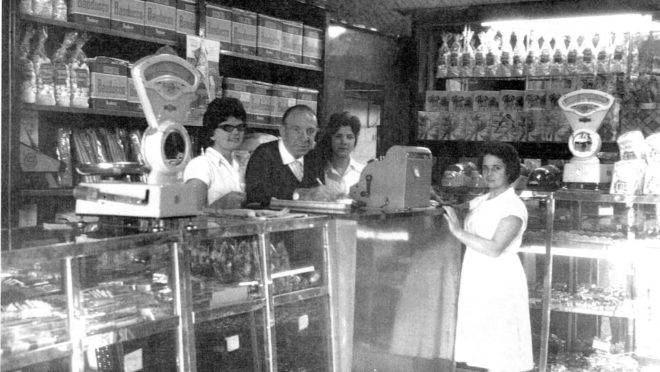
Always 100% family business
The family business had Luigi as a helper in production and sales and Margherita was responsible for managing the business.
To boost sales, Carlo hired a plane to drop propaganda leaflets over the central area of São Paulo. In this way, he promoted his cake with raisins and candied fruits, which won over Brazilians. Publicity was also done with advertisements on the radio in Italian, through the presenter Antonella Flavioli.
The first packaging was designed by Italian designer Giorgio Bricarello, with a panettone surrounded by landscapes of São Paulo and Italy.
Industrial production, original recipe
The leap from artisanal to industrial production took place in 1962, with the opening of the Guarulhos factory. Despite the increase in demand, the original revenue from Panettone, with natural fermentation, never changed. Before the panettone is ready to be packaged, it takes 48 hours, 20 of which are for the dough to slowly rise.
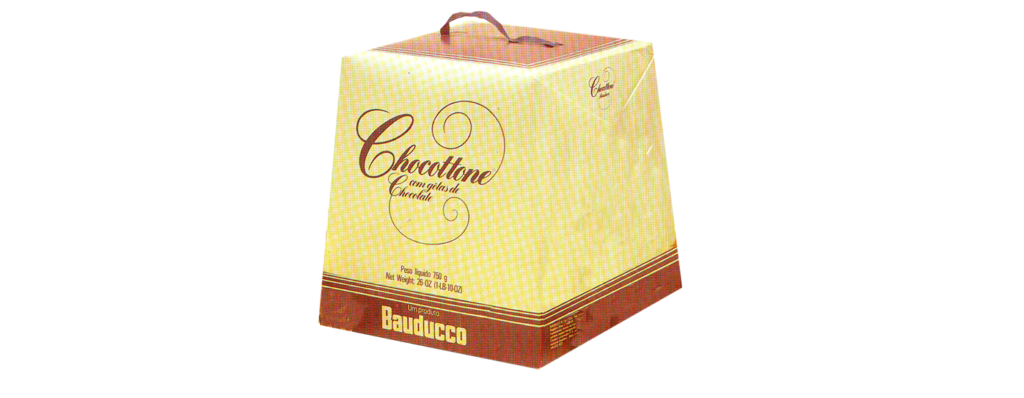
In the following years, innovations came such as the creation of cardboard packaging and its entry into supermarkets. Lines of toast and products such as Colomba Pascal and panettone with chocolate drops, Chocottone.
In 1979, the first exports to the United States came and in the 80s, with the construction of the second factory, products such as butter cookies and wafers.
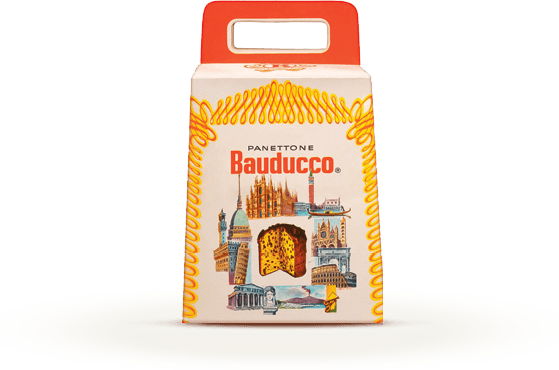
Nessa Massimo Bauducco, Luigi's eldest son and Carlo's grandson, took over the business. Today Bauducco is the world's largest producer of panettone and exports to more than 50 countries, including Japan, Latin America and Angola.
Visual identity and international award
In 1997, the company modernized its visual identity and adopted yellow packaging, a color that symbolizes sunlight and wheat. The following year, Bauducco was the first Brazilian company to receive the Design Effectiveness Awards in London, for the packaging developed for the panettone's special Christmas tin.
In 2001, the company purchased its main competitor, Visconti, and consolidated itself as market leader, with 70% in the panettone segment. In 2008, the company began manufacturing and distributing Hershey's products in Brazil, including chocolates, chocolate drinks and confectionery.
Dream that became reality
With products ranging from simple biscuits and toast to cookies and guava biscuits, the company opened its first store in 2012, called Bauducco House, and a modern factory in the state of Alagoas. Today Bauducco manufactures more than 75 million panettone per year and its annual revenue is R$3 billion.
Carlos Bauducco died in 1972, aged 66 and Luigi Bauducco died in 2020, aged 88. The company they built from the dream of spreading Italian cuisine in Brazil and the work to make this dream come true remains firm as one of the most well-established brands in Brazilian culture.
See a Bauducco commercial shown in the 1980s:
By Roberto Schiavon/Italianism