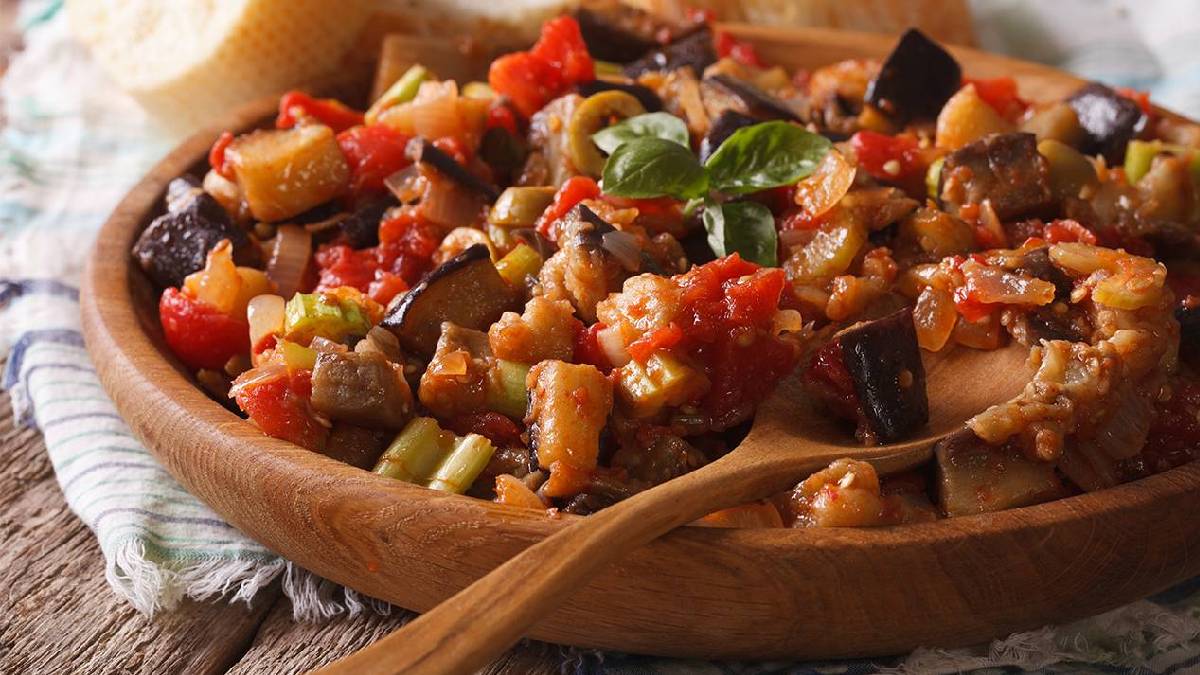
A caponata é um dos acompanhamentos com A maiúsculo, com uma receita simples mas apetitosa. É o acompanhamento ideal para o verão.
Embora muitas vezes é interpretada incorretamente pela adição de ingredientes que não estão na receita original ou pela remoção de ingredientes que são necessários para a adição de uma caponata respeitável.

Simples mas apetitosa, a caponata é o acompanhamento ideal de verão. Graças à presença da beringela (e em alguns casos também de outros vegetais de verão).
A origem da caponata
Existem quase 40 receitas diferentes de caponata só na área do Mediterrâneo. Todas com uma coisa em comum: os ingredientes principais são vegetais de diferentes tipos, todos cortados mais ou menos no mesmo tamanho.
Na Sicília, a origem da caponata remonta à palavra capone, que é um peixe branco, e no passado era consumido apenas por quem tinha dinheiro ou posses.
As pessoas, por outro lado, substituíam os peixes por beringelas e com o tempo o uso de peixes desapareceu por completo, dando lugar à versão apenas com vegetais.
A primeira vez que a caponata foi mencionada remonta ao ano de 1709, quando o escritor Joseph Vinci, no livro Etimologicum Siculum, a definiu como “acetarium et variis rebus minuteum conficis ” ou “uma salada e vários pequenos alimentos cozidos”.
Diferentes variações de caponata
Hoje na Sicília são preparadas diferentes receitas de caponata com a adição de outros ingredientes de acordo com a região.
Por exemplo, em Catania são usados também pimentões vermelhos e amarelos. Em Palermo é preparada com beringelas, azeitonas verdes, aipo e tomate. E em Agrigento, adicionam pimentões e azeitonas pretas em vez de verdes.
Receita de caponata para 6 pessoas
1 kg de berinjela;
500 g de talos de aipo / salsão;
400 g de tomate bem maduro;
1 colher de sopa de extrato de tomate;
100 g de azeitonas verdes sem caroço;
50 g de alcaparras dessalgadas;
1 colher de sopa de pinhões (ou algum tipo de castanha);
Um copo de vinagre de vinho branco;
Uma cebola grande;
1 colher de sopa de açúcar;
2 colheres de sopa de azeite de oliva extra virgem;
Manjericão, sal e pimenta a gosto;
Azeite para fritar.
Modo de preparo
Lave as beringelas e corte-as em pedaços (sem as descascar). Coloque-as em uma peneira e polvilhe sal abundantemente e deixe escorrer por cerca de uma hora.
Lave os talos de aipo e corte-os em pedaços de meio centímetro.
Mergulhe os tomates por alguns segundos em água fervente e depois passe-os em água fria. Descasque-os, retire as sementes e pique-os.
Numa frigideira grande, aqueça o azeite e frite a cebola até dourar. Adicione os tomates e o extrato e cozinhe em fogo médio e sem tampa, por cerca de dez minutos.
Tempere com sal [um pouco] e pimenta e acrescente o aipo, as azeitonas cortadas ao meio, os pinhões e as alcaparras dessalgadas. Dissolva o açúcar no vinagre e despeje no molho, mexendo bem.
Cozinhe em fogo baixo por cerca de vinte minutos para que os sabores se misturem e o molho fique bem espesso.
Lave as beringelas com água corrente, seque-as pressionando ligeiramente em um pano e frite-as, duas ou três vezes, em bastante óleo bem quente [próximo de 180º].
Quando estiverem douradas, escorra e passe-as sobre um papel toalha. Quando estiver tudo pronto, adicione ao molho, mexa e cozinhe em fogo baixo por no máximo cinco minutos.
Caponata: dicas e truques
- A caponata é comida fria, em temperatura ambiente, polvilhada com manjericão picado.
- A caponata, mantida bem fechada na geladeira, dura por dois ou três dias, ganhando até mais sabor. No entanto, retire-a da geladeira pelo menos uma hora antes de servir.
- A beringela caponata é perfeita para temperar um espaguete. Pode adicionar queijo mozzarella em cubinhos para um sabor ainda mais marcante.
Como preparar berinjelas para caponata
Para obter uma caponata siciliana perfeita, é necessário ter o cuidado de preparar as beringelas corretamente seguindo este procedimento:
- Lave bem as beringelas e seque-as;
- Coloque as beringelas numa tigela, salpique-as com sal grosso e cubra-as com um peso para que percam a água e tire o gosto amargo;
- Após uma hora, enxágue com água fria e deixe escorrer bem.
Como servir a caponata
A caponata pode ser servida como um acompanhamento clássico, mas também pode se tornar um petisco se combinada com torradas ou se servida em copos pequenos.
Caponata da Sicília: variações regionais
Agrigento
É preparada com beringelas, pimenta verde picante, tomate, cebola, aipo, azeitonas verdes, azeitonas pretas, alcaparras, vinagre, mel, açúcar, alho, azeite, pimenta malagueta, manjericão, pinhões e uva passa.
Trapani
A receita de caponata é preparada com beringelas, pimentões, cebolas, tomates maduros, aipo, azeitonas verdes, alcaparras, vinagre, açúcar e amêndoas torradas.
Catânia
A receita de caponata é preparada com beringelas, pimentões amarelos e vermelhos, tomates, cebola, aipo, azeitonas verdes ou pretas, alcaparras, vinagre, azeite, sal e açúcar.
Nápoles
A caponata napolitana é completamente diferente da siciliana. Na verdade é feita com um pão torrado, chamado de fresella, temperado com tomate fresco, alho, azeite, orégano e manjericão.
Newsletter
Últimas do Italianismo
Todo dia, às 18h, um resumo do que aconteceu na Itália direto no seu e-mail.
É gratuito e você cancela quando quiser.