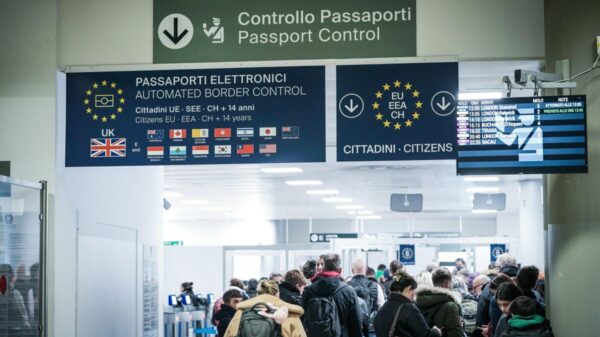





















Those who hold a European passport are, in most cases, among the most powerful in the world. The data is straightforward. Of the 50 passports with the greatest travel freedom, 35 belong to European countries.
This represents 70% of all top-ranked global rankings, produced by Henley GlobalNo other region comes close to this level of presence and consistency.
The result shows that the strength of European passports is not a one-off event. It is structural and distributed among various countries on the continent.
Dominance in the top 50
The concentration of European countries in the ranking is striking due to its sheer volume. It's not a matter of just a few countries standing out, but an entire bloc occupying significant positions.
While other regions report isolated cases, Europe maintains a consistent presence throughout the list. This includes large economies as well as medium-sized countries.
This pattern reinforces the idea that the European advantage goes beyond individual factors.
Integration as a foundation
The main explanation lies in political and diplomatic integration. European countries operate within a network of agreements that expands the international reach of their citizens.
O Schengen area It guarantees internal circulation without barriers between various countries. At the same time, collective bargaining strengthens access to other territories.
In practice, each European passport carries the weight of the entire bloc.
One system, not isolated cases.
Outside of Europe, the scenario is different. There are countries with very strong passports, but in small numbers.
In Asia, Japan and Singapore stand out. In the Americas and the Middle East, their presence is more limited and less consistent.
This shows that, outside of the European continent, strength is individual. Within Europe, it is systemic.
What does that mean

Being among the 50 strongest passports in the world means more than just easy travel. It represents expanded access to opportunities, professional mobility, and greater freedom of choice.
For those with European citizenship, the data is objective. The probability of being within this group is high.
The European dominance in the ranking confirms that the value of this passport is directly linked to the strength of the bloc as a whole.
Passport Ranking (Top 50)
1st | Singapore | 192
2nd | Japan | 187
2nd | South Korea | 187
2nd | United Arab Emirates | 187
3rd | Sweden | 186
4th | Belgium | 185
4th | Denmark | 185
4th | Finland | 185
4th | France | 185
4th | Germany | 185
4th | Ireland | 185
4th | Italy | 185
4th | Luxembourg | 185
4th | Netherlands | 185
4th | Norway | 185
4th | Spain | 185
4th | Switzerland | 185
5th | Austria | 184
5th | Greece | 184
5th | Malta | 184
5th | Portugal | 184
6th | Hungary | 183
6th | Malaysia | 183
6th | Poland | 183
6th | United Kingdom | 183
7th | Australia | 182
7th | Canada | 182
7th | Czechia | 182
7th | Latvia | 182
7th | New Zealand | 182
7th | Slovakia | 182
7th | Slovenia | 182
8th | Croatia | 181
8th | Estonia | 181
9th | Liechtenstein | 180
9th | Lithuania | 180
10th | Iceland | 179
10th | United States | 179
11th | Bulgaria | 177
11th | Romania | 177
12th | Monaco | 176
13th | Chile | 174
13th | Cyprus | 174
13th | Hong Kong (SAR China) | 174
14th | Andorra | 169
15th | Argentina | 168
15th | Brazil | 168
16th | Israel | 166
16th | San Marino | 166
17th | Barbados | 163
Source: Henley Global
FOLLOW-US