
































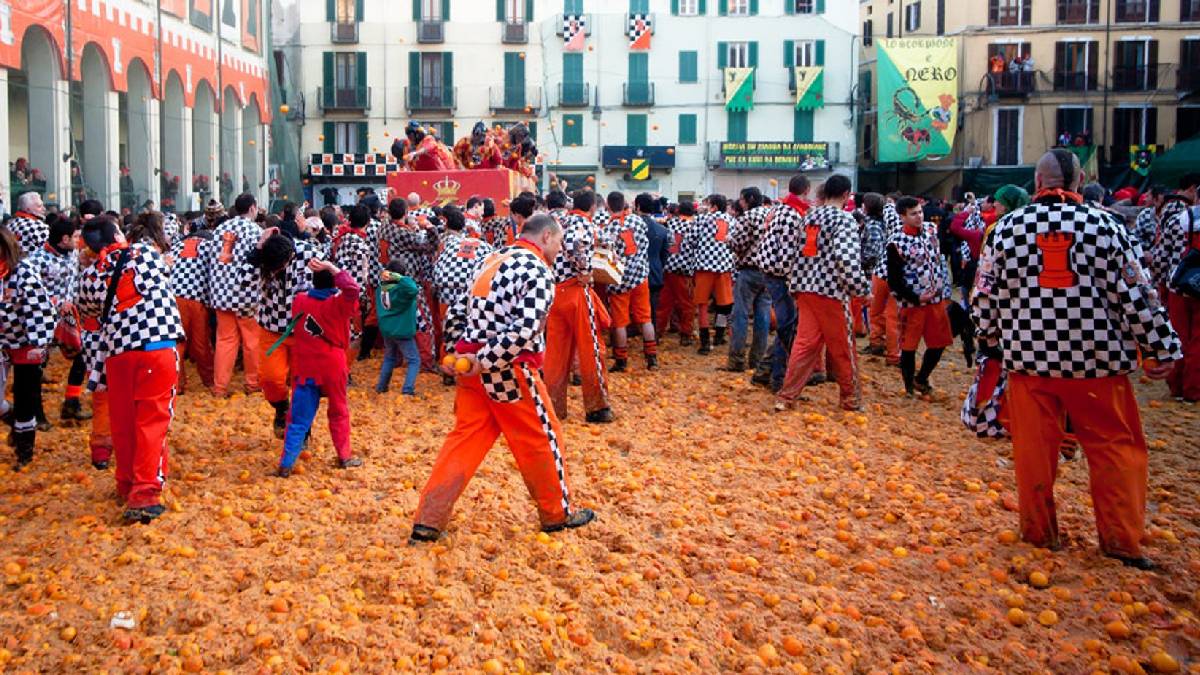
A Battle of the Oranges, typical of the Carnival of Ivrea, a city in the province of Turin, has become a deeply rooted tradition that brings visitors from all over the world to the Piedmont region.
As traditions span decades and generations, their origins become a bit fuzzy. Regarding the Ivrea Carnival, the curious thing is that it is a staging of a real historical eventaccording to the Atlas Obscura.

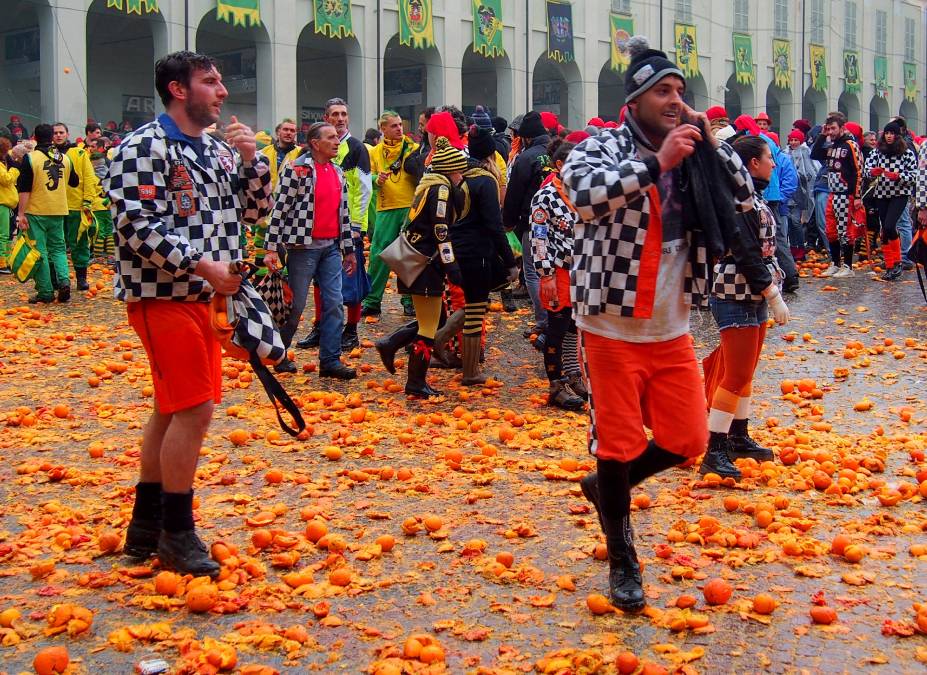
In the book Citrus: A History, Pierre Laszlo explains that the three-day celebration, held before Lent, is a staging of “bloody riots by the city’s inhabitants.”
The revolution could have been against Ranieri di Biandrate, a 12th-century tyrant known as jus primae noctis, a medieval custom that gave him the right to spend his first night with his vassal's bride.
When he tried to assert this “right” with a local woman, he was unsuccessful: he ended up being decapitated and his head was shown to the population as a sign of triumph. Ivrea's heroine became the protagonist of Carnival.
Another story pits the city against the Marquis William VII of Montferrat, a 13th century tyrant who was accused of the same crime.
It is not known how oranges come into this story, but the festival celebrates a revolt, the people against any oppressive power.
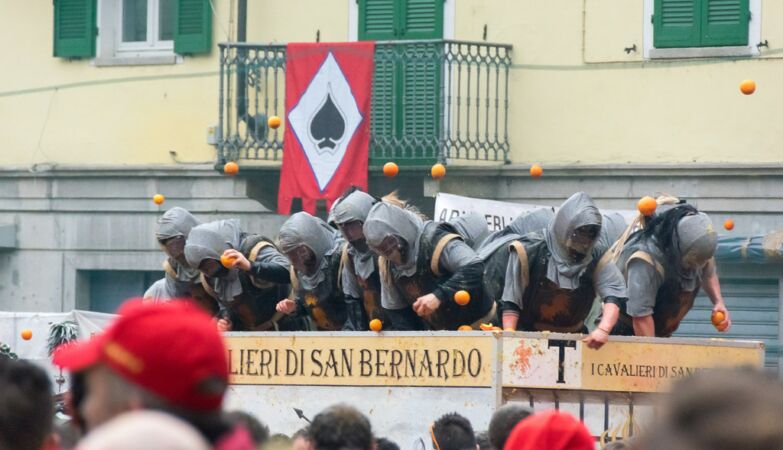
At the Ivrea Carnival, the city enters a simulated battle, with people throwing oranges and others in horse-drawn carts defending the castle. Each group – the rebels and the knights – wears their own costume.
Almost three tons of oranges, brought from the south, fly in this celebration, which leaves the city in a pulp – literally.
FOLLOW ITALIANISM