





































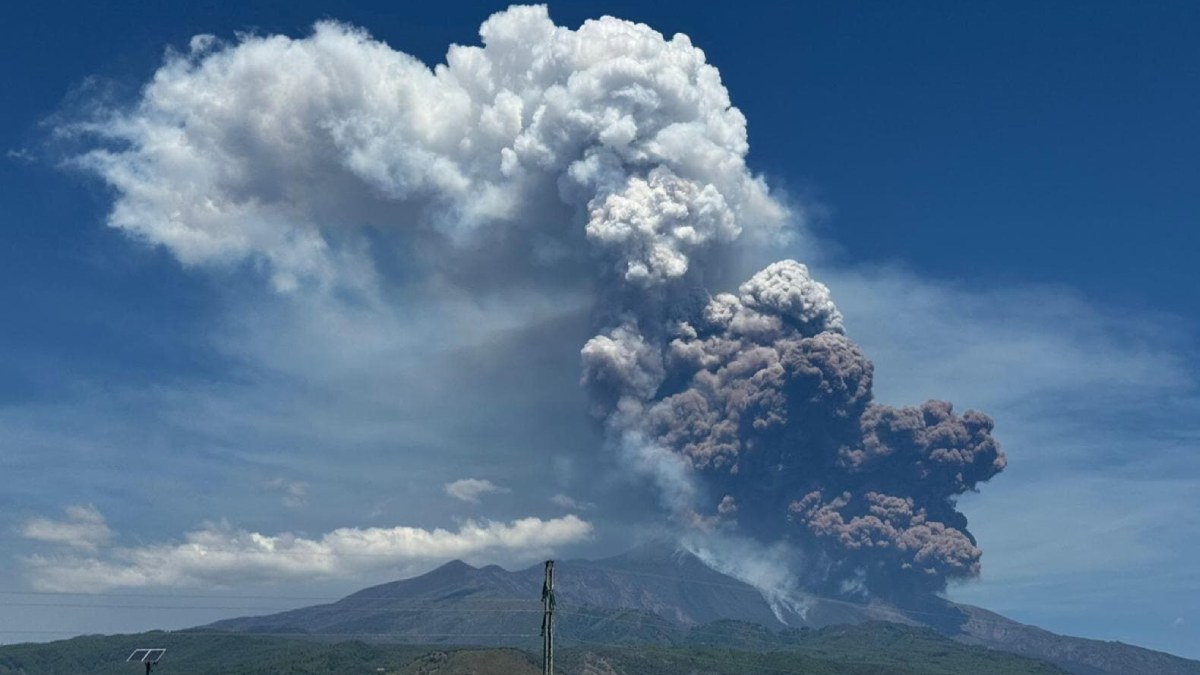
O Etna volcano, the largest in Europe, erupted on Sunday night, June 1, 2025, spewing lava and ash across the Sicily region of southern Italy. The seismic activity surprised tourists who were close to the site.
According to the National Institute of Geophysics and Volcanology (INGV), the eruption occurred at an altitude of approximately 2.800 meters. Despite its intensity, the lava remains far from urban areas. So far, no injuries have been reported.

The first notification of the INGV occurred at 2:39 a.m. local time, indicating a sudden change in volcanic parameters. The eruption generated columns of ash visible from nearby cities, such as Catania, located 35 kilometers from the volcano.
Mount Etna, located between Catania and Messina, is one of Italy's most visited natural attractions. Many tourists were on the mountain and captured images of the eruption in the early hours of Monday.
Immediate consequences
the airport of Catania continues to operate under surveillance. Some roads have been blocked, and schools have suspended classes as a precaution. Authorities have issued warnings to avoid areas near the summit.
Renato Schifani, president of the Sicily region, said there was no immediate risk to the population, according to a report by Italy's Civil Protection Agency. The head of the local Civil Protection Agency, Salvo Cocina, urged caution and asked visitors to respect safety guidelines.
Etna activity history
Mount Etna is one of the most active volcanoes in the world, with more than 200 recorded eruptions over 2.500 years. The most devastating occurred in 1669, when lava reached the walls of Catania.
At around 3.300 meters high, Mount Etna dominates the landscape of the east coast of Sicily. Its constant activity makes it an important object of geological study and a symbol of the natural strength of the region.
Tourism and economic impacts
Despite the risks, the volcano is one of the driving forces behind Sicilian tourism. Thousands of people visit the site each year to hike and explore the craters. Agricultural production also benefits from the fertile volcanic soils, especially in the production of wine and olive oil.
Due to the new eruption, tourist activities have been temporarily suspended. They will be resumed based on an assessment of safety conditions.
Continuous monitoring
INGV continues 24-hour monitoring with seismic sensors, drones and satellite images. The priority is to ensure the safety of the population and visitors in the face of the possibility of new explosions or lava flows.
FOLLOW ITALIANISM