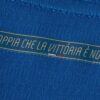






















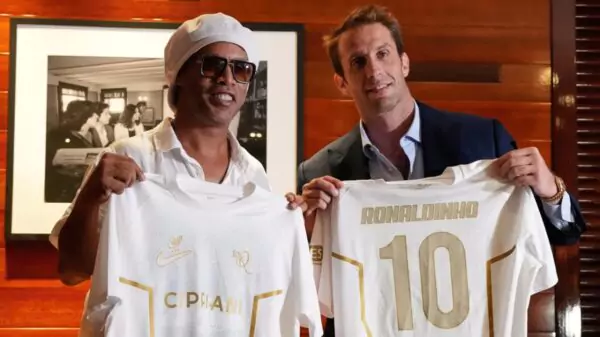



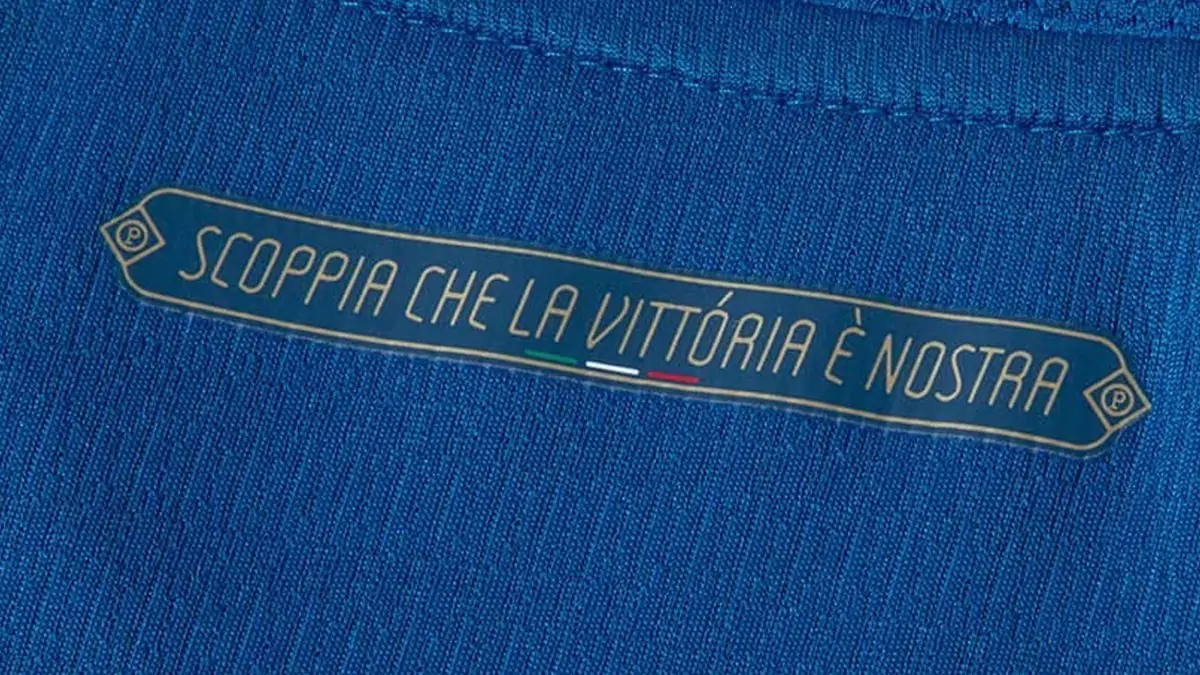
Palmeiras' new third jersey, created by Puma to celebrate the club's Italian roots, sparked discussion even before its debut on the field. The reason lies in the phrase... “Scoppia che la vitória is ours”, printed on the back of the uniform.
In Italian, "vittoria" is written without an accent.
The uniform would be used this Sunday (23), against Vasco, for the Brazilian Championship, but the CBF informed Palmeiras that the shirt could not be used due to technical issues related to the semi-automatic offside technology. The debut is now scheduled for Wednesday (26), against Santos, for the Copa do Brasil, on the day the club turns 112 years old.
After the controversy surrounding the spelling, Puma told GE, Globo's portal, that there was no error. According to the company, the accent was used as a "typographical device" to reinforce the stressed syllable and facilitate reading, inspired by the way Italian dictionaries, such as Treccani, indicate the pronunciation of words.

The Supreme Court reaffirmed: citizenship is born with the person.
- New legal front opened
- Processes can still be filed.
- Individual assessment before any decision.
The intention is understandable. The justification, however, doesn't hold up well.
A dictionary does not determine the spelling of a phrase.
Treccani actually uses accents in its entries to indicate pronunciation and stress. This is because it is a dictionary.
This does not mean that these marks are part of the normal spelling of words in texts written in Italian.
In the case of “vittoria”, there is yet another problem. Treccani presents “vittòria”, with a grave accent, to indicate the open pronunciation of the “o”. On the shirt it appears as “vittória”, with an acute accent.
Therefore, not even the notation used corresponds exactly to the reference cited by Puma.
If the intention was to help the Brazilian, why only "victory"?
The argument that the accent would make it easier for Brazilians to read faces another problem.
The complete sentence is “Scoppia che la vittoria è nostra”.
For someone unfamiliar with Italian, words like "scoppia" likely present more difficulties in pronunciation and comprehension than "vittoria." Even so, they have been retained as written in Italian, without any phonetic indication.
The shirt itself also features other Italian expressions, such as "Avanti Palestra," also without adaptations intended for the Brazilian reader.
If the logic were to indicate the stress pattern of words potentially unknown to Portuguese speakers, it would be necessary to apply some consistent criterion to the rest of the text.
This did not happened.
The intention is good, the defense is poor.
The detail doesn't detract from the merit of the concept created for the uniform.
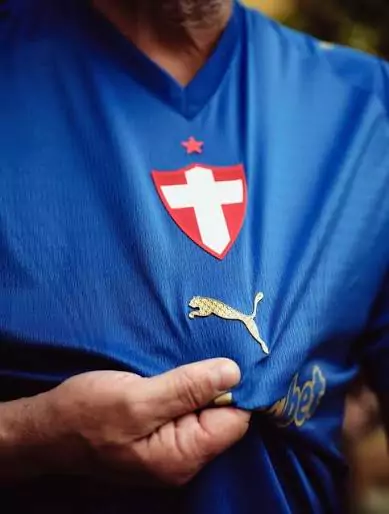
Puma and Palmeiras used the blue of the Italian national team, the Savoy Cross, used by Palestra Italia in 1916, and elements related to Italian immigration and the club's history. The campaign was even produced in locations in Italy, such as Milan, Bergamo, and the Gressoney-Saint-Jean region.
The Constitutional Court's decision changed the landscape. The new citizenship law will now be reviewed by the European Union's courts of justice.
The intention to bring the current fans closer to Palmeiras' Italian origins is a good one.
It's also perfectly possible that the accent was a deliberate aesthetic choice, and not a simple proofreading error. Puma itself points out that the word "vittoria" appears correctly, without an accent, elsewhere on the uniform.
But this only demonstrates that the alteration was intentional.
It does not translate "victory" into correct Italian, nor does it support the explanation that the accent would be necessary to make it easier for Brazilians to read.
The graphic choice can be defended as a design license. However, the linguistic argument chosen to justify it is unconvincing.