

































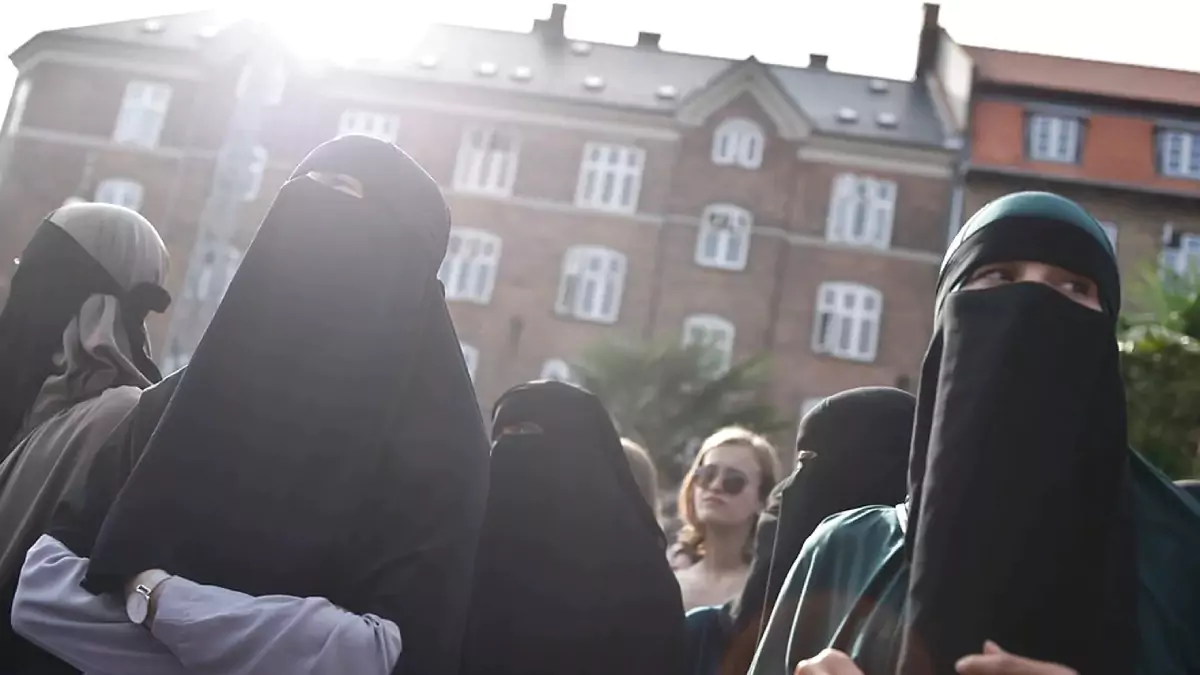
The President of Portugal, António José Seguro, enacted on Tuesday (18) the law that prohibits the concealment of the face in public spaces. Known as the "burqa law"The measure targets garments such as the burqa and niqab, although the text does not specifically mention any religion or item of clothing.
The final version approved by Parliament establishes that it is prohibited to wear clothing in public spaces that is intended to conceal or hinder the viewing of the face. The rule applies to public roads, places open to the public, public service spaces, events, sporting activities, and demonstrations.
The law also prohibits coercing a person to conceal their face based on gender, religion, age, or origin.
The proposal originated in the Chega party and was definitively approved by the Assembly of the Republic on July 17th. The text underwent changes during its passage and adopted as its central principles security, public order, and the possibility of identifying citizens.

The Supreme Court reaffirmed: citizenship is born with the person.
- New legal front opened
- Processes can still be filed.
- Individual assessment before any decision.
Fines can reach €3.
Anyone who violates the ban may be fined between €150 and €750 if the infraction is due to negligence. In cases considered intentional, the amount ranges from €400 to €3. Enforcement will be the responsibility of the security forces, while the application of fines will be the responsibility of the municipal councils.
The law establishes exceptions for situations justified by reasons of health, work, artistic activities, entertainment, or advertising.
Also exempt from the ban are aircraft, diplomatic and consular facilities, places of worship, and other spaces considered sacred. The face may still be covered for security reasons, weather conditions, or when other legal regulations permit.
This means that the so-called "burqa law" does not legally constitute a specific prohibition of Islamic clothing. The legislation creates a general rule against concealing the face in certain spaces, even though the burqa and niqab are among the cases directly affected by the measure.
Prison sentence for anyone who forces a woman to cover her face.
The text provides for harsher punishment for anyone who forces another person to conceal their face.
Anyone who resorts to threats, violence, coercion, abuse of authority, or abuse of power based on the victim's gender may be sentenced to up to two years in prison or a fine of up to 240 days. If the victim is a minor, the penalty will be increased by one-third.
President cites equality between men and women.
In announcing the enactment, Seguro acknowledged that the issue involves "great social and cultural sensitivity" and stated that it is difficult to strike a balance between rights and duties in this area.
The president cited social integration, security, and equality between men and women as fundamental principles, in addition to decisions by the European Court of Human Rights regarding restrictions on the concealment of faces.
According to the Presidency, considering it acceptable that only women are required to completely hide their faces would create an asymmetry incompatible with the principles of equality and dignity between men and women. Seguro also highlighted the role of the face in identification and communication between citizens.
The law does not yet take effect immediately simply because it has been enacted. The text stipulates that it will come into force 30 days after its publication in the Official Gazette.
















Danni
August 20 from 2026 at 00: 33
It is not necessary to say that this question is stupid.
Gustavo
August 20 from 2026 at 00: 57
Would you think that someone would be willing to punish anyone for costing someone else a gift for the burqa? Why don't I show compassion for others?