









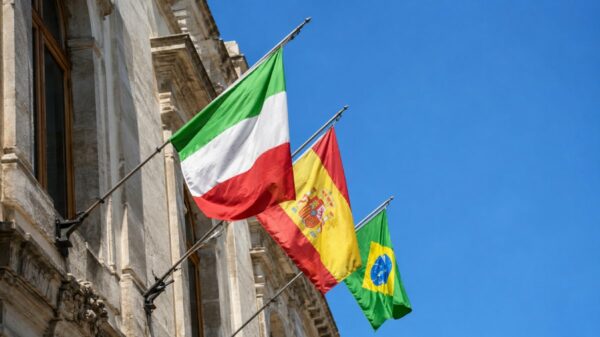











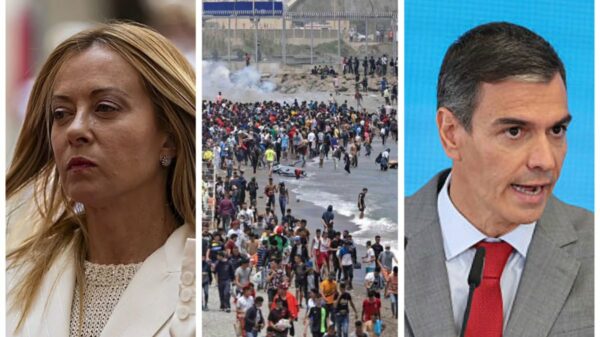









A diplomatic crisis between Italy and Spain increased this Friday (7), after the government of Giorgia Meloni It rejected Madrid's ultimatum and decided to maintain controls on travelers coming from the Iberian country at least until August 15.
Hours earlier, the Spanish government had demanded the suspension of the measure by the end of Sunday (9). Otherwise, it promised to adopt “proportional responses to protect the interests and dignity of its citizens”.
In a statement, the Chigi Palace affirmed that Italy “does not accept ultimatums or impositions from abroad” on matters related to national security and border control. Rome also said it does not intend to review the decision until it receives guarantees regarding the control of migratory flows originating in Ceuta.
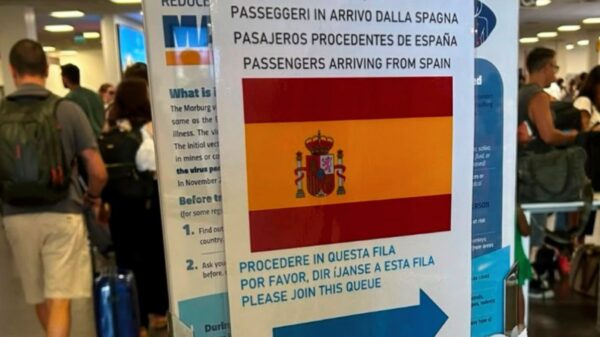
The two countries do not share a land border. In practice, the inspections affect passengers arriving from Spain through Italian airports and ports, including Spanish citizens and tourists who have departed from Spanish territory.

The Supreme Court reaffirmed: citizenship is born with the person.
- New legal front opened
- Processes can still be filed.
- Individual assessment before any decision.
Italy reintroduced border controls on August 1st, following the mass influx of migrants from Morocco into the Spanish enclave of Ceuta in North Africa. According to ANSA, approximately 72 people crossed the border during the crisis.
Madrid considers the Italian response unjustified and discriminatory. In an official statement, the government of Pedro Sánchez stated that Ceuta has a special regime within the Schengen Area and that migrants could not freely travel to mainland Spain or other European countries.
The Spanish government added that almost all those who entered illegally have already returned to Morocco. This version coincides with the assessment released by the Council of the European Union after a videoconference of interior ministers held on August 4th.
According to the Council, the “vast majority” of migrants had been returned, with no record of subsequent movements to mainland Spain or other Member States.
At the meeting, the countries of the European Union and those associated with the Schengen Area expressed unanimous solidarity with Spain. The ministers also advocated for greater coordination between governments during migration crises.
The Spanish statement accuses Rome of having adopted the controls unilaterally, without prior notice and with arguments incompatible with Schengen rules. Madrid also recalled that it has never applied similar restrictions against Italians, despite the high number of landings registered in Italy in recent years.
The dispute began after Italian authorities criticized Spanish immigration policy, including the plan to regularize hundreds of thousands of foreigners. Italy's Deputy Prime Minister and Foreign Minister, Antonio Tajani, stated that the initiative could encourage further irregular entries.
The Spanish Foreign Minister, José Manuel Albares, responded that Rome had not reacted "adequately" to the emergency in Ceuta.
Maintaining the controls opens the way for possible Spanish retaliation starting Monday (10). So far, Madrid has not announced what measures it intends to take if Italy maintains the restrictions.