




























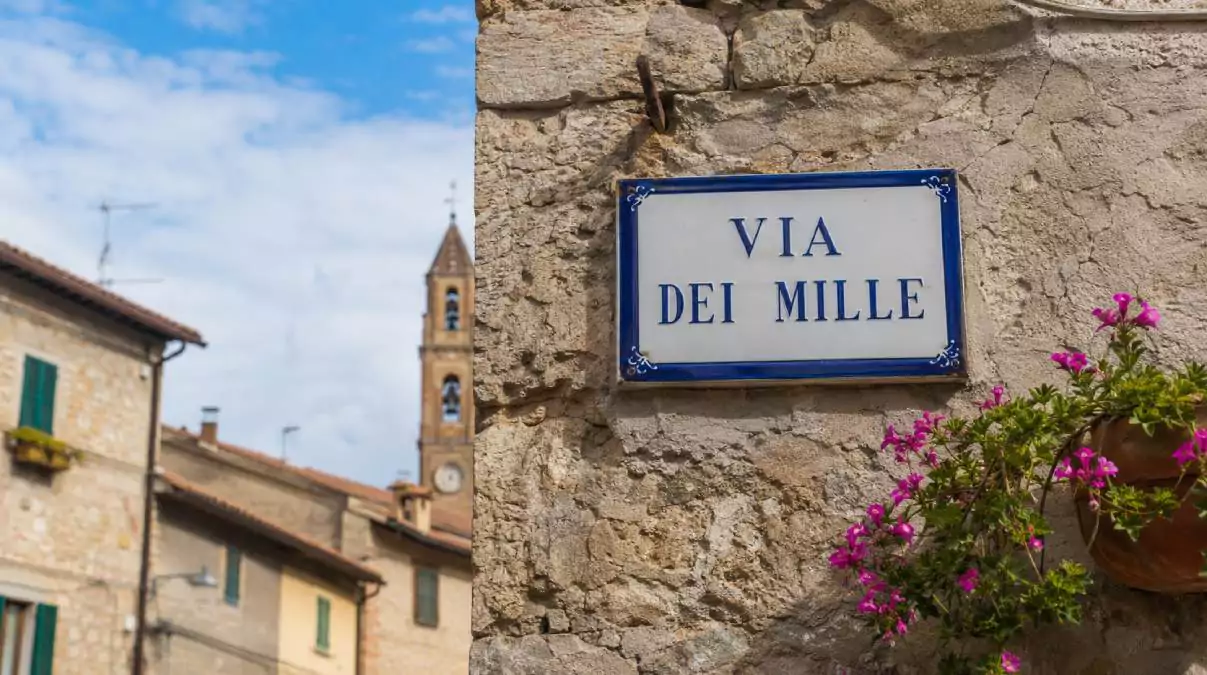
Many Italian surnames carry a small word before the given name: De Luca, Di Pietro, Lo Bianco, Dal Molin, Della Rovere. It's not there by chance. In onomastics, the science that studies the origin and formation of names, these particles can hold clues about ancestry, family, provenance, or even the place to which a person was connected.
The logic dates back centuries, when it was necessary to distinguish people who had the same name. A preposition could help identify someone by the family they belonged to or the place they came from.
A surname like Di Giovanni, for example, could indicate descent from or belonging to the family of a Giovanni. Names like Dal Lago, on the other hand, could identify someone connected to a particular place or geographical feature.
De and Di: the family trail
The forms De and Di are among the most widespread in Italy and frequently appear in surnames of patronymic origin, that is, formed from the name of an ancestor.

The Supreme Court reaffirmed: citizenship is born with the person.
- New legal front opened
- Processes can still be filed.
- Individual assessment before any decision.
De Luca, De Rosa, Di Marco, and Di Stefano are examples of this construction. In many cases, the preposition indicated descent or family affiliation.
According to the onomast Enzo Caffarelli, from the “Rivista Italiana di Onomastica”, De Luca occupies a special position: it is the most widespread prepositional surname in Italy.
When the following word begins with a vowel, forms with an apostrophe also appear, such as D'Angelo, D'Anna, and D'Amico. The D' results from the elision of the preposition and can derive from "de," "di," and, in certain cases, from "da."
Dal and Da: the geographical clue
Other particles are particularly interesting because their very distribution helps to tell the regional story of Italian surnames.
Caffarelli observes that “Dal è proprio dell'area Veneto-Friulana; Da appartiene all'area trentina e altoveneta”, that is, “Dal” is characteristic of the Veneto-Friulana area, while “Da” belongs mainly to the Trentino region and the Upper Veneto.
It is in this context that surnames such as Dal Molin, Dal Maso, Dal Corso, Dal Lago, Dal Pozzo, and Da Re appear.
The presence of many of these surnames among families of Italian origin in Southern Brazil also aligns with the history of strong immigration from Veneto, Friuli, and other regions of Northeastern Italy.
Della, Dello and Dell': they don't always mean the same thing.
The forms Della, Dello, and Dell' require a little more care. There is no rule that all of them necessarily indicate a place.
Depending on the origin of the surname, these particles can establish relationships with nicknames, professions, functions, or geographical elements.
“Della”, in particular, frequently appears in surnames related to territorial elements. Della Valle, for example, literally refers to the valley. Other surnames may have different histories, which need to be analyzed individually.
That is precisely why onomastics works with historical, linguistic, and geographical clues, and not just with the literal translation of the surname.
And what about the "Lo" in Lo Bianco?
There are also surnames formed with articles, such as Lo Bianco, Lo Monaco, or La Rosa. In this case, the logic is different from that of De, Di, or Dal.
These forms may originate from nicknames, personal characteristics, professions, or other designations that have been passed down from generation to generation.
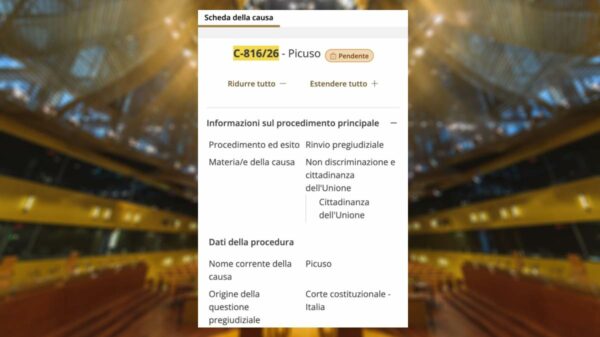
The Constitutional Court's decision changed the landscape. The new citizenship law will now be reviewed by the European Union's courts of justice.
Therefore, it is incorrect to automatically interpret every word that appears before an Italian surname as equivalent to "son of" or "originating from".
The myth of nobility
Here's one of the most common misconceptions.
There is a belief that writing "de" or "di" in lowercase is a sign of belonging to a noble family. This is not true.
Treccani herself notes that the presence of the particles "de" or "di" in the surname does not, in itself, constitute indication of nobility.
The association arose from historical and social customs and ended up fueling the habit of some people writing the particle in lowercase to give an aristocratic appearance to the surname, even without documentation proving noble origin.
Therefore, finding a "De", "Di" or "Della" in the surname does not mean you have discovered a hidden title in the family tree.
The particle may, however, reveal something perhaps more interesting: a clue as to how that family was identified centuries ago.
What might the particle indicate?
From and Di: They often indicate descent or family affiliation. Examples: De Luca, Di Marco.
D': A form with elision before a vowel, usually related to De or Di and, in some cases, to Da. Examples: D'Angelo, D'Amico.
Dal and Da: These names can indicate origin and have a strong regional distribution. “Dal” is characteristic of the Veneto-Friulian area; “Da”, of the Trentino region and Upper Veneto. Examples: Dal Molin, Dal Maso, Da Re.
Della, Dello and Dell': They can establish different types of relationships, including with elements of the territory. Example: Della Valle.
Lo and La: These are articles found in various surnames and may be linked to nicknames, characteristics, professions, or other historical designations.
Lowercase particle: It's not proof of nobility.
In genealogy, therefore, a particle can function as a small window to the past. It can indicate family, descent, territory, or another historical relationship, but its meaning... It needs to be investigated on a case-by-case basis..