

































Of the 9 million hams produced per year, 7,5 million are consumed in Italy
Four centuries before Christ, Hippocrates, considered the father of medicine, stated: "Let food be thy medicine." This advice remains highly relevant today. More and more people are making food one of their main allies in the pursuit of health, and for those who are part of this group, there's good news: scientists at the Thomson Mass Spectrometry Laboratory of the Institute of Chemistry (IQ) at Unicamp have just identified a new natural pigment present in "Parma" and "Iberian" hams.
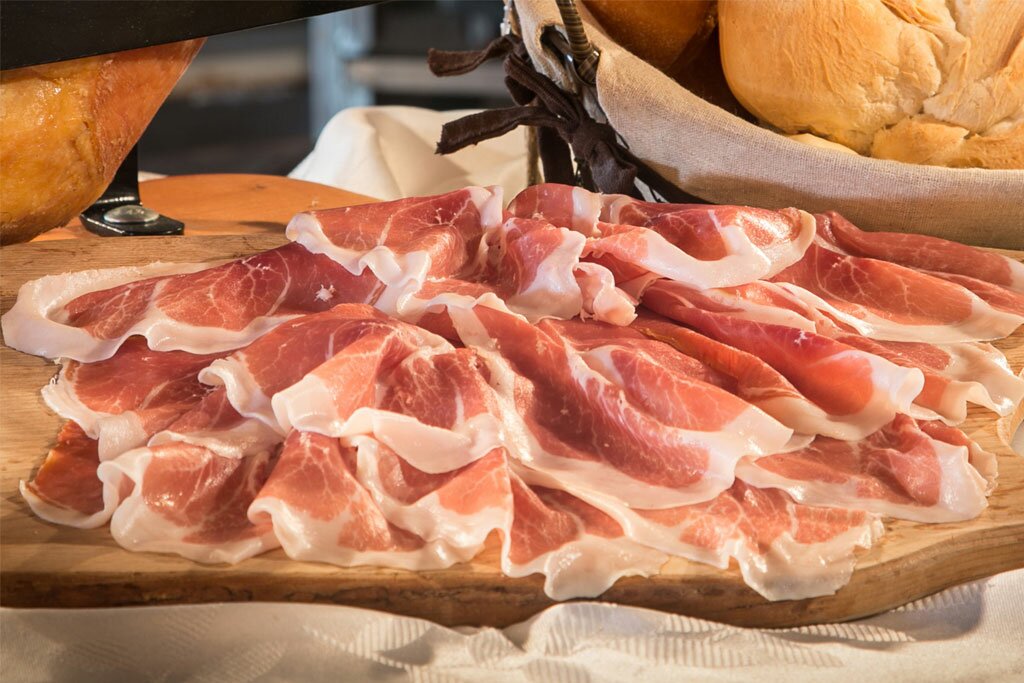
A delicacy produced for 2 years, genuine Parma ham (produced in Parma, as its name suggests) does not contain preservatives or chemical additives. The curing process lasts at least twelve months, during which time the ham is kept in ventilated environments. The secret and magic of its flavor, as highlighted by the website sensibilidade e sabor, comes from the pigs, raised exclusively in Italy, and from the curing time, during which the aroma of the region's forests gives the meat a special flavor.

Made in small family businesses, with recipes passed down through Italian generations for hundreds of years, it went beyond the borders of Italy, and is now known throughout the world, but this only happened after the industrial districts were created, more than 50 years ago. Of the 9 million hams produced per year, 7,5 million are consumed in Italy, and 1,5 million are exported to 40 countries.
The substance, called zinc-porphyrin, is an important source of zinc, a mineral that is relatively scarce in food. “Associated with vitamin C, for example, zinc favors increased resistance on the part of the immune system”, says food scientist Rodrigo Catharino, one of the members of the team responsible for the study. According to him, the next step is to try to synthesize the pigment, which could make it possible to add it to other food products.
Unicamp researchers decided to study the pigment of Parma and Iberian hams for a simple reason. Both products are part of the so-called Mediterranean diet, which according to various studies contributes to increasing the longevity of residents of some regions of Greece, Portugal, Spain, Italy and France, among other countries. In addition to sausages, these populations frequently consume olive oil, wine and oregano, ingredients considered highly beneficial for health. The first question that occurred to scientists was: what pigment is responsible for the characteristic color of sausages, given that they only use salt in their preparation, eliminating the need for dyes and preservatives?
To answer this question, experts from the Institute of Chemistry counted on the collaboration of scientist Jens KS Moller, from The Royal Veterinary and Agricultural University, an institution in Denmark, who had already been investigating the pigment of Parma and Iberian, but had not been able to define its structure. Moller forwarded the data generated by his studies and facilitated contact between the Unicamp team and the sausage manufacturers, who sent samples for laboratory testing. According to Rodrigo Catharino, the determination of the pigment was made with the aid of equipment called a mass spectrometer and through an ionization technique called electrospray.
After approximately ten trials with each type of ham, Unicamp researchers finally determined the pigment. The name zinc-porphyrin was based on the two main substances present in the natural dye. This, explains Rodrigo Catharino, originates from reactions that occur during the meat maturation process. “An interesting feature of this pigment is that in addition to helping to give hams a healthy appearance, it also nourishes. The presence of zinc provides a benefit to the body, as the mineral favors greater resistance on the part of the immune system”, says the scientist.
After determining the pigment, the Thomson Laboratory team is beginning to prepare to carry out a second study on the substance. The new stage will consist of attempting to synthesize zinc-porphyrin. If this is feasible, it can be produced in the laboratory, which will enable its eventual addition to other food products. The research involving Parma and Iberian hams generated an article that has already been accepted for publication in Meat Science, one of the most important scientific journals in the segment. “In addition to opening up the prospect for the large-scale use of a new pigment that brings health benefits, this type of research demonstrates the ability of Brazilians to carry out cutting-edge science. Normally, foreigners come here, take our products and discover new things. Now, we are starting to reverse this trend”, analyzes Rodrigo Catharino.
By MANUEL ALVES FILHO / Unicamp Newspaper