





































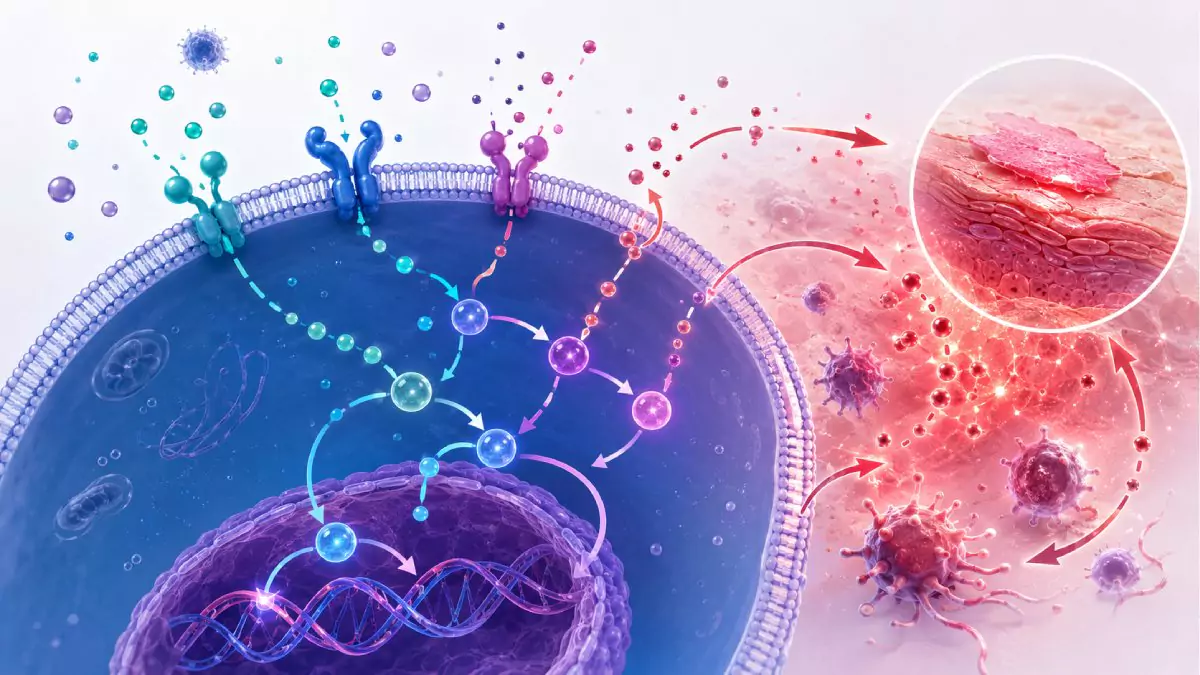
Researchers at the Italian National Research Council (CNR) have identified a new molecular mechanism that amplifies the chronic inflammation in psoriasisA skin disease that affects between 2% and 3% of the world's population. The study, published in British Journal of DermatologyThis paves the way for more precise treatments and already includes an experimental inhibitor being tested in humans.
The research was coordinated by the Institute for Translational Pharmacology (CNR-IFT) and the Institute for Applications of Calculus (CNR-IAC), in partnership with the Dermatopathic Institute of the Immaculate Conception (IDI-IRCCS), the Bambino Gesù Children's Hospital, and Stanford University.

The role of the p75NTR protein
At the heart of the discovery is the p75NTR protein, a receptor capable of binding to Nerve Growth Factor (NGF), the molecular complex identified by Rita Levi-Montalcini. Nobel Prize in MedicineThe receptor, previously understudied in psoriasis, acts as an amplifier of the inflammatory response.
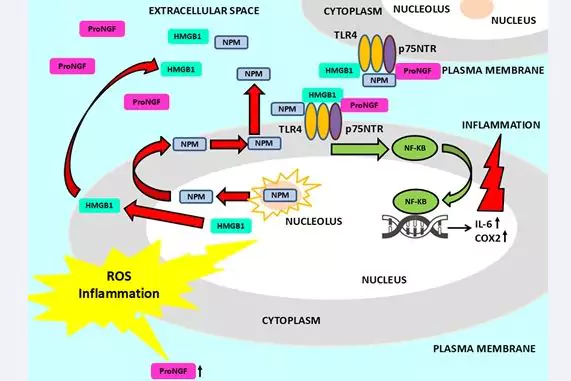
“The mechanism by which p75NTR amplifies the activation of one of the main molecular pathways involved in cutaneous inflammatory processes was discovered through the analysis of skin biopsies and cellular models from patients,” explained Luisa Bracci-Laudiero, from CNR-IFT, a long-time Nobel collaborator and coordinator of the study. The protein increases the release of “alarms,” molecules emitted by damaged tissues that sustain and amplify inflammation.
From computational hypothesis to laboratory confirmation.
The initial hypothesis stemmed from an analysis of databases. Paolo Tieri, from CNR-IAC, mapped interactions between proteins and suggested, based on theory, that p75NTR could modulate different inflammatory pathways. Laboratory experiments confirmed this reasoning.
"Psoriasis is recognized as an inflammatory disease sustained not only by immune cells, but also by the activation of nerve pathways that amplify the effect on damaged skin," Bracci-Laudiero pointed out.
Concrete therapeutic potential
The study showed that pharmacologically blocking p75NTR significantly interrupts the inflammatory response, also inhibiting the release of alarmins and cytokines involved in the development of the disease. The Stanford team developed an inhibitor of the protein, LM11A-31, already tested in clinical trials for Alzheimer's, which now emerges as a candidate for the treatment of psoriasis and other chronic inflammatory diseases.
“P75NTR behaves like a true sensor of inflammation, necessary for the full activation of the inflammatory response,” concluded Alessandra Magenta, from CNR-IFT, corresponding author and coordinator of the experiments with samples from patients recruited at IDI-IRCCS.
The scientific relevance of the work was recognized by the journal itself, which published an editorial commentary highlighting the novelty of the findings and their clinical prospects. (With information from AISE)






















Edna Viana Ramos
1 July 2026 18 at: 15
I've had psoriasis for 5 years and I hope this study progresses and improves the quality of life for people with this disease.