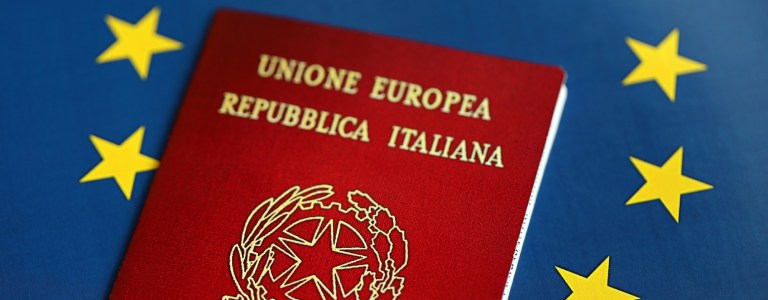
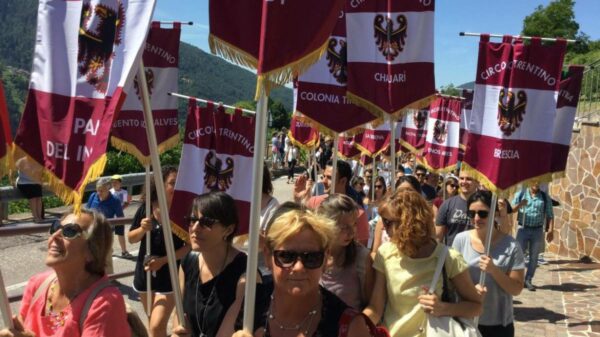
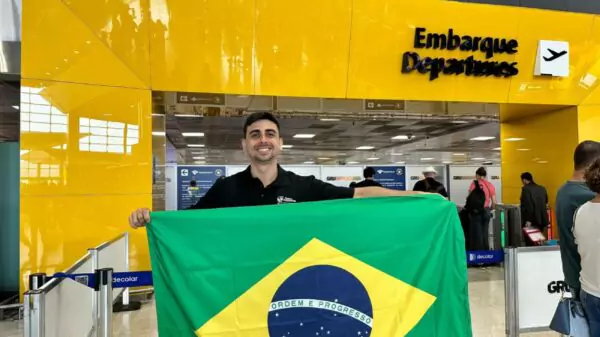

























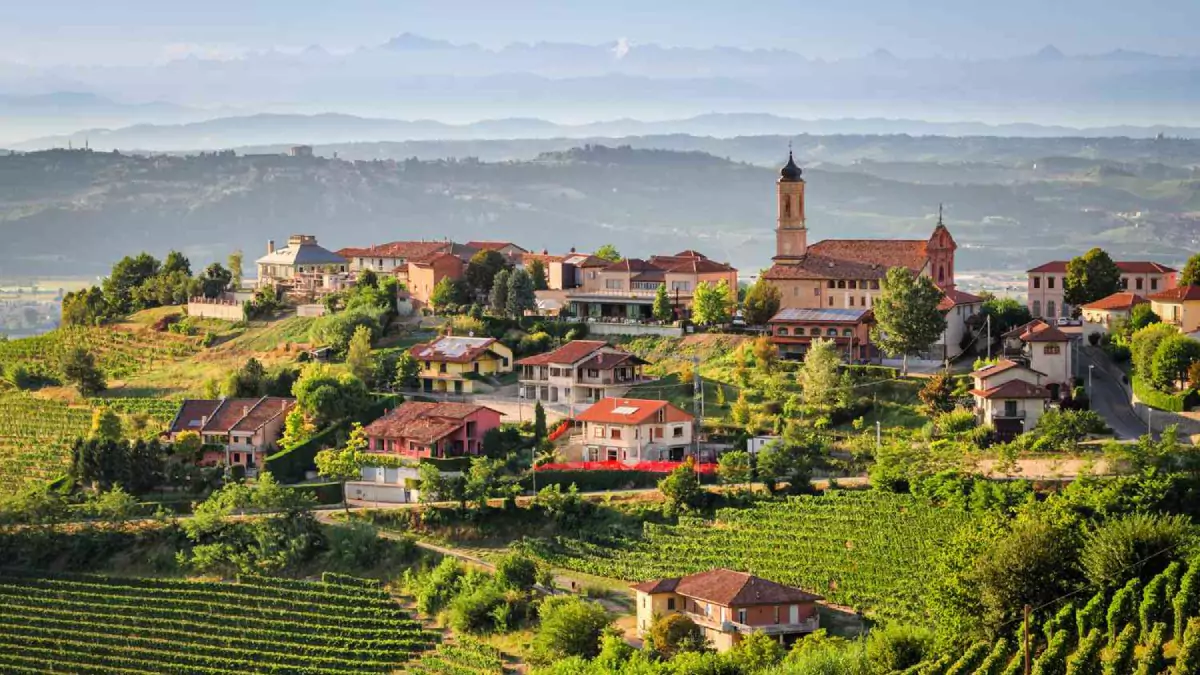
the end of the World Cup match between Argentina and Spain, this Sunday (19), is particularly affecting Piedmont. Report by Rai TGR Piemonte Remember that more than 800.000 people left the region for Argentina after Italian Unification.
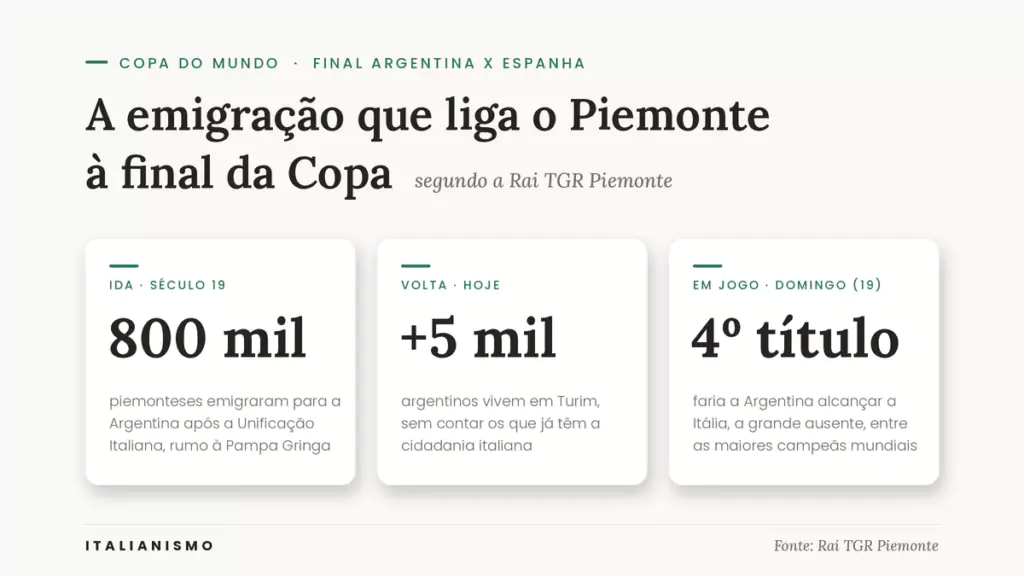
Today, the trend has reversed. Turin is officially home to more than 5.000 Argentinians, a number that grows considerably when you include those who have already obtained Italian citizenship and appear in the statistics as Italians.
Why did Piedmont emigrate?
According to the report, the modernization of agriculture and population growth generated a "hunger for land" that pushed the Piedmontese out of Italy at the end of the 19th century.
“This coincided with the Argentine government opening up to emigration from Europe,” explains José Luis Minati, former researcher and oenologist at the University of Turin and treasurer of the Argentine-Italian Association of Piedmonte.
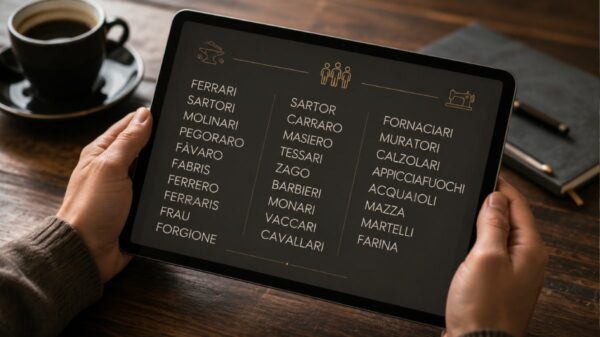
In the so-called Gringa Pampas, between Córdoba, Rosario, Santa Fe, and Entre Ríos, the Piedmontese people became cattle ranchers and grain producers. Near the Andes, in the Mendoza region, they dedicated themselves to viticulture. Surnames like Gancia and Bosco remain common there.
The return movement
The reverse route began with exiles from the Argentine dictatorship and gained momentum with the economic migration of the 1980s, which continues to grow today.
“In the 1980s, families and older people arrived. Today, mostly young people come from Argentina,” says Minati. According to him, the new generation focuses more on integration and the job market than on community life among fellow countrymen.
Spain, wars, and chocolate.
The relationship from Piedmont The relationship with Spain also goes back a long way. Two centuries of wars, with the Spanish sometimes allies, sometimes enemies of the House of Savoy, left a sweet legacy: chocolate, introduced to Turin in the 16th century, according to tradition, by the Spanish duchess Catherine Michelle of Austria.
In the city, the fans are divided. Some support Argentina in memory of a relative who emigrated or out of admiration for Messi and Maradona, while others side with their Spanish "cousins." One detail weighs heavily on the Italian heart: a fourth title would allow Argentina to catch up with Italy, the notable absentee, in the ranking of world champions.
What is Pampa Gringa?
The name given to the agricultural strip north of Buenos Aires, between Córdoba, Rosario, Santa Fe, and Entre Ríos, which was massively colonized by European immigrants at the end of the 19th century. "Gringo" was what Argentinians called foreigners, especially Italians, who transformed the region into a center for livestock and grain production.
(With information from Rai TGR Piemonte)