



































She didn't have a degree. She didn't read scientific articles. But she knew exactly what to do when you came home with a fever, a cough, a broken heart, or an upset stomach. Grandma had a solution for everything—and most of them, we've now discovered, actually worked. Science arrived a hundred years late, but it arrived.
Chicken broth for any ailment.
Action: Anti-inflammatory, flu, cold

“Mangia il brodo, ti fa bene.” Eat the broth, it's good for you. How many times have you heard that? Grandma didn't know why, but she knew it worked. Today, science knows: chicken broth made with bones, carrots, onions, and celery releases amino acids like cysteine, which acts directly on the respiratory tract, reducing inflammation and thinning mucus.
The most beautiful detail of the story: researcher Dr. Stephen Rennard, from the University of Nebraska, decided to test chicken broth in the laboratory after years of watching his wife prepare her grandmother's recipe when someone was sick at home. The study used exactly that recipe — and called it... "Grandma's Soup"The result was published in 2000 in the journal CHESTFrom the American College of Breast Physicians: the broth inhibits neutrophil migration, reducing the inflammatory response associated with colds and flu. In 2020, the same researchers updated the study applying the findings to the COVID-19 pandemic.
Scientific sources:
- Original study (PubMed): https://pubmed.ncbi.nlm.nih.gov/11035691/
- COVID-19 Update (NIH/PMC): https://pmc.ncbi.nlm.nih.gov/articles/PMC7201233/
- University of Nebraska Medical Center: https://www.unmc.edu/newsroom/2021/05/25/chicken-soup-study/
- Science Daily: https://www.sciencedaily.com/releases/2000/10/001018075252.htm
Crushed raw garlic
Action: Antibacterial, immunity
Raw garlic was Grandma's antibiotic. She would crush it, let it rest for a while, and serve it with a drizzle of olive oil—and the children would make faces, but they would eat it. The secret lies in... allicin, a compound released when garlic is crushed. It acts as a natural antimicrobial and stimulates macrophages, lymphocytes, and NK cells — the cells that fight viruses and bacteria.
A historical detail that Grandma didn't know, but which proves her intuition: in the First and Second World Wars, garlic was used as an antiseptic on the battlefields when medicines ran out. The Romans already called it... "theriac of the peasant" — the poor man's cure-all. To better utilize the allicin: crush the garlic and let it rest for 15 minutes before consuming or cooking.
Scientific sources:
- Immunological Review (PubMed): https://pubmed.ncbi.nlm.nih.gov/25961060/
- Antimicrobial activity of allicin (NIH/PMC): https://www.ncbi.nlm.nih.gov/pmc/articles/PMC4249831/
- Immunomodulatory effects (NIH/PMC): https://www.ncbi.nlm.nih.gov/pmc/articles/PMC4417560/
Chamomile before bed.
Action: Calming, digestion, sleep
Una camomilla e vai a letto — a chamomile tea and then go to sleep. That was the way the day ended in many Italian-Brazilian homes. Grandma would prepare it with dried leaves, add honey, and serve it warm. No drama, no explanation. The child would drink it and fall asleep.
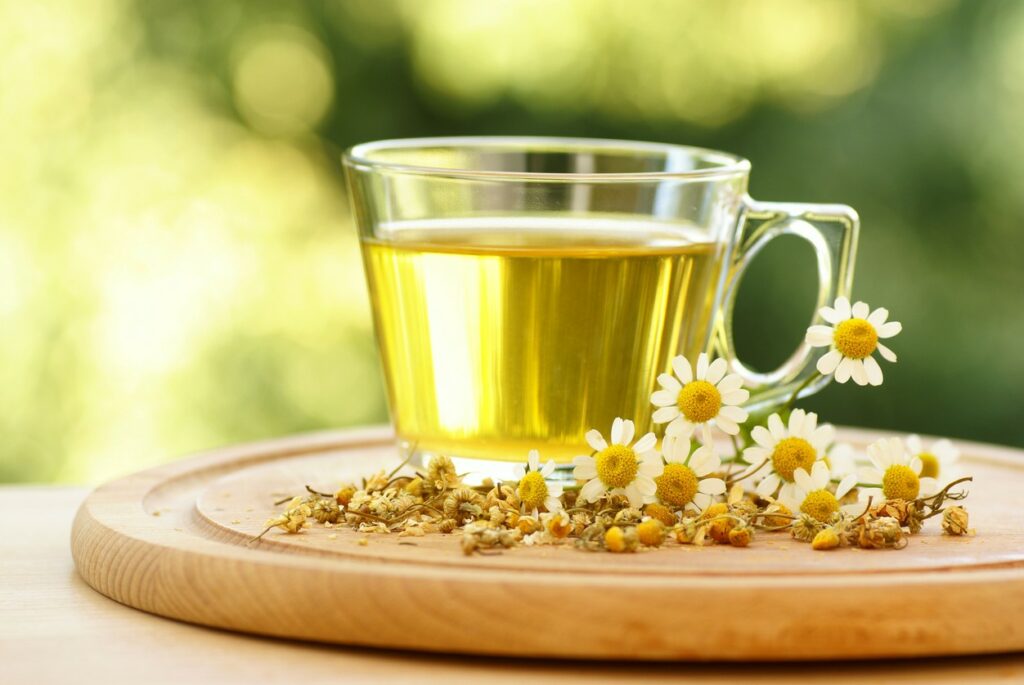
Chamomile contains apigenin, a flavonoid that binds to benzodiazepine receptors in the brain — the same ones activated by anti-anxiety medications. It also has antispasmodic action, relieving cramps and digestive discomfort after large Sunday meals.
Scientific source:
- Complete clinical review (NIH/PMC): https://www.ncbi.nlm.nih.gov/pmc/articles/PMC2995283/
Onion syrup with honey
Action: Expectorant, cough, sore throat
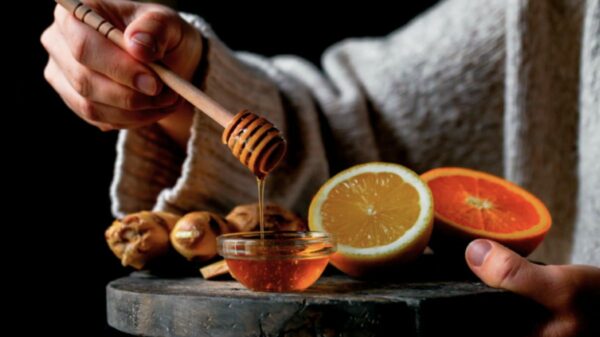
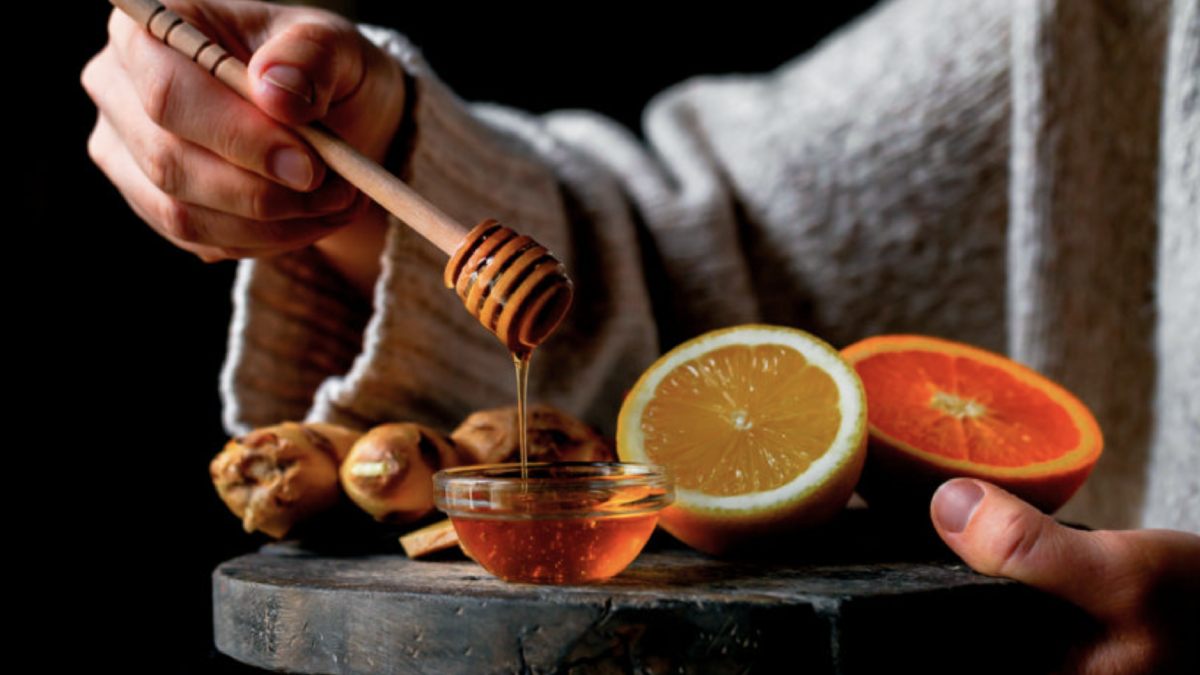
This was the remedy the children feared most—and it worked best. Sliced onions, covered with honey or brown sugar, left to sit until they released a golden liquid. A spoonful and the cough was relieved. It seemed like witchcraft. It was chemistry.
Onions are rich in quercetin, a flavonoid with anti-inflammatory action that inhibits the production of histamines — responsible for nasal congestion. Honey creates a protective film over the irritated throat mucosa. Together, they form a natural expectorant that is gentler than many pharmaceutical syrups.
Scientific sources:
- Honey as an expectorant (review): https://pubmed.ncbi.nlm.nih.gov/18056558/
- Donna Moderna (contextualization): https://www.donnamoderna.com/benessere/rimedi-della-nonna-salute
Herbs from the backyard: bay leaf, mint, thyme
Action: Digestive, respiratory, versatile
Every grandmother had a flower bed. It wasn't for decoration—it was her pharmacy. bay In infusion, it aids digestion and has antimicrobial properties. mint It relieves headaches and nausea — the menthol it releases acts directly on the airways, with proven expectorant and antispasmodic effects. thyme It contains thymol, a natural antiseptic that acts on the respiratory tract, used in European folk medicine for centuries and now present in industrial mouthwashes.
Scientific sources:
- Menthol and respiratory action (PubMed): https://pubmed.ncbi.nlm.nih.gov/25761609/
- Thymol: antimicrobial activity (NIH/PMC): https://www.ncbi.nlm.nih.gov/pmc/articles/PMC4808543/
- Mint: clinical review (Correio Braziliense): https://www.correiobraziliense.com.br/cbradar/o-cha-que-solta-catarro-acalma-a-tosse-limpa-as-vias-aereas-e-ainda-alivia-dores-abdominais/
A foot bath with coarse salt
Action: Circulation, feet, fatigue
After a long day in the fields or at the factory, Grandma would fill a basin with hot water, two handfuls of coarse salt, and soak her feet for twenty minutes. It was the immigrant spa. The heat dilates the blood vessels and improves circulation in the lower limbs. The salt helps reduce swelling through osmosis. Today, luxury spas charge high prices for the same principle—Grandma did it with what she had.
Sources:
- Avvenire (Italian historical context): https://www.avvenire.it/agora/pagine/nonne_200906090949026200000
- Humanitas Salute (medical validation): https://www.humanitasalute.it/salute-a-z/93749-rimedi-della-nonna-quali-funzionano-e-quali-no/
Vin brûlée for hoarseness
Action: Sore throat, voice, flu
Abbassamenti di voce — hoarseness — had a sure cure in Italian tradition: the burnt wineRed wine is boiled with cloves, cinnamon, and sugar. Much of the heated alcohol evaporates during cooking. What remains is the heat and the cloves—which contain... eugenol, a natural analgesic with anti-inflammatory properties — and cinnamon, with antimicrobial action. It was the throat remedy of the canteens and homes of Serra Gaúcha.
Sources:
- Storie di Cibo (traditional Italian rituals): https://www.storiedicibo.it/il-cibo-che-cura-alcuni-rimedi-della-nonna/
"Canarino" — boiled lemon peel
Action: Digestion, heavy stomach
Hai esagerato con la lasagna? Did you overdo it on the lasagna? Grandma used to make the famous one. "Canary"Lemon peels boiled in hot water for a few minutes. The yellow color of the infusion gave it its name. The essential oil of the lemon, released by the peel during cooking, stimulates gastric juices and helps the stomach and intestines to function. It was served after heavy Sunday meals—and researchers confirm that the choice was not random.
Pig iron:
- Herbecedario (tradition and science): https://blog.erbecedario.it/categorie/approfondimentos/10-rimedi-della-nonna-da-scoprire-e-tramandare/
The cornmeal plaster
Action: Cough, bronchitis, phlegm in the chest
This is the only remedy on this list that It didn't come from Italy.It originated here, in the southern colonies of Brazil, from the fusion of two worlds: the Italian tradition of hot poultices on the chest and the most abundant ingredient in the colonies — cornmeal, the same as grandma's polenta.
The recipe varied from family to family, but the principle was always the same: cornmeal mixed with hot water, sometimes with a drizzle of olive oil or a little cachaça (Brazilian rum), forming a paste that was spread on a cloth and applied warm to the chest of the coughing child. It was left until it cooled.
The logic behind it is sound: the Moist heat applied to the chest It dilates the bronchi, thins the mucus, and relieves the feeling of tightness—the same principle as the hot compresses used in respiratory physiotherapy today. Because of its porosity, the cornmeal retained heat longer than a simple damp cloth. It was artisanal technology—without a scientific name, without instructions, without packaging.
There are no articles on PubMed about cornmeal plaster. This is the kind of knowledge that never made it into books—it lived by word of mouth, from grandmother to granddaughter, inside the wooden houses of the Serra Gaúcha and the interior of São Paulo. The fact that it wasn't recorded doesn't mean it didn't work. It means it belonged to a world where knowledge was passed down through hands, not through writing.

Science has confirmed it. Grandma already knew.
Grandma didn't have access to modern medicine. She had something that modern medicine took decades to recognize: the accumulated knowledge of generations observing what worked. Making mistakes was too costly. Therefore, what survived, survived because it worked.
When you prepare a broth today, when you crush a clove of garlic before cooking, when you serve chamomile to a child with a fever, when you remember the cornmeal poultice that your grandmother used to put on her chest — you are repeating a gesture that crossed the Atlantic and arrived here intact.
FOLLOW ITALIANISM