













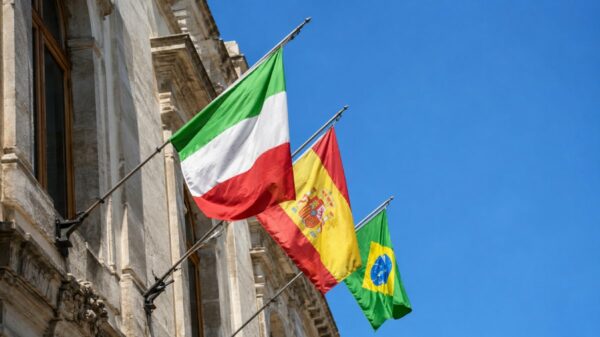



















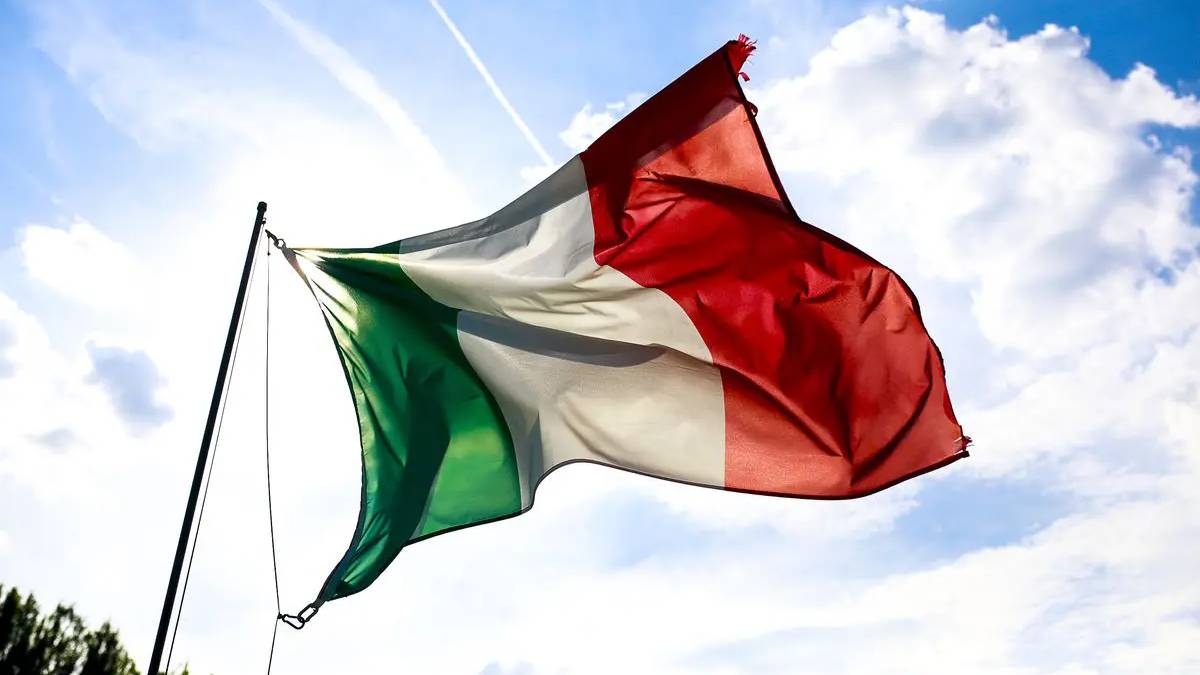
Festa del Tricolore: on January 7, 1797, the Tricolor was officially born, as it is called italian flag. Although it had already been used a few years before.
Green like the plains, herd such as the Alps and the Apennines and red like the blood of war victims.
This is the most common explanation for the origin of Italian flag colors that today, January 7th, turns 225.
In fact, the flag of our Republic – better known as tricolor – has a much more complex and troubled history.
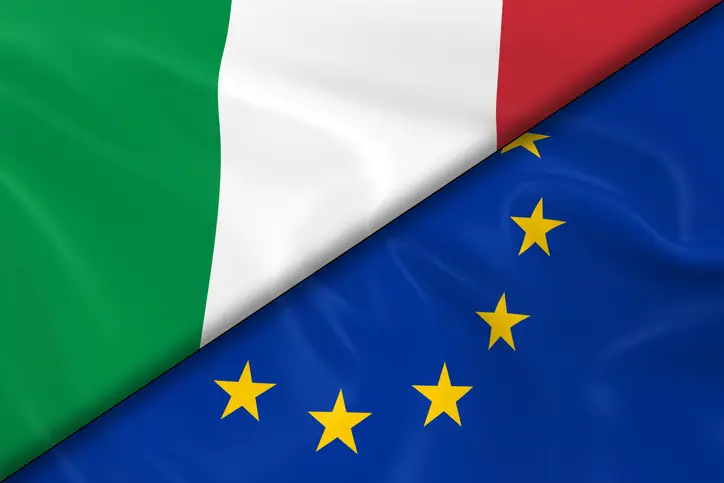
The Supreme Court reaffirmed: citizenship is born with the person.
- New legal front opened
- Processes can still be filed.
- Individual assessment before any decision.
Firstly, it seems that the three colors combined make their first appearance in 1794 (67 years before the unification of Italy), thanks to two students from University of Bologna: Giovanni Battista De Rolandis, from Asti, and Luigi Zamboni, from Bologna.
Both supporters of the principles contained in the Declaration of the Rights of Man and of the Citizen – drawn up in 1789 during the French Revolution – and impatient for the arrival of the army of Napoleon Bonaparte, decide to give life to an insurrection by distributing their own tricolor cocardas (insignia) among supporters.
They chose white and red because they were the colors of Bologna and Asti, respectively, while green is added as a symbol of hope.
However, the insurrection fails and Zamboni and De Rolandis are sentenced to death.
January 7, 1797: the tricolor is born
The tragic fact of the Bologna protest meant that the tricolor issue was left aside for some time.
However, just under 3 years had passed when, on January 7, 1797 in Reggio Emilia, the Parliament of Cispadan Republic (which included Bologna, Modena, Ferrara and Reggio, cities that had gained independence thanks to Napoleon's intervention) establishes “which makes the standard three-color flag universal: green, white and red, which must be used by everyone”.
The fact that they are three colors is a clear sign of the strong influence that the French flag exerted.
Symbol of freedom
The tricolor flag became the symbol of freedom in the uprisings of Giuseppe Mazzini in the name of national unity. In 1848, it officially became the flag of the Kingdom of Sardinia, and was raised on the Subalpine Senate em Turin.
The version at the time featured the coat of arms of Savoy in the center, surrounded by blue (Italy's national color, hence the definition of “azzurra” for athletes competing in any sport) to prevent the Savoy cross from being confused on the white background.
The Unification of Italy
After the proclamation of the Kingdom of Italy em March 17th, 1861, the tricolor is in fact the official flag, but there is still no legislative recognition that precisely establishes its characteristics.
The law that clarifies it only comes in 1925 and requires that, in addition to the three colors green, white and red, the standard has in the center the royal crown emblem. In this capacity, it is now displayed in all institutional locations and in the residences of sovereigns.
Festa del Tricolore – In the constitution
"The flag of the Republic is the Italian tricolor: green, white and red, in three vertical bands of equal size”.
So says the Article 12 of the Italian Constitution, which came into force in January 1, 1948 , which excludes the coat of arms of Savoia and marks the official election of the tricolor flag as a symbol of new republican Italy.
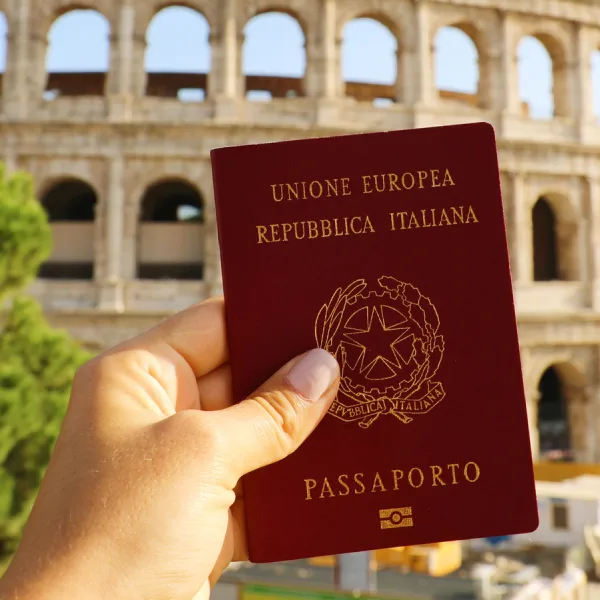
The Constitutional Court's decision changed the landscape. The new citizenship law will now be reviewed by the European Union's courts of justice.
Since 1997, January 7th has officially become the Giornata del Tricolore, initially established with the aim of celebrating the bicentenary of his birth.