



















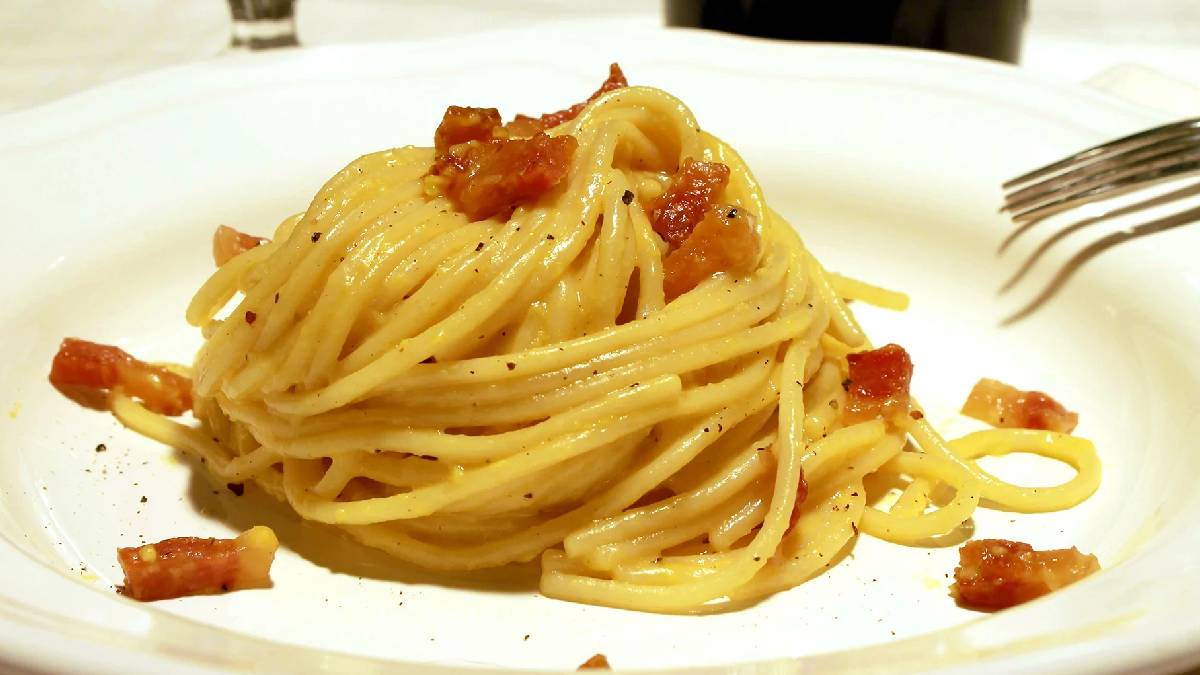
At the end of World War II, carbonara was the dish of renaissance. In fact, the dish has been spreading since the second half of the 1940s and coincides with the end of the hardships of the conflict and the return to normality, when people started eating out again and going to restaurants.
The first carbonaras are born from the union of the Italian genius with American logistics, that is, with the ingredients brought by the United States Army in the famous K rations: bacon and eggs – already scrambled, canned or in powder form – increasingly found on the black market.
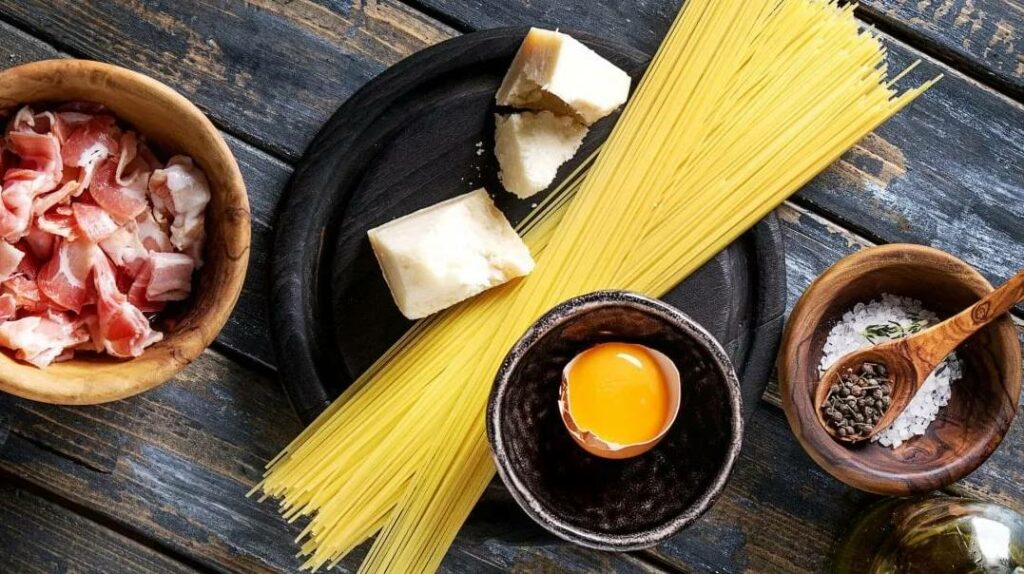
The Italian contribution, of course, is the tradition of pasta, a food capable of making a substantial military ration delicious and satisfying, yes, but always equal to itself.
This hypothesis of its origin – very plausible even for historians – was recently told in a short film, directed by Xavier Mairesse, which shows an American soldier in a newly liberated Rome who is tasked with organizing a meal that will boost troop morale.
It's a real mission, almost impossible, but thanks to the help of the young cook – Claudio Santamaria - Or spaghetti alla carbonara, a bridge dish between two people who find themselves in a tasteful embrace, will see the light.
The film was sought after by Barilla to celebrate the Carbonara day remembering this same spirit of encounter and solidarity between cultures, in the idea of caring for someone.
To do this they used the CareBonara with pun intended, donating a million plates of pasta to the cafeterias of the Food For Soul.
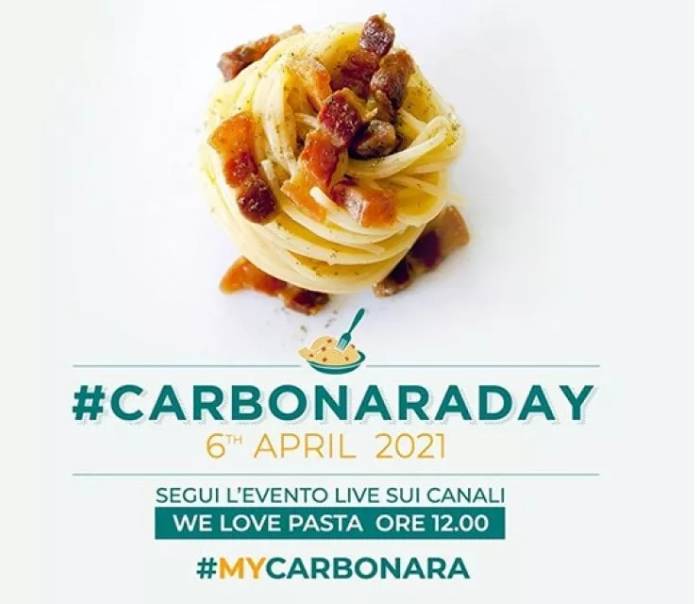
Carbonara Day: pasta for 1 billion people
But on the day that the world celebrates Carbonara, promoted every April 6th by the pasta makers of Unione Italiana Food, with an immense virtual banquet that has reached an audience of 1 billion people in the last 5 editions, it is curious to note how the dish that most unites It is also the one whose recipe is most discussed.
There are only five elements, but they can be diminished in a thousand different ways. So we discuss all aspects: pancetta or guanciale, parmesan or pecorino, just egg yolk or even egg white, boiled or raw egg, short or long pasta.
And Italians are outraged when abroad they dare to propose versions sui generis, as if they were questioning their own identity.
Among the first public “scandals” about carbonara occurred in 2006, when the actor by Tom Cruise, who prides himself on preparing a special carbonara, gives his recipe on the Oprah Winfrey show: he starts with sautéing an onion and two cloves of garlic. At this moment the Italians punch the table.
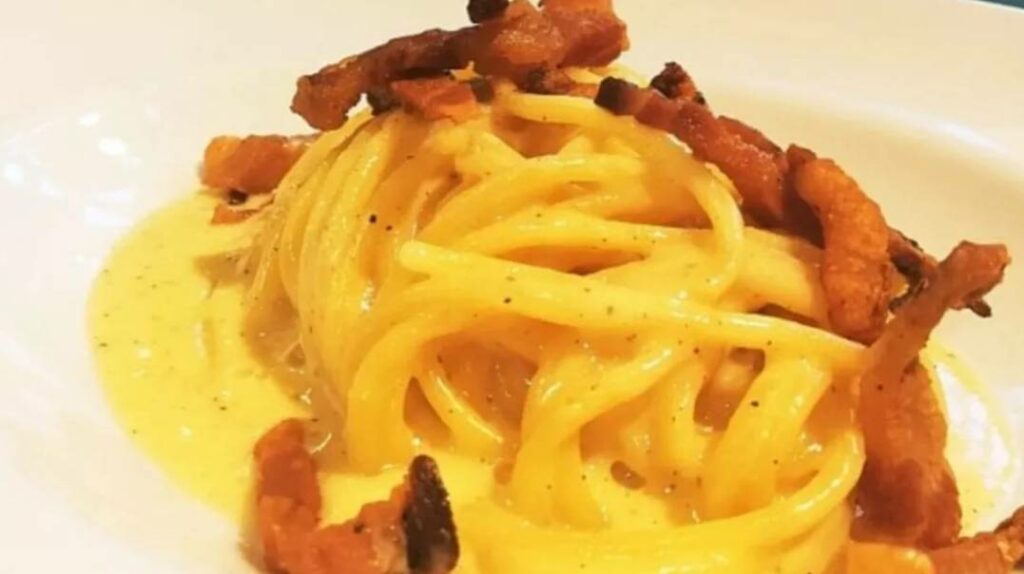
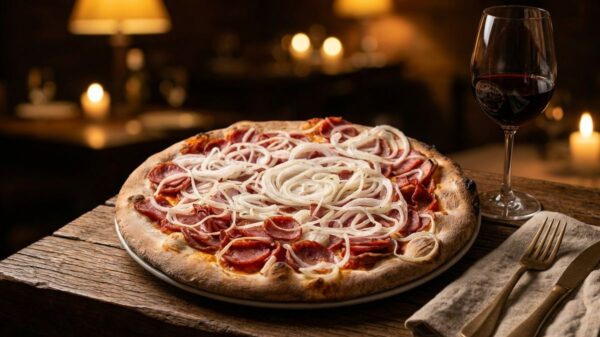
Then there is the fateful Carbonara-gate, in 2016: the French website Demotivateur publishes a very controversial recipe. Bacon, butterfly noodles, water and sliced onion are all cooked together in a pan of water, then whipped with cream and finally garnished with raw egg yolk and parsley.
Diplomatic relations between Italy and France were almost shaken.
It's a good thing that Italians don't know that in Brazil carbonara is made with cream.
In fact, there is no perfect carbonara, everyone has a recipe that they consider perfect.
The most popular version is the one with bacon, pecorino, egg yolk and pepper. But some use some other ingredients: these are the mistakes that carbonara purists, especially on social media, do not forgive.
FOLLOW ITALIANISM