



































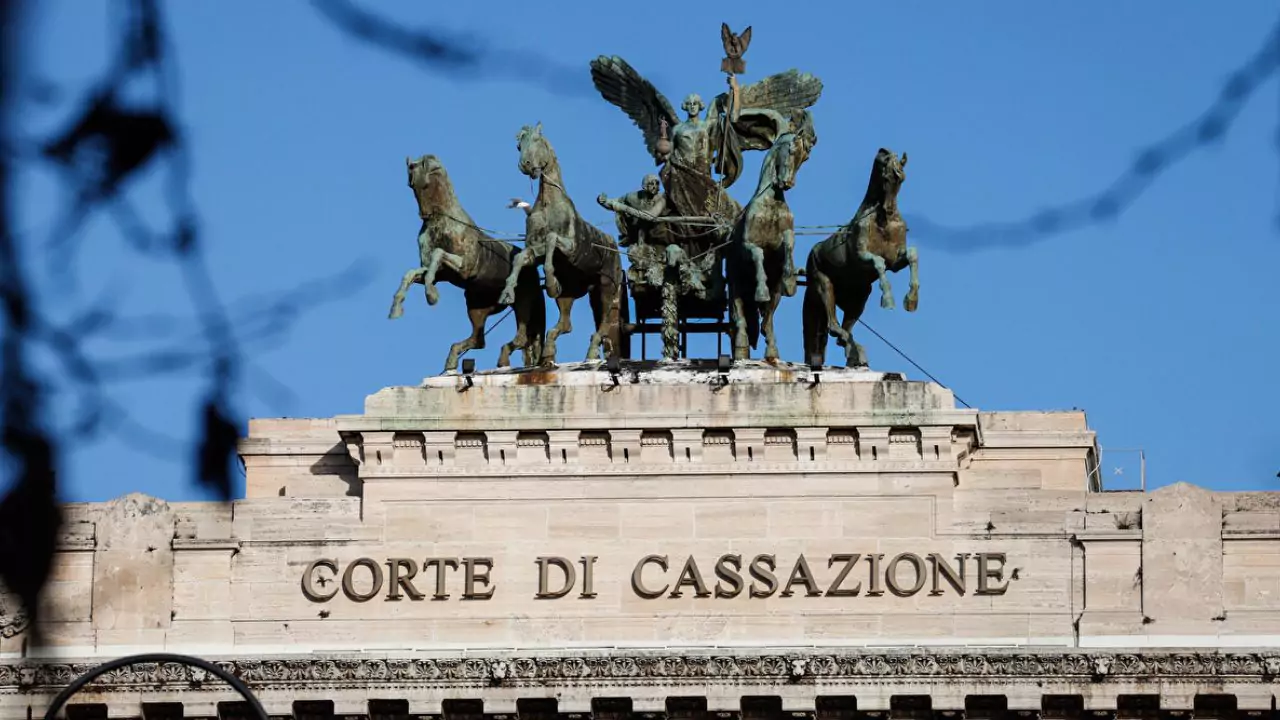
Italy's Court of Cassation is expected to rule in December on a procedural issue with the potential to impact hundreds of Italian citizenship applications: can essential documents be submitted after the case has been filed, or must all evidence be submitted with the initial application?
The discussion will take place in a process led by the lawyer. Marco Mellone, included among approximately 30 cases related to the citizenship of minors that will be examined by the Court in a non-public hearing scheduled for December 17, 2026.
“In this same case, this procedural issue will be discussed: is it possible to submit documents after starting the citizenship process? Or must everything be submitted at the beginning?” Mellone stated to [the newspaper/publication]. Italianism, this Saturday (8).
Although the main issue in this process is the citizenship of a minor, the discussion regarding the presentation of documents can have a much broader scope.

The Supreme Court reaffirmed: citizenship is born with the person.
- New legal front opened
- Processes can still be filed.
- Individual assessment before any decision.
Courts are already rejecting lawsuits based on documents submitted after the fact.
In recent months, Italian courts have begun rejecting lawsuits in which documents deemed necessary to prove lineage were submitted after the lawsuit had already been filed.
In Caltanissetta, for example, ruling no. 523, dated July 21, 2025, dismissed a lawsuit after deeming the submission of supplementary documentation to be late.
Other decisions from the same court followed a similar line of reasoning.
In Brescia, rulings issued at the end of 2025 also established that, in the simplified procedure, the plaintiff must submit, along with the initial appeal, the documents intended to prove the facts supporting their claim. Subsequent submission was deemed inadmissible in various cases.
The discussion stems from the rules of the so-called simple rite of knowledge, a procedure used in Italian citizenship recognition processes.
Under the current wording of the Italian Code of Civil Procedure, the subsequent production of documents may be admitted when this need arises due to the defenses presented by the other party. The controversy lies precisely in knowing the extent of this limitation and whether documents intended to supplement the original proof of a right can be accepted during the proceedings.
Race before the 600 euro fee
The problem took on a particular dimension at the turn of 2024 to 2025.
The Italian Budget Law for 2025 created a new unified contribution of 600 euros per applicant in legal proceedings for recognition of Italian citizenship. The fee came into effect on January 1, 2025.
Until now, the amount was calculated per case, according to the criteria applicable to cases of undetermined value. With the change, a lawsuit involving ten members of the same family, for example, now requires 6.000 euros in court fees alone.
With the new tax coming into effect, there was a rush to file lawsuits in the final days of 2024.
O Italianism It was found that, during this period, several lawsuits were filed before all the necessary documentation was obtained, with the expectation that certificates, translations, apostilles, or other documents could be added later.
It is precisely this group of processes that may be most affected if the Cassation confirms a rigid interpretation of the so-called documentary preclusion.
Revocation could establish guidelines.
The analysis scheduled for December may clarify whether the submission of essential documents must necessarily occur at the time of filing and under what circumstances a subsequent supplement may be permitted.

The Constitutional Court's decision changed the landscape. The new citizenship law will now be reviewed by the European Union's courts of justice.
The decision will be relevant for cases still pending in the courts and for appeals from applicants whose citizenship recognition was denied due to the late submission of evidence.
Mellone's case also involves another issue not yet examined by the United Sections of Cassation: the situation of a minor who was born in Italy and, according to the lawyer, was not bipolar from birth.
This discussion will be analyzed along with the other cases regarding the citizenship of minors on December 17th.