


































The Italian Leonardo da Vinci was probably one of the greatest geniuses in history. Although he is best remembered for painting the Mona Lisa, the Renaissance man was also an accomplished inventor.
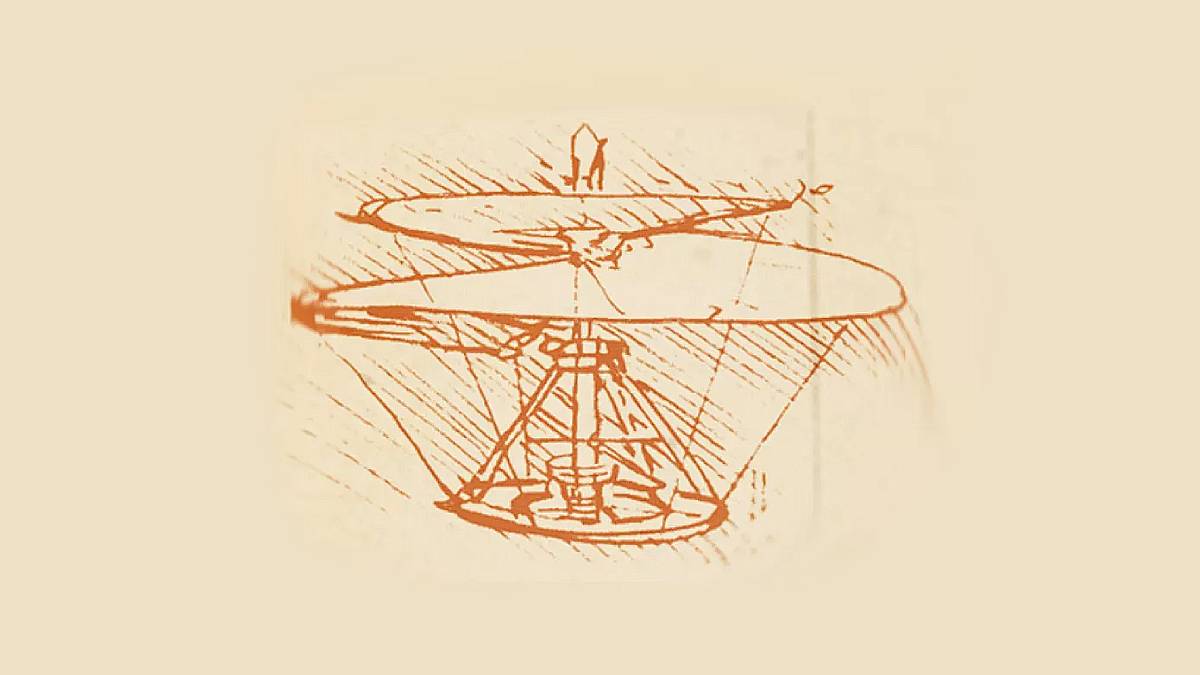
Among his inventions was a type of helicopter, a circular structure with a spiral in its upper part that, according to the creator, could “pierce” the air if it were rotated, making the artifact fly.
Now, more than 500 years after the invention, a member of the engineering team at the University of Maryland, in the United States, has created a drone that shows that, for a change, da Vinci was right in his prediction about the equipment.
For a year and a half, Austin Prete, a graduate student in aerospace engineering, worked on a drone called Crimson Spin. It is a drone with four rotors, but with spirals instead of propellers, inspired by da Vinci's design.

The Supreme Court reaffirmed: citizenship is born with the person.
- New legal front opened
- Processes can still be filed.
- Individual assessment before any decision.
Better than one helicopter 'normal' Prete created the prototypes with 3D printing and built the final version using aluminum and plastic. These are light materials, which da Vinci did not have access to more than half a millennium ago — certainly the inventor's original project would not get off the ground if it were built using materials such as wood and leather, and without a high-capacity energy source.
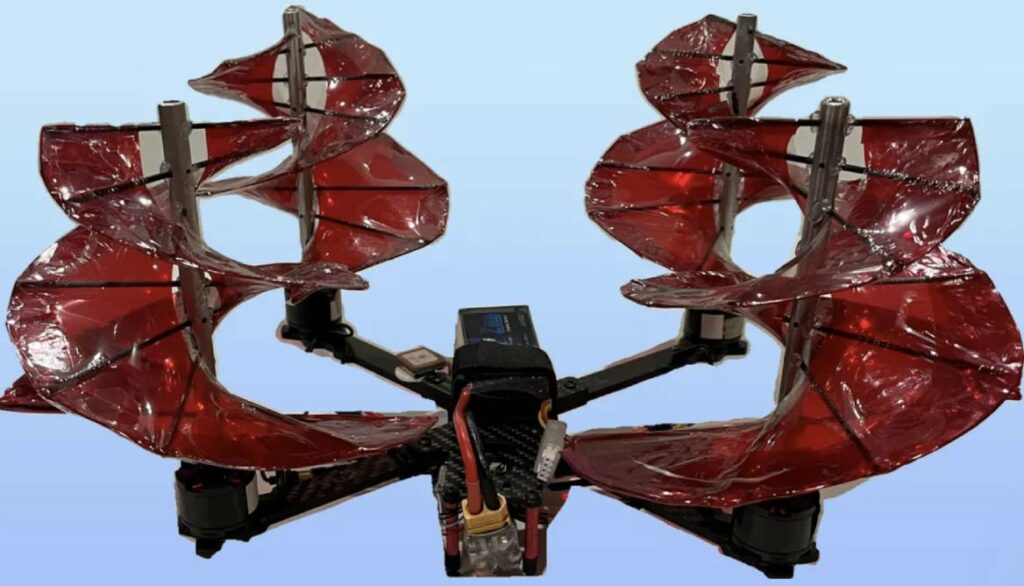
The final version of Crimson Spin was presented at an event called Transformative Vertical Flight 2022, in San Jose, California (USA). The event seeks to encourage creative solutions aimed at vertical flight.
The use of spirals in the rotors instead of propellers gave the Crimson Spin some advantages.
To maneuver, the drone's computerized system promotes small individual changes in the speed of the spirals, so that the aircraft can tilt or rotate.
Furthermore, the solution ends up offering an advantage over a more conventional design. When the spirals rotate, a kind of air vortex forms along the outer edge of the drone's flat surface. This creates a low pressure zone, which applies a vertical force upwards, causing the device to rise.
In practice, this means that the Crimson Spin is capable of raising less dust when taking off or flying low, in addition to being quieter in operation.
With this initial success, Prete believes that the solution can be used in larger projects. There are still a number of challenges, such as the additional weight of the spirals and also the potential for instability.
But, in any case, it is no exaggeration to say that, if he were alive, da Vinci would be proud. *With information from Cnet website and Uol.