






















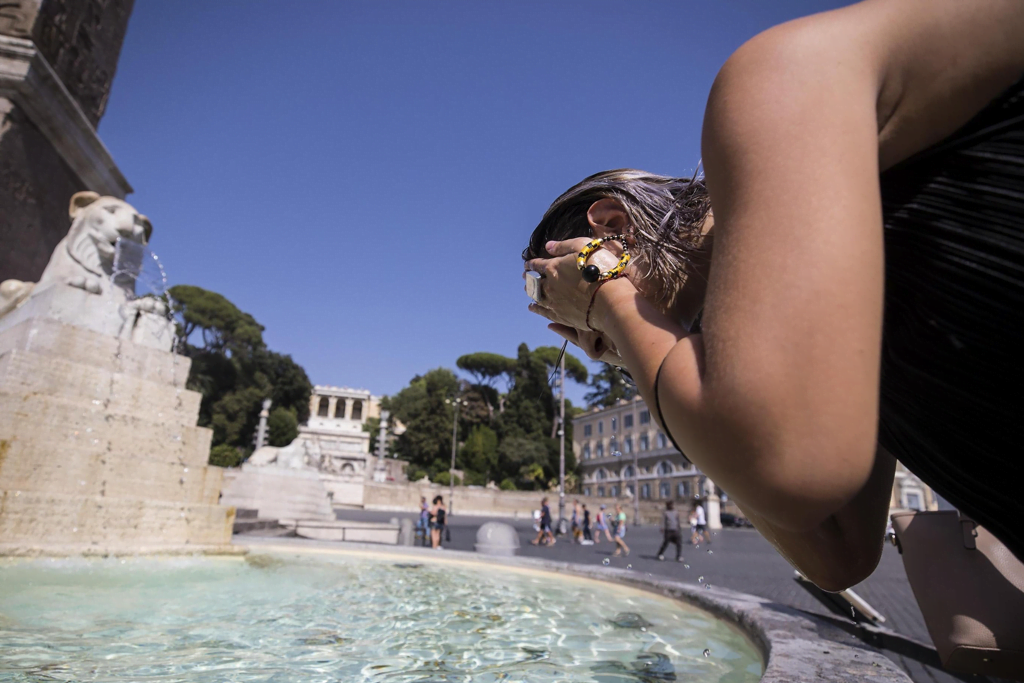
The report analyzed deaths from 2005 and 2016 in 23 Italian cities.
Severe heat waves and high temperatures in Italy have killed 23,8 people in a decade, according to a study by the Department of Epidemiology of the Lazio region's health system, which has set up an observatory on climate change.
In Rome alone, according to the research, 7,7 people have died due to heat-related issues since 2000. "Large urban centers are the places most at risk of suffering the consequences of climate change. That is why it is crucial to move forward and define policies and resources to adapt to a constantly changing climate," said the Italian environmental organization Legambiente.

Heat waves can cause harmful effects on health, especially in the elderly and sick people, when temperatures exceed 35ºC during the day and 25ºC at night. In urban areas, asphalt, cars and air conditioning systems can increase temperatures by 4 to 5 degrees.
This year, the heat reaches its peak in Italy this Friday (3) and, from Saturday onwards, temperatures are expected to remain high, but not much above normal levels for the period, which is statistically the hottest of the year. .
Meteorologists at the Epsom Weather Center say that, in general, “we will have temperatures between 30 and 35ºC and are unlikely to reach 37 or 38ºC”.
The decrease in heat is associated with the weakening of a high pressure zone over the Central African Mediterranean Sea, which will lead between today and tomorrow to an increase in general instability, with the risk of heavy rain, hail and gusts of wind. Over the weekend, instability tends to recede in central-northern Italy, while the south will be influenced by a vortex of instability that increases the risk of storms.
“If we want to reduce risks to people and avoid heat waves, new urban policies, resources and national coordination are needed to help mayors deal with the effects of climate change, which is happening on an unprecedented scale. We ask the government to focus on interventions relating to cities”, declares Edward Zanchini, vice-president of Legambiente.
By ANSA Brasil
FOLLOW ITALIANISM