



























The last name Serafim, written with the letter “m” is the Brazilian way of writing the Italian surname Serafin, very popular in the region of Veneto.
The origin of this family name goes back to the Latin term Serafim, which indicated celestial beings, or angels which had six wings. The Hebrew word Seraphim, which comes from seraph, means “fiery” or "incandescent".
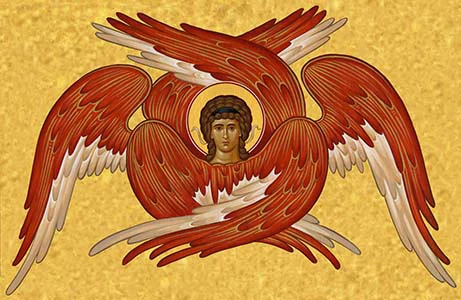
Six-winged angels
Os seraphim were known for having the first position in the celestial hierarchyl According to the mythology of angels, therefore, they had the right to the place closest to God.
According to the Bible, just as the cherubs, the seraphim had the function of glorifying the majesty and greatness of God.
Furthermore, the surname refers to the name of a Russian saint, known as Saint Seraphim of Sarov, who lived between 1759 and 1833. He is one of the most venerated saints in Russian Orthodox Church and also from the Russian Catholic Church.

Popularity of the Seraphim
There are records of the name Seraphim since medieval times, with some variations, such as a record found in documents dated 1164, where there is a mention of a patriarch of the Serafini family, one of the variants of this surname.
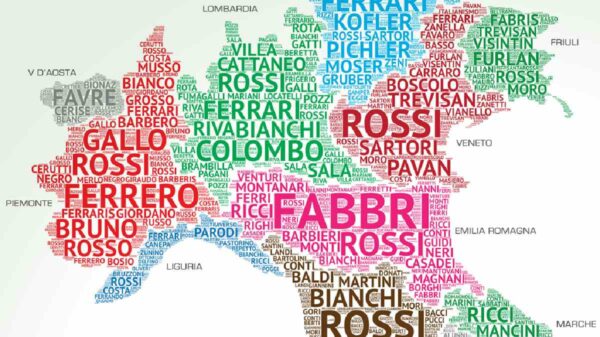
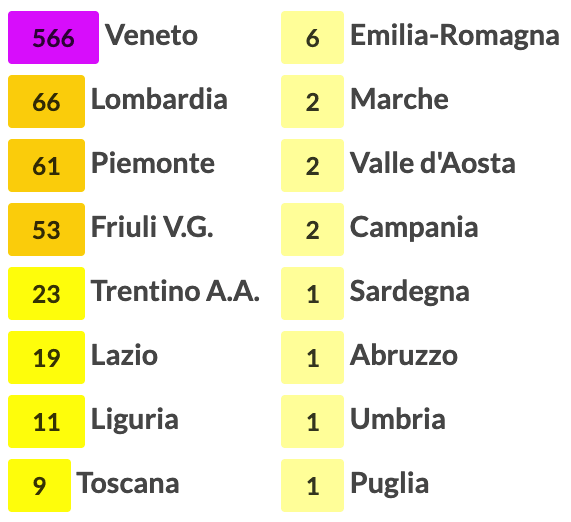
According to the site Cognomix, there are 824 families Serafin in Italy, 566 in Veneto, 66 in Lombardia and 61 in Piedmont.
This surname is the 230th most popular in the Veneto region, the 51st in the province of Treviso and the 3rd most common in the municipality of Fossalta di Piave (VE).
Variant
Cognomix indicates that the variant Will be finished has 4774 families in Italy, including 991 in Lazio, 690 in Emilia-Romagna and 589 in the region of Brands.
The surname Serafini is the 28th most popular in the Marche, the 6th in the province of Pesaro e Urbino and the most popular in the city of Lower Bleggio, in the province of Trentino.
It is worth remembering that there are other spellings and variants of this surname, such as Seraphim and Serafino, for example.
Geographical distribution of the surname in Italy:
Friar Seraphim
Among the personalities with a surname of Italian origin, perhaps the most famous is Friar Seraphim of Catania (1812-1887), a Capuchin missionary who arrived in Brazil from Sicilia, in Italy, through Recife, in 1841.
He went all the way Northeast preaching and building churches. He became famous for his kindness and gained a reputation as a miracle worker. The story goes that he came to Teresina in 1874 and was responsible, using alms from the community and donations from the Public Treasury, for the construction of the Church of Saint Benedict, completed in 1886.
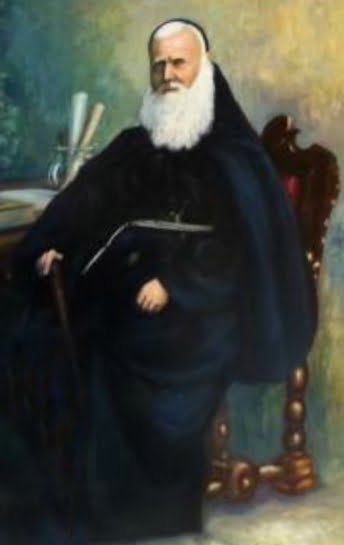
Avenida Frei Serafim, in Teresina, Piaui, the main thoroughfare of the State capital, pays a fair tribute to the pioneer, considered the first large population of the city.