

































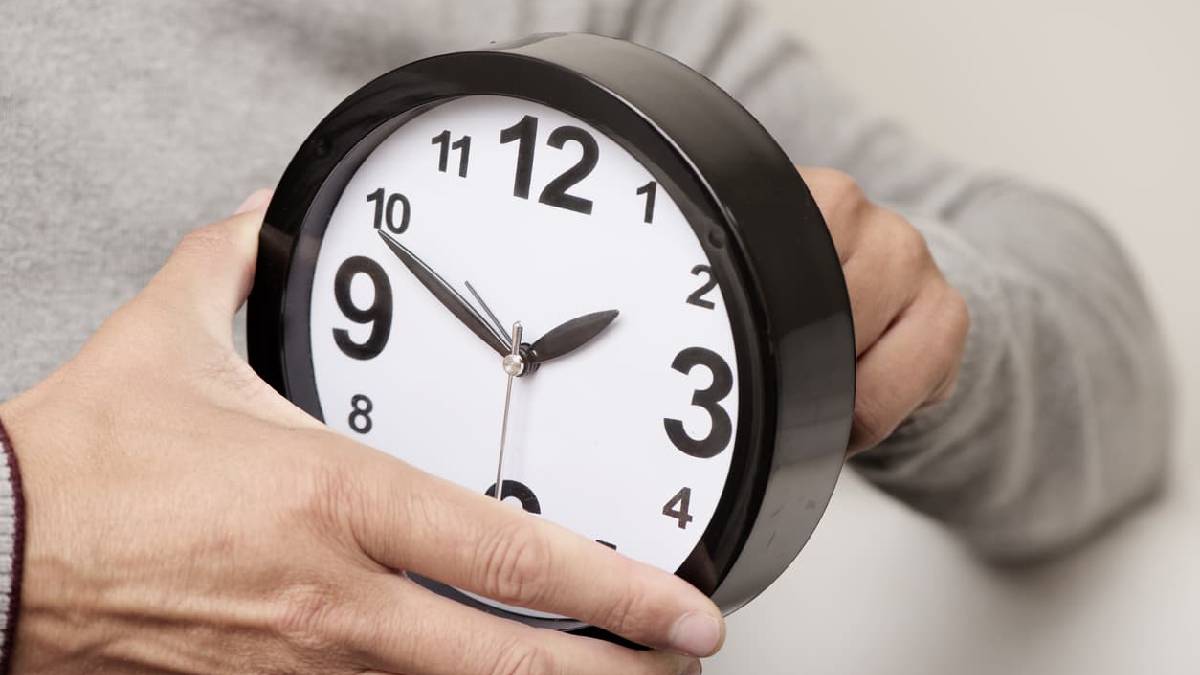
By April, Italy will have to decide whether to end daylight saving time or not
Two things are certain for now. The first is that within a few days, in the night between 24 25 and October, returns the winter time (Italians sleep an extra hour).
The second is that we will have to wait until April to find out whether in 2021 Italy will have this temporal ritual (the time change), which has existed for 54 years.
It is estimated that there will be a chaos of time zones in Europe.
Italy and summer time
Between July and August 2018, after public consultation (84% of votes in favor), the European Parliament approved the removal of the obligation for member countries to change from one hour to the next twice a year.
Each country will therefore be free to decide by April 2021 whether to adopt summer time, solar time (also called winter time) forever or continue alternating, as it is now. The discussion originated from the opposition between “northerners and southerners”.
The possibility of having more light with summer time benefits the countries of Southern Europe, but not those in the North, which, led by Finland and Poland, are pushing for the end of summer time, while those in the South are moving in the opposite direction. . France, for example, with a popular vote decided to maintain it throughout the year.
Instead, Italy leans towards the status quo: six legal months and six solar months.
The economic factor plays an important role in the Italian choice: daylight saving time allows Italians to turn on the lights an hour later. According to the Aeneas (National Agency for New Technologies, Energy and Environment), this system leads to a 0,2% savings of total consumption, a low number, but according to experts, significant in energy saving policies.
According to data from the Terna (Italian company that manages the electricity transmission network), between 2004 and 2017, summer allowed Italians to save 1 billion and 435 million euros.
The controversy
The political division in Europe shakes the sleep of defenders of the unrestricted free market. A change in approach by European countries could cause inconvenience for those traveling from one country to another, even for work, forced to move the needle several times.
To this could be added the higher cost of cross-border trade, a potential drop in productivity and problems in transport and communications.
In relation to Brazil, the time difference decreased from the current 5 hours to 4 hours. Good for those who have family or businesses in both countries.
READ TOO