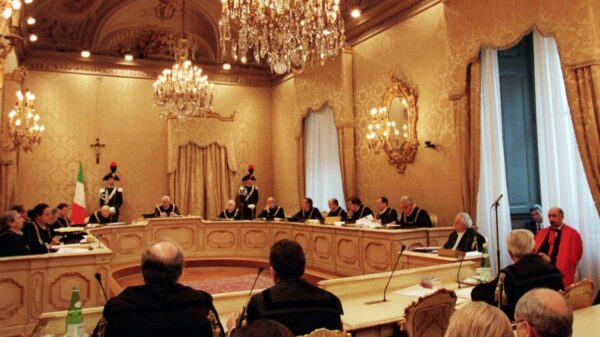





































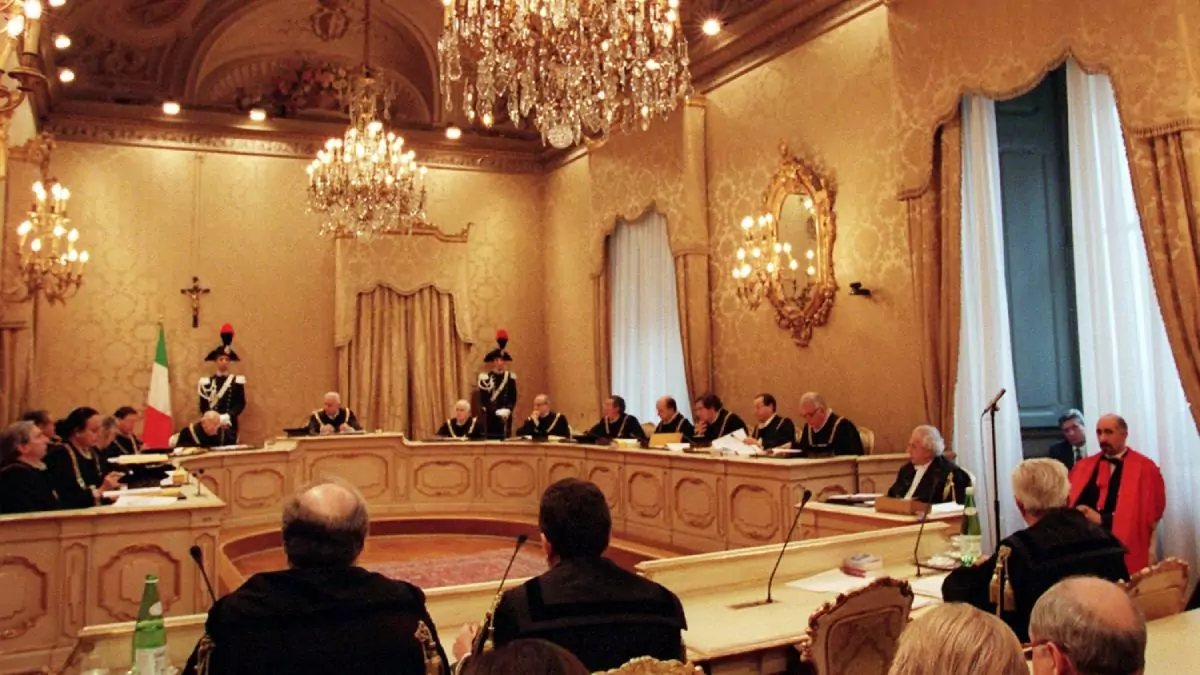
The Italian Constitutional Court has decided not to have the final say alone on one of the most controversial points of the new citizenship law.
This Thursday, July 23th, Ordinance 147/2026 was deposited.The Court suspended the judgment on Article 3-bis of Law 91/1992 and referred the question of its compatibility with European law to the Court of Justice of the European Union in Luxembourg. The decision was made on June 9.

The move is particularly noteworthy for one reason: less than three months ago, the same Court had said it didn't need to ask Luxembourg anything.
In judgment 63/2026, filed on April 30, the Court expressly rejected the request for a preliminary ruling from the CGUE. According to that judgment, existing European case law was already sufficiently clear to conclude that Article 3bis did not violate Articles 9 of the Treaty on European Union and 20 of the Treaty on the Functioning of the European Union. Therefore, the Consultation reversed its decision.
The same issue that was "resolved"
The contradiction appears in the text of the new decision itself.
The Court expressly admits:
“Questa Corte ha già dichiarato non fondata tale questione in sentenza no. 63 del 2026.”
That is: "This Court has already declared this issue inadmissible in judgment no. 63 of 2026."
And she makes a point of adding that she remains convinced of the interpretation adopted on that occasion.
According to Ordinanza 147, the Court "tuttora ritiene di essersi uniformata" (the Court is responsible for upholding the precedents established by the CGUE), that is, it continues to understand that its previous position was in accordance with European law.
That's precisely where the problem arises.
If European case law was so clear as to dispense with a consultation with the CGUE in April, why is it necessary to suspend the trial three months later and ask Luxembourg precisely about this point?
The Court does not directly address this contradiction.
It simply says that it has decided to proceed with the resending:
“in omaggio at the beginning of fair cooperation”
and in respect of the CGUE's exclusive competence to provide the definitive interpretation of Union law.
In plain Portuguese: the Italian Court continues to say that it believes it is right, but now prefers that Luxembourg confirm, or overturn, this interpretation.
What will Luxembourg have to answer?
Article 3-bis was introduced by Decree-Law 36/2025, later converted into Law 74/2025.
The rule establishes that anyone born abroad, including before the new law came into effect, who holds another citizenship and does not fall under one of the exceptions provided for in the provision, is considered to have never acquired Italian citizenship.
It is precisely this legal framework that has now arrived in Europe.
The question submitted by the Constitutional Court to the CGUE is whether Articles 9 TEU and 20 TFEU prevent legislation that establishes:
“a preclusion that originates all acquisition of the Italian city”
For those born abroad, including before the entry into force of Article 3-bis, they possess another citizenship and are not protected by the exceptions provided for by law.
The wording directly addresses the most explosive aspect of the reform: its effects on people born well before March 2025.
Revocation or citizenship that never existed?
The courts that brought the matter before the Constitutional Court saw the problem differently.
The Mantua Court argued that the new rule could represent an "implicit revocation" of citizenship for people who had already acquired the status through descent, even though they had not yet obtained formal recognition.
The Campobasso Court was even more direct and described the mechanism as a:
“revocates ex tunc of an acquired right”
In other words, the retroactive withdrawal of a right that has already been acquired.
The Constitutional Court rejected this interpretation in ruling 63.
According to the Consultation, Article 3-bis did not revoke an already existing citizenship. Legally, it created a "preclusione originaria," meaning that certain people are considered as never having acquired citizenship.
This distinction was fundamental to the Italian government's first victory.
It was precisely because it considered that there was no true "loss" of citizenship that the Court understood that European jurisprudence requiring proportionality control would not apply when someone loses national citizenship and, consequently, Union citizenship. It will be Luxembourg that will say whether this construction really holds up under Union law.
The law has not been repealed.
It's important not to turn Thursday's decision into something it isn't yet.
The Constitutional Court did not declare article 3-bis unconstitutional..
The Court of Justice of the European Union has also not yet declared Italian legislation incompatible with European law.
What happened is legally relevant for another reason: a question that the Consultation had considered sufficiently clear to be decided without consulting Luxembourg has now been officially placed in the hands of European judges.
The Court ordered the suspension of the trial and instructed that the decision and the case files be sent to the CGUE secretariat.
Only after a response from the European Union can the trial proceed in Italy.
The problem created by the Court itself
For Giorgia Meloni's government, the decision does not yet represent a defeat.
But it's also far from irrelevant.
Judgment 63/2026 offered an extremely strong defense of the reform by stating that Article 3-bis did not remove citizenship from anyone, because its recipients should be considered legally as people who never acquired that status.
Ordinance 147/2026 formally upholds this reasoning, but removes from the Italian Constitutional Court the exclusive control over its substantiation in European law.
This is the most important political and legal aspect of the decision.
After saying there was not enough doubt to ask, the Court is now asking.
After dismissing the European objection, it acknowledges that the final interpretation belongs to Luxembourg.
And after practically closing that door in ruling 63, the Constitutional Court itself has just reopened it.