






Known for its rich gastronomy, Italy has an incredible variety of typical Christmas sweets.
Zeppole, pandoro, pandolce, struffoli… We have selected 25 sweets from the North to the South of Italy. But the list is much longer.
Tasty homemade, artisanal and industrial preparations, which accompany the Christmas festivities with their flavors, and of which in Italy there is a wide range in all regions.

Brucellato
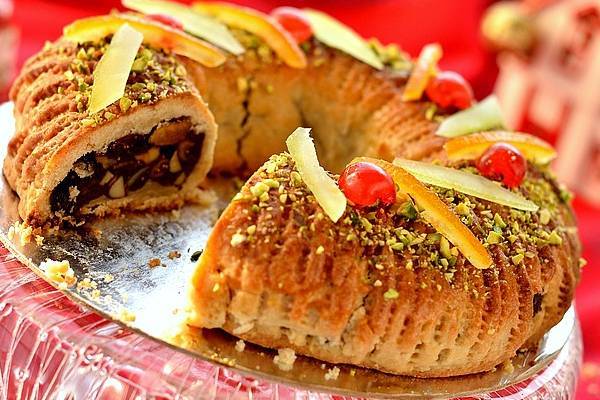
Buccellato or cucciddatu is a traditional Sicilian sweet. It's a sweet treat with a thin crust. It is decorated in various ways and filled with dried figs, raisins, almonds, orange peel and other ingredients, which vary depending on the place where it is prepared. Made in the oven, buccellato keeps for a long time and is present on Sicilian tables throughout the Christmas period.
22 typical Italian Christmas sweets
pandoro
“Pandoro” is an Italian cake, which is eaten as a dessert, especially after Christmas dinner. It comes from “Pan d'Oro”, or golden bread. Pandoro was already described in the 18th century. The cake was found in the upper circles of Venice. A century later, it became the specialty of Verona, where the recipe was refined.
Rubber/pvc ankle boots
In Piedmont, you can't miss the “tronchetto di Natale”, a sweet born from an ancient legend, in which wood firewood was supposed to burn slowly in the chimney to bring luck. The ingredients are chestnut cream and chocolate, united by egg, butter, mascarpone cheese and whipped cream.
Crescenzin
Crescenzin is a variant of black bread from Coimo, in Val Vighezzo. In the past it was prepared only twice a year and usually at Christmas as a gift brought by Jesus. It is made with nuts, figs and raisins.
Spongata
In Emilia-Romagna, the emphasis is on “spongata”, a Christmas pie baked in butter, which also includes honey, spices, dried fruit, candied fruits, or cooked in jelly.
Canarico, cannariculi or turdilli
Known in Brazil as “canarico”, cannariculi (or cannaricoli) is a Christmas sweet typical of the Calabrian culinary tradition. Depending on the region of Italy, they are also called turdilli. The main ingredients are: wheat flour, wine, oil, cinnamon and clove powder, yeast, sugar and honey.
pandolce
Genoese pandolce or simply pandolce is a typical product, especially from Liguria. Ancient tradition says that it should be brought to the table by the youngest member of the house, served with a laurel branch in the middle, a symbol of luck and well-being.
Panpepato
Panpepato or pampepato is a round and sweet cake typical of the Province of Ferrara, Siena, Province of Terni, Sabina and Valle Latina. Panpepato is a type of panforte.

Panforte
Panforte is a typical Italian Christmas sweet, which contains almonds, hazelnuts and candied fruits, as well as a topping sprinkled with icing sugar, whose origins are very old: the first written records date back to the 11th century. At that time it was called pane natalizio, pane aromatico or pan pepatus.
parish
Parrozzo or pan rozzo is a traditional cake from the Abruzzo region of Italy. It is traditionally served as a Christmas dessert, but is also enjoyed year-round. Parrozzo is officially designated as a traditional food product of Abruzzo.
Micooula

In Vale d'Osta, the typical sweet bread for the festivities is “micooula”, prepared with wheat and rye, as well as chestnuts, dried figs and raisins.
Caggiunitti
Caggiunitti are delicious fried sweets, similar to ravioli, traditionally eaten on Christmas Eve, but in fact they accompany the entire Christmas period. It is typical of Abruzzo, and its filling contains honey, chestnuts, dark chocolate, chickpeas, rum and cinnamon.
Frustingo
Frustingo or frostengo is a Christmas sweet from the Marche region. and is made with dried fruits and figs.
Roman pangiallo
O Roman pangiallo It is a typical dessert for celebrations of ancient origin, dating back to imperial Rome. It is commonly prepared on the day of the winter solstice as a good omen for the return of long sunny days, a shape that somewhat resembles this dessert. It is common in Umbria, Tuscany, and generally throughout central Italy.
Subiachini
In the early 1900s, these cookies began to be made in the village of Subiaco, initially reserved for an upper-middle class, but which, after the war, spread even among the poorest. Subiachini are characterized by different shapes: dove, rhombus, elliptical and recently also elongated and are made with simple ingredients.
zeppole
Zeppola or zeppoli in the plural, St. Joseph's cake, sfinge or Bignè di S. Giuseppe, is a puff pastry typical of the regions of Rome and Naples. Also served in Sicily, the sweet is a classic of Italian cuisine.
susamielli
Susamielli are Neapolitan cookies typical of Christmas time in Naples, but found throughout Italy. Made in the shape of an “S”, the sweet is prepared with sesame and honey and the name derives from the union of these two ingredients. They are also known by the name of sapienze because in the 17th century the Poor Clares of the Convent of Santa Maria della Sapienza specialized in preparing these sweets.
Mostaccioli
Mustacciuoli is a traditional pasta from Naples, usually served at Christmas time. Mustaccioli takes the shape of a parallelogram and consists of a soft, spiced, cake-shaped interior covered in chocolate.
struffoli
Struffoli are sweet dough balls, fried and then dipped in honey and decorated with colorful sprinkles and candied fruit. It's a Neapolitan tradition for Christmas.
Roccoco
Roccocò is a typical Neapolitan dessert. It is made with almonds, citrus fruits and lots of spices (pisto) that give it a unique flavor. It's a pretty hard cookie, but it can be softened by dipping it in sparkling wine or limoncello.
Cicirata
Cicirata, or cicircchiata, is a typical dessert from Calabria and Basilicata, prepared for the Christmas holidays. It's very similar to struffoli.
Cartellate
Cartellate is a typical Puglia Christmas sweet, made from dough with flour, olive oil and white wine. Its cut ribbons, made of very thin dough, are closed in the shape of roses or crowns that resemble, in the popular imagination, the crown of thorns of Jesus Christ. Fried, they can be served with vincotto or poured honey and, finally, decorated with sugared almonds and dried fruits.
Pan di sapa
Pan di sapa is one of the most traditional sweets in Sardinia. In Cagliari it is produced mainly during the “Tutti i morti” celebrations, but it is also prepared for Christmas. Every corner of Sardinia has its own way of preparing Pan di sapa. In Apulia it is known as “vincotto”.
Buccellato
Buccellato or cucciddatu is a traditional Sicilian sweet. It is a sweet with a thin crust. It is decorated in various ways and filled with dried figs, raisins, almonds, orange peel and other ingredients, which vary depending on the place where it is prepared.
Made in the oven, buccellato keeps for a long time and is present on Sicilian tables throughout the Christmas period.
Nougat
Nougat is a typical Italian sweet, especially for Christmas. Made from egg whites, honey and sugar, it is filled with almonds, walnuts, peanuts or roasted hazelnuts. Some are covered in chocolate.
cubaita
Cubaita, or cubbaita, is a recipe that derives from Arabic “quibbiat” which means “almond”.
It is a nougat made from almonds, sesame and honey. And it is a popular dessert throughout Sicily, even though they prepare different types. However, the best known are those prepared with sesame and chopped almonds. A better-known variant is “giggiulena”, in which crunchy almonds are covered with sesame seeds and honey.
Do you know another typical Italian Christmas sweet? Comment below.
FOLLOW-US