


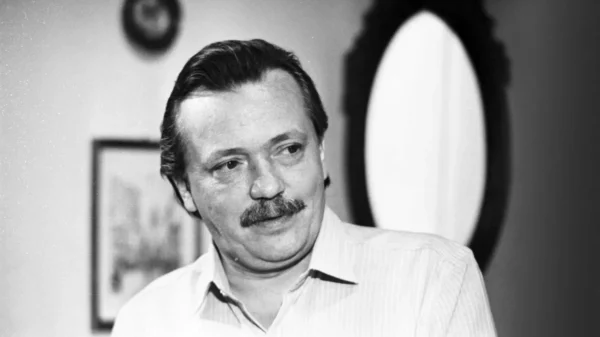






The president of Italy, Sergio Mattarella, 80, was re-elected this Saturday (29) for another seven years in office.
The current head of state won 759 votes in the electoral college (out of a total of 1.009), which is made up of 630 deputies, 321 senators and 58 regional delegates. Mattarella's victory was applauded by the parliamentarians present in the Chamber.
With 90 votes, Carlo Nordio, a 74-year-old former judge, was the second most voted.

The result puts an end to a week of deadlock in negotiations between the parties to reach a consensus name, but also exposes divisions within Parliament and Prime Minister Mario Draghi's government.
Re-elected only on the eighth ballot, the president had given several indications that he did not want to continue in office and had even rented an apartment in Rome for when he left the Quirinal Palace.
Mattarella, however, was the only name capable of garnering the support of all parties in the national unity government headed by Draghi, a heterogeneous coalition that ranges from the left to the extreme right.
The president enjoys wide sympathy in society and politics, support that had already been made clear in his votes in Parliament: he had 336 votes in the sixth ballot and 387 in the seventh, even with the parties recommending abstention.
In 75 years of the Republic in Italy, only one president had been re-elected, precisely Mattarella's predecessor, Giorgio Napolitano, who won his second term in 2013 and resigned around 20 months later.
Representative Fausto Longo and Senator Fabio Porta, representatives of Italian-Brazilians, voted for the re-election of the President of ItalySergio Mattarella.
Re-electing the president of Italy was not an option Roberto Lorenzato (Liga), another Italian deputy elected in Brazil. “Mattarella is a high profile, but not my personal candidate,” he told Italianismo. He preferred not to reveal his candidate.

Failed attempts
The agreement was precipitated by the right's attempt to boost the president of the Senate, Elisabetta Casellati, nominated last Friday by the moderate Força Italia (FI), by Silvio Berlusconi, and by the ultranationalists League, by Matteo Salvini, and Brothers of Italy ( FdI), by Giorgia Meloni.
However, Casellati obtained only 382 votes in the fifth ballot, far short of the approximately 460 that the right should have in Parliament. After this result, FI and Liga, which are part of the Draghi government, returned to negotiating with the other parties in the situation, leaving Meloni aside.
“Salvini proposed asking Mattarella to serve a new term as president of the Republic. I don’t want to believe that”, declared the far-right deputy even before the final vote – the Brothers of Italy is the only major opposition party in Parliament currently.
“The parliamentary right no longer exists, it is necessary to recreate it from scratch, out of respect for people who want to change”, stated Meloni, adding that he will fight in defense of direct elections for president of the Republic.
There were also attempts to reach an agreement to elect the centrist senator Pier Ferdinando Casini, the head of the secret services, Elisabetta Belloni, or the Minister of Justice, Marta Cartabia, but they all faced resistance in one or more parties from the allied base.
Italy never had a woman as President of the Republic or Prime Minister.
Tasks
Despite having a more institutional than political role, the president is far from being a merely ceremonial figure and has the power to influence the country's direction, appointing prime ministers, blocking appointments of ministers and even demanding the approval of laws in the nation's interest.
Mattarella himself is an example of the importance that a head of state can gain in delicate moments.
In 2018, the populist 5-Star Movement and League parties won the elections and tried to nominate an openly anti-euro professor, Paolo Savona, as Economy Minister, but the president, a defender of European integration, refused to appoint him so as not to feed Euroscepticism in Italy.
The president was even threatened with impeachment and accused of “high treason”, but he did not back down and managed to get M5S and Liga to nominate another minister – both parties voted for his re-election this Saturday.
At the beginning of 2021, after the fall of Giuseppe Conte, the president called on the former president of the European Central Bank Mario Draghi to form a government and put an end to a political crisis that threatened to lead the country to early elections.
With Mattarella's support, Draghi managed to form a coalition of national unity and was even considered to replace the current president, but saw his chances destroyed by the difficulty of finding a new prime minister to govern until the end of the legislature, in 2023. .
Profile
Mattarella was born in Palermo, is a widower and has three children: Laura, Francesco and Bernardo Giorgio, the first of whom usually accompanies her father to public engagements.
A former exponent of the extinct Christian Democracy, the head of State was a deputy for 25 years and minister of Relations with Parliament (1987-1989), Education (1989-1990) and Defense (1999-2001).
Furthermore, he was vice-president of the Council of Ministers between 1998 and 1999. His last political party was the Democratic Party (PD), the largest center-left force in Italy, which he left in 2009.
Two years later, he was appointed judge of the Constitutional Court, where he would remain until the beginning of 2015, when he became the first Sicilian elected president of the Republic.
Mattarella's older brother, Piersanti, was murdered by Cosa Nostra in 1980, when he was governor of Sicily, for having contravened the interests of the mafia, a crime that led the jurist to a political career. (ANSA)
FOLLOW-US



