





















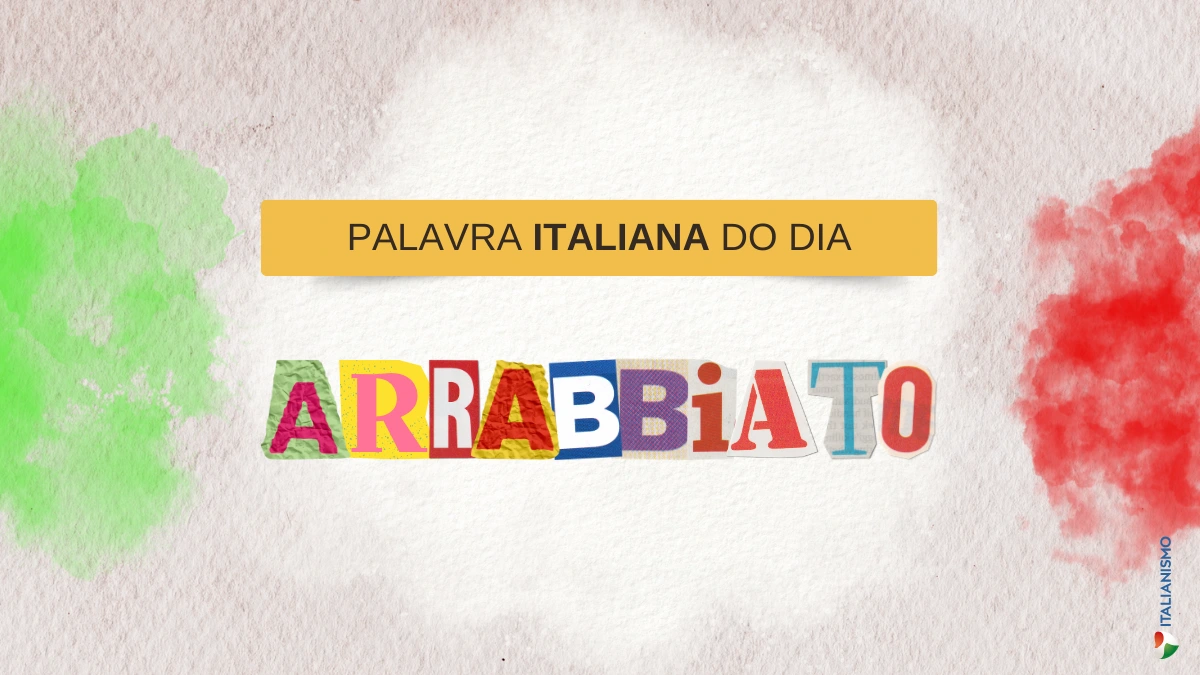
In Italy, everyday life often unfolds with intensity, and one expression that captures this emotional fervor is the word “arrabbiato or angryta".

If you have ever encountered angry drivers in a busy urban center or faced an inflexible public servant (9 out of 10), you may have witnessed the state of someone described as angry: enraged or irritated.
We will explore this Italian emotional expression that goes beyond anger, revealing cultural nuances and peculiar uses, from tantrums to tasty dishes like suck all'arrabbiata.

[responsivevoice buttontext=”” voice=”Italian Female” buttonposition=”after”]I didn't see any more of the arrabbiata.[/ responsivevoice]
He had never seen her so angry.
[responsivevoice buttontext=”” voice=”Italian Female” buttonposition=”after”]Giorgio doesn't respond to my phone call, I believe he has an arrangement with me.[/ responsivevoice]
Giorgio doesn't answer my calls, I think he's mad at me.
If arrabbiato/a means furious, the reflexive verb get angry means to get angry or become enraged.
[responsivevoice buttontext=”” voice=”Italian Female” buttonposition=”after”]My sleep arrabbiata con lei perché mi ha fatto fare late at work.[/ responsivevoice]
I was angry with her because she made me late for work.
[responsivevoice buttontext=”” voice=”Italian Female” buttonposition=”after”]I meowed if I slept so much when I reached school.[/responsivevoice]
My parents were very angry when they found out I was skipping school.
The noun anger means both 'rage' and 'rage', presumably because observers noticed that patients infected with the disease began to behave furiously and foam at the mouth. Both meanings derive from the Latin rabere, delirious.
[responsivevoice buttontext=”” voice=”Italian Female” buttonposition=”after”]Si è scatenato in a rabbia.[/ responsivevoice]
He was furious.
[responsivevoice buttontext=”” voice=”Italian Female” buttonposition=”after”]I didn't avvicinatevi a quel cane, potrebbe avere la rabbia.[/ responsivevoice]
Don't go near that dog, he might have rabies.
In addition to 'bravo', the word angry after a noun can also (less usually) describe someone who is extremely obstinate or relentless in their beliefs or actions, or who does something to excess.
[responsivevoice buttontext=”” voice=”Italian Female” buttonposition=”after”]It's an animalistic arrabbiata.[/ responsivevoice]
She is a staunch animal rights activist.
In addition to 'bravo', the word angry after a noun can also (less usually) describe someone who is extremely obstinate or relentless in their beliefs or actions, or who does something to excess.
[responsivevoice buttontext=”” voice=”Italian Female” buttonposition=”after”]It's a giocatore d'azzardo arrabbiato.[/ responsivevoice]
He's a furious gambler.
And if you've already sampled the home-style cooking in the Lazio region around Rome, you may have tried the... suck all'arrabbiata — a simple sauce made from tomatoes, garlic, parsley, olive oil and pepper flakes.
It gets its name from its strong flavor and the fact that it is a little spicy, which is very rare in Italian cuisine outside of Italy. Calabria region.
[responsivevoice buttontext=”” voice=”Italian Female” buttonposition=”after”]Do we manage the penne all'arrabbiata per scene?[/ responsivevoice]
Let's eat penne pasta with arrabbiata sauce at dinner?
FOLLOW-US