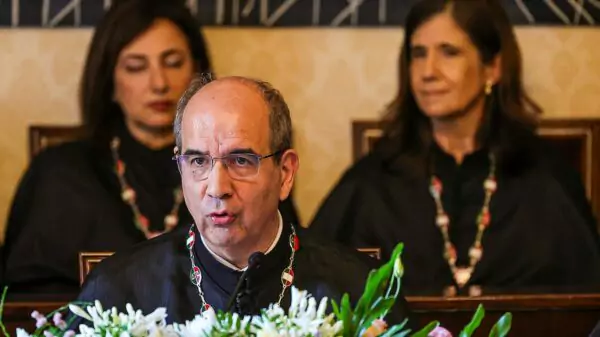








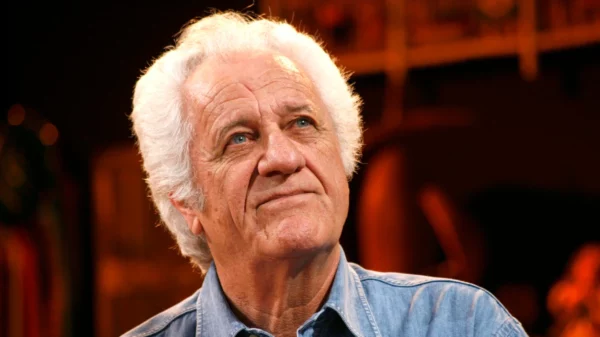



















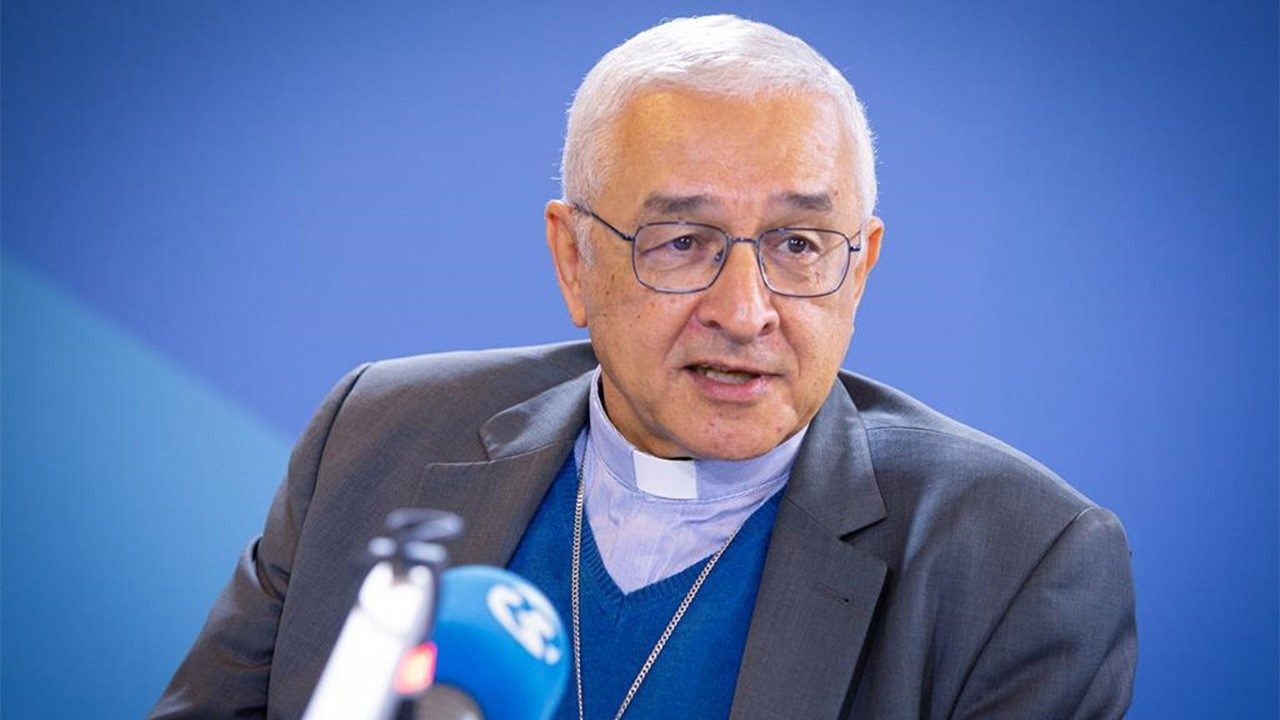
The president of the Portuguese Episcopal ConferenceDom José Ornelas stated that the proposal of nationality law presented by the Government "It is not rational," he said, arguing that immigrants integrated into Portugal should receive equal treatment under the law.
In an interview with the Ecclesia Agency, published this Saturday (11), the person in charge of Catholic Church in Portugal He said that the Constitution does not allow citizens with incomplete rights. According to him, the loss of nationality, under the terms discussed, does not respect this principle.
“A citizen who has arrived from other latitudes and other cultures, who is accepted into our political system and integrates into it, must also be treated fairly. There are no half-citizens. Our Constitution does not provide for citizens with half the rights and others who lose them. If someone fails in what is proper to a citizen, they must suffer, like any other citizen. If they have penalties to bear, they must bear them, but they do not lose their nationality for that. It is not rational,” said Bishop Ornelas.
The president of the CEP acknowledged, however, the need to regulate immigration. According to him, this control is also important to protect immigrants themselves from criminal networks that take advantage of the vulnerability of those arriving in the country.

The Supreme Court reaffirmed: citizenship is born with the person.
- New legal front opened
- Processes can still be filed.
- Individual assessment before any decision.
The bishop argued that the State must regulate the policy of openness, but also guarantee adequate reception and processes within an acceptable timeframe. He stated that there is still a long way to go before immigrants feel like full citizens in Portugal.
“We know that there has been a transformation of the bodies that control all of this, which takes time, and some improvement has been made, but there is still a long way to go to give those who are welcomed the possibility of feeling like full citizens and not just in a half-hearted way.”
Criticisms regarding the lack of "rationality and humanism"
Without prejudging the constitutionality of the proposal, Dom Ornelas said that this assessment will be up to the Constitutional Court. Even so, he stated that the debate lacks "rationality and humanism."
“The Constitutional Court will decide,” the official noted, before arguing that a society loses its reason when it fails to ensure justice for all.
Populism and protest voting
In the interview, he also commented on the change in political and parliamentary landscape in Portugal since he took over as president of CEP in 2020. According to him, this process is linked to a disillusionment with policies that do not address the real problems of the population.
“There is disillusionment with the implementation of policies that forget to be among the people, with a centralism that is so often carried out with a disregard for the work demanded of the municipalities closest to the population, and to whom the means to do so are not given,” he criticizes.
Speaking about the rise of populism, the president of the Portuguese Episcopal Conference stated that this discourse does not seek justice, but rather electoral results.
"Populism presents a remedy that has nothing to do with the disease. The problem with populism is that it doesn't seek a just solution; it seeks a solution that wins votes, adapted to solving a reality, but not with the goal of finding justice for all."