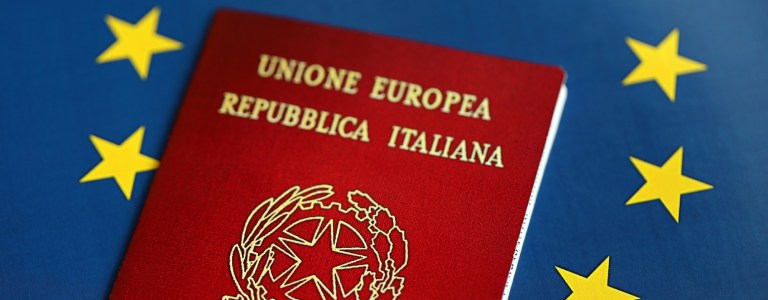



























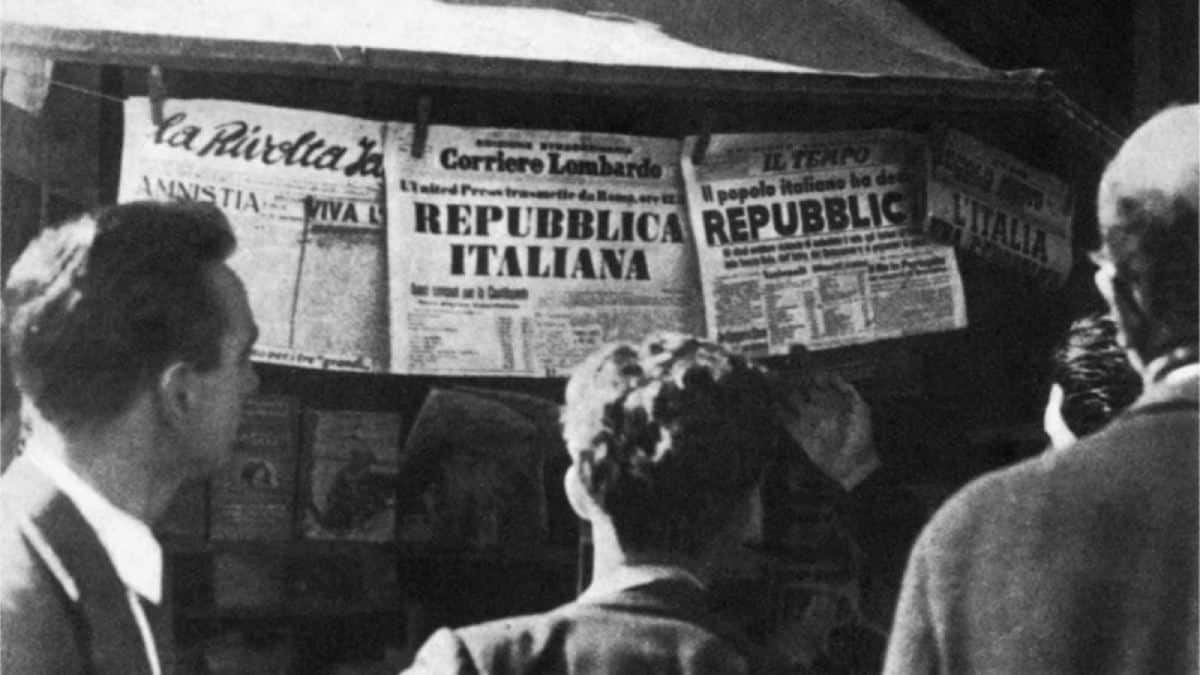
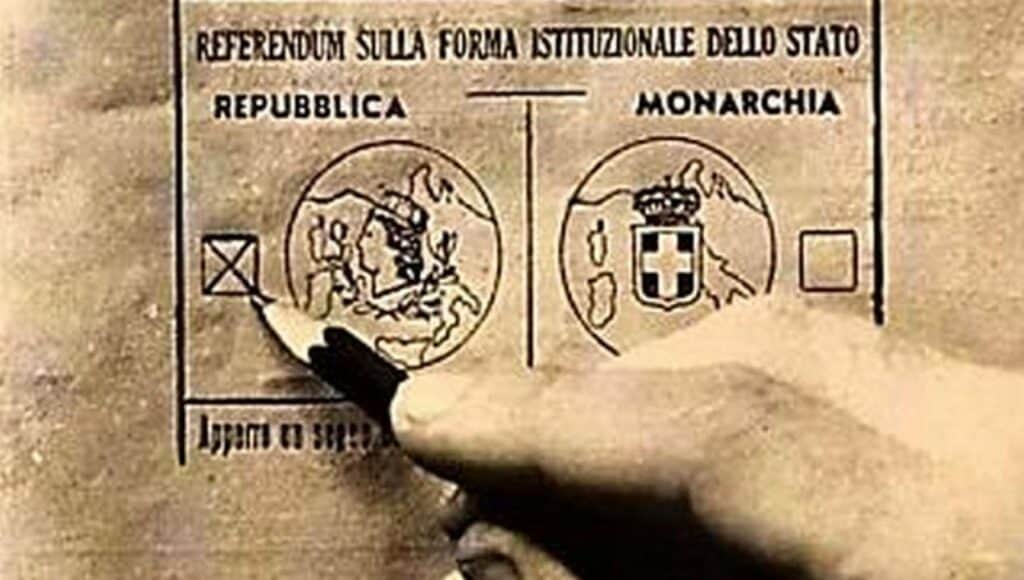
Italy celebrates this Tuesday (2) the 80 years since the founding of the RepublicThe date refers to the institutional referendum of June 2, 1946, when Italians went to the polls to choose between a Republic and a Monarchy, following the fall of fascism and the end of World War II.
In the same vote, voters also chose the members of the Constituent Assembly, responsible for drafting the new Constitution. It was the first national political consultation with the participation of Italian women, in a process of universal male and female suffrage. Before that, they had already voted in the administrative elections held in the same year.
The consultation concluded a transition period that began after the fall of Benito MussoliniThe conflict began in 1943 and deepened with the armistice announced on September 8 of that year. From then on, the country was divided between the Kingdom of the South, supported by the Allies, and the Italian Social Republic, a fascist regime created in the North under German tutelage. This was followed by the Nazi occupation, the Partisan resistance ...and a civil war that left deep scars on Italian society.
On May 9, 1946, King Vittorio Emanuele III abdicated in favor of his son, Umberto II. The decision sought to preserve the continuity of the House of Savoy, but was seen as belated by parties linked to the National Liberation Committee. The monarch was held directly responsible for the crisis of the liberal regime, for the appointment of Mussolini in 1922, and for the institutional support of fascism for two decades.
Republican North, Monarchist South
The vote revealed a deep fracture in the electorate, primarily based on geographical boundaries. The North voted overwhelmingly for a Republic, while the South leaned towards a Monarchy.
This division reflected distinct historical experiences. In the North-Central region, the German occupation, the Italian Social Republic The Resistance's struggle reinforced the link between anti-fascism and the republican option. In the South, liberated earlier by the Allies and less marked by the partisan war, conservative political networks, traditional ties with the monarchy, and greater distrust of left-wing republican forces weighed heavily.
Voter turnout was extremely high. Of the 28.005.449 eligible voters, 24.946.878 cast their ballots, equivalent to 89,08%.
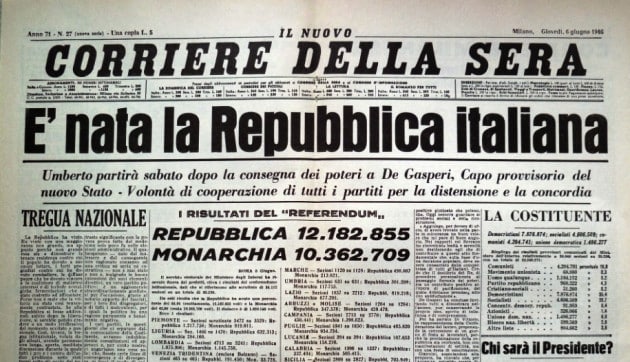
Among the valid votes, 12.718.641 were for the Republic, or 54,27%, and 10.718.502 for the Monarchy, or 45,73%. The difference confirmed the republican victory, but also showed that the choice was far from consensual.
The transition occurred in a tense atmosphere, with accusations of fraud, appeals, and complaints about the legality of the referendum. The Court of Cassation proclaimed the first results on June 10th. Three days later, amidst the institutional crisis, Umberto II left Italy, ending the reign that would earn him the nickname "King of May." After reviewing the appeals, the Court definitively confirmed the Republican victory on June 18, 1946.
The new Republic was therefore born not as a result of a peaceful break, but of a difficult choice, marked by territorial divisions, memories of war, the monarchy's responsibility in the face of fascism, and the effort to democratically rebuild a devastated country.