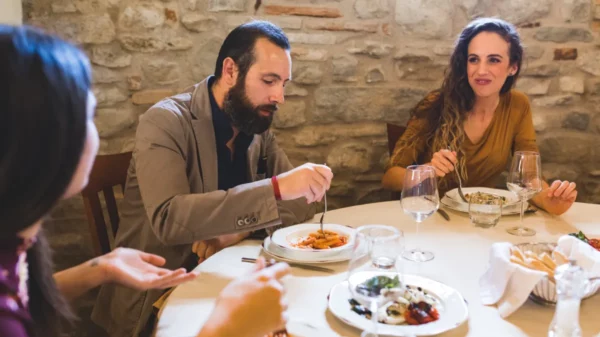












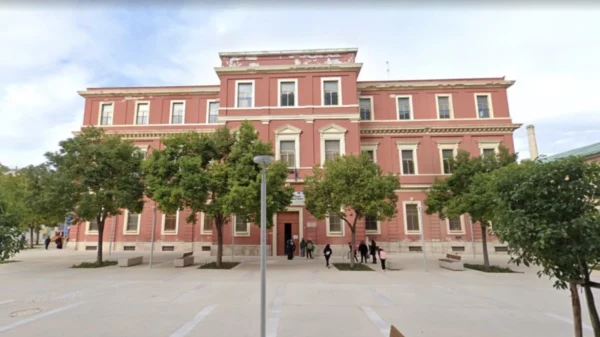
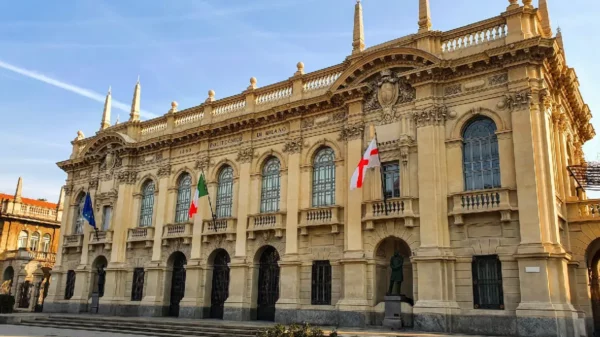
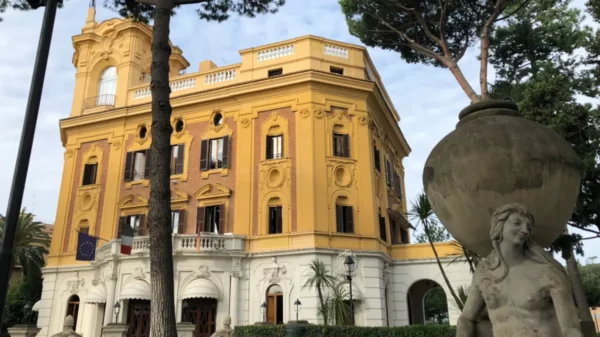
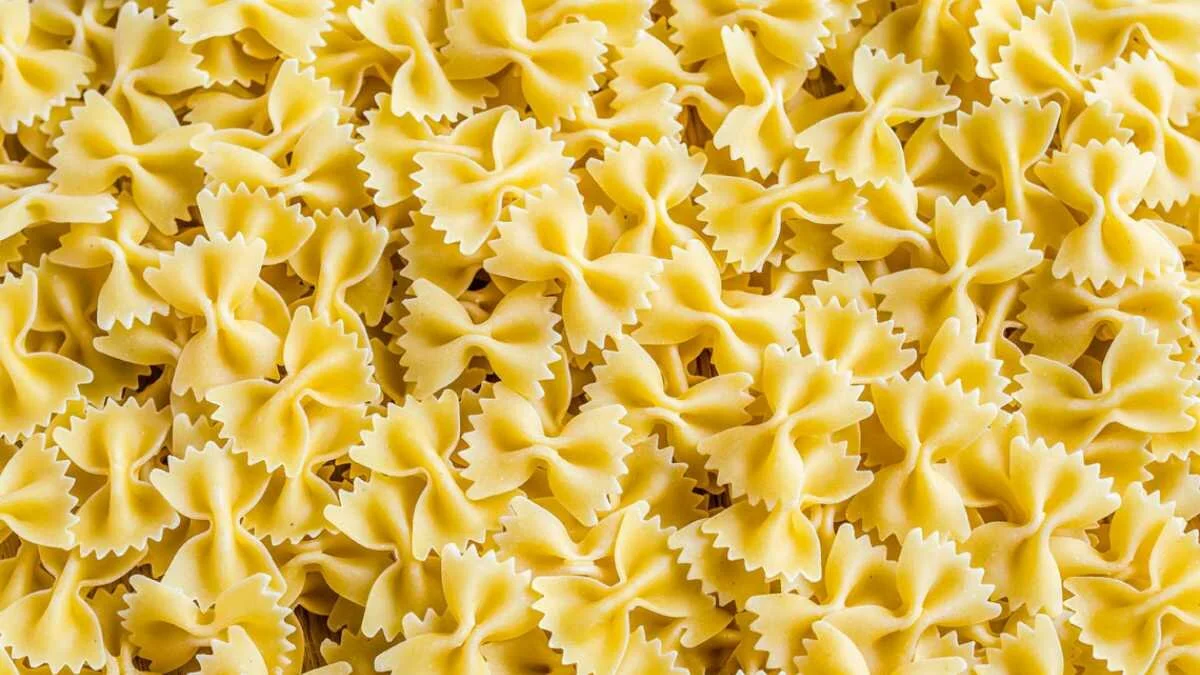
The city's dry pasta tradition dates back centuries. Gragnano is known as 'Città della Pasta'
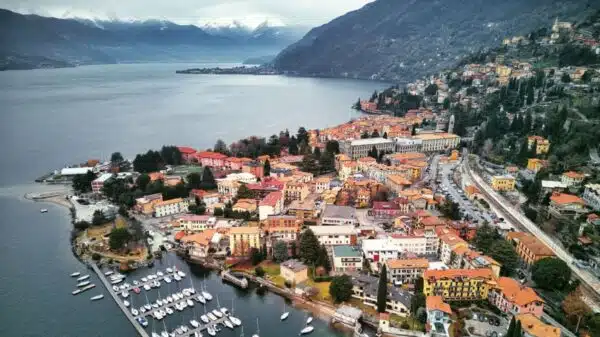
Em Gragnano, a city of 29 thousand inhabitants located 30 km southeast of Nápoles, in the region of campania, in Italy, the wind beats religiously like the church bell throughout the day.
Locals initially thought the breeze was 'Le Mistral', a cold, dry wind that blows through the Provence region to the Mediterranean.
They had a point.
While the northwest wind is called by the same name — and characteristic of both southern Italy and southern France — this Mistral wind (or Marino, as the local population calls it) blows in the opposite direction, bringing moisture and minerals from the sea to the streets of Gragnano.


“You can produce and dry pasta every day because of the predictability of this wind blowing within the village towards the valley”, says Giuseppe Di Martino, CEO of Pastificio Di Martino, run by his family for three generations.
Pastificio Di Martino is one of the three main pasta factories in Gragnano, known as “Città della Pasta” (“Cidade da Massa”).
Gragnano became famous for its “white gold,” or macaroni, when it stopped making silk in the late 1700s., after silkworms suddenly began to die due to a pest invasion.
A holy medicine
But the city's dry pasta tradition dates back centuries. According to historian Giuseppe Di Massa, president of the Gragnano Cultural Center, there are documents dating back to 1200 that talk about the production of annoyed, or rather, dry pasta.
Around the same time, the doctor of King William II of Sicily, Giovanni Ferrario, who was also a professor at a medical school in Salerno, Italy, proclaimed the benefits of dry pasta from Gragnano.
He prescribed typhoid fever patients to eat vermicles al dente, pasta predecessor to vermicelli, a long pasta slightly thicker than spaghetti.
Fresh pasta — a simple mixture of wheat flour, water and eggs — is most common in the Piedmont, Lombardy and Veneto regions, where the dough is stretched with rollers and cut into either tagliatelle or tortellini.
Dry pasta, on the other hand, requires just two ingredients: water and durum wheat semolina. And it is carved in traditional bronze molds, which provides a rough texture to the final product, giving the pasta the ability to absorb more sauce.

“Here, in Gragnano, we are much more addicted to dry pasta,” explained Nunzia Riccio, food technologist and quality control manager at Pastificio Di Martino, as we toured the factory.
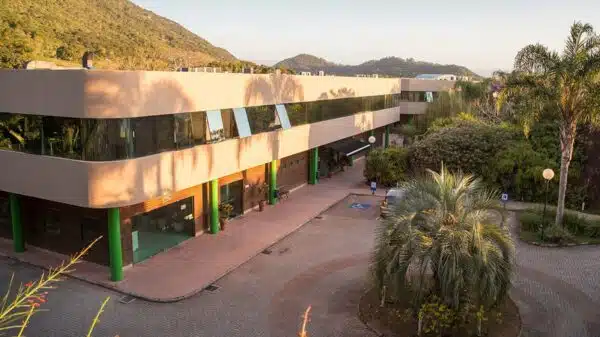
From the top of the Pastificio Di Martino building, it is easy to understand how Gragnano is strategically positioned to be a natural pasta factory. The city is surrounded by mountains on three sides and the sea on the other, which creates an effect known as a “rain shadow”, ideal for drying the dough slowly in the open air, while the sea breeze blows from the coast.
The buildings in Gragnano were designed so that the humid wind, which blows several times a day, provides natural ventilation, forming a tunnel along the city's old main street, Via Roma, where most of the factories were built.
If it weren't for the light dust of semolina that rises through the air, you wouldn't imagine that this sleepy coastal town was once one of the richest in the region in terms of pasta making.
“In the past, almost every family in Gragnano made pasta,” says Riccio.
“This is an ancient tradition dating back more than 250 years, ‘white gold’ drove the city’s economy.”
I've been to Gragnano
In the 19th century, Gragnano was one of the famous destinations of the Grand Tour, a trip traditionally taken by young upper-middle class Europeans to Greece and Italy after completing their studies to learn more about ancient civilizations, visiting places such as the Parthenon and Pompeii — from the same way that many young people backpack today.
“When European nobles came to Gragnano to prove that they had participated in the Grand Tour, they took pasta back home to say that they had been to Gragnano”, says Di Martino.
Pictures painted by French artists such as Prosper Barbot and Jean-Baptiste-Camille Corot (six of which are in the Louvre in Paris) depict life in Gragnano during the height of its pasta production.
The painters arrived with their easels at Valle dei Mulini (Valley of the Mills), where 40 mills ground fresh wheat from neighboring Puglia with water from the springs of Monte Lattari; they also positioned themselves along the ancient Via Roma, paved with volcanic stones, where carts awaited with crates to transport the pasta to the markets.
Almost 70% of the population of Gragnano at the time was involved in the pasta sector, and 100 thousand kg of pasta were produced daily.
At the table the king
When King Ferdinand II of Naples visited the city in the mid-2th century, he was so impressed that he chose the pasta makers of Gragnano as official suppliers for the summer palace at Quisisana, a former royal residence outside Castellammare di Stabia, 19 km from Gragnano.
By the mid-19th century, the city's dried pasta was so popular that the municipality of Gragnano began demolishing old buildings to make way for dozens of artisanal factories that dried pasta on reed poles hanging like willow branches outside houses. .
“The municipality allowed pasta factories to occupy the space in front of the entrance with the of salvation (“dough clothesline”) and, in turn, the factories ensured the cleanliness of the streets, as they did not want their dough to be contaminated by dust”, explains Di Massa.
“The drying of Gragnano pasta was a true art, perfected over the centuries, and became a family secret generation after generation. As there were no preservatives or antibacterial products at the time, conservation [of the dough] depended on slow drying.”
The buildings were positioned so as not to shade neighbors, and Via Roma was widened to facilitate access for raw material suppliers from Valle dei Mulini, according to Di Martino.
Gragnano was industrially redesigned to be “the city of pasta,” as its factories were exporting enormous amounts of pasta to the United States — more specifically, to the Italians who migrated before the New York stock market crash of 1929, he added. .
“At the time, Gragnano pasta was more popular outside of Italy.”
The city had 120 factories
In the early 1900s, the city had almost 120 pasta factories. THE tree Industrial, however, replaced the traditional method of drying in the open air with mechanized movements in ventilated rooms, reducing the number of factories to 42. Since then, they have grown in size, but not in number.
As they exported noodles to new markets, machine tools replaced workers, increasing unemployment—which led many workers to migrate to the U.S. in search of a livelihood.
“The economic recovery was slow, and large industrial complexes were created in other parts of Italy, which forced many pasta factories in Gragnano to close,” says Di Massa.
“The surviving pasta factories rolled up their sleeves and realized that it was not possible to compete with the big pasta companies in terms of production and sales price, and began to focus on the quality of their pasta.”
When export to the USA was banned during World War I, as part of the government's economic defense plan, Italian residents in the country who had imported “white gold” recreated the slow drying process with the help of machines to produce Italian-style pasta for the American market.
One thing they couldn't replicate, however, was the taste. The secret to why Gragnano's pasta resisted traveling so well — especially the six-week journey to the USA — was in the ingredients.
“The water has a low mineral content, which does not change the flavor and taste of the pasta, when compared to other areas”, explains Riccio.
Plus, Italian durum wheat only travels three hours from Puglia to Gragnano — “so the semolina is fresh, there’s no time to develop mold or toxins.”
Just over a decade ago, Di Martino, who is the former president of the Gragnano pasta makers consortium, was in London's Borough Market for a conference organized by the Canadian Wheat Board.
“They thought there was no future in biodiversity and local production, and the only way forward was globalization,” he says.
Canadian wheat could be traded five or six times before landing on the coast of England, which made him reflect on the privileged location of Gragnano, near Puglia.
PGI
In the taxi on the way to lunch, he started thinking about ways to preserve Gragnano's “white gold” in partnership with farmers in the Gravina fields, who supply wheat to the city's 14 factories — responsible for 14% of dry pasta exported. by Italy.
“What I wanted was to have a better quality of wheat, which was connected to the land, to the population, to preserve this cultural heritage”, he explains.
The first emblem of Gragnano was formed by branches of wheat, and later a hand was added holding the branches like spaghetti, which, according to Di Massa, symbolizes the correlation between the land and manual labor.
“When you are linked to a place, you are transferring value back to farmers,” said Di Martino when speaking at the opening at the 10th anniversary of Festa del Raccolto, Puglia's annual pasta festival, in June 2018.
“Growing up in Gragnano, close to the factories, the masses become your toys, and the workers your friends.”
In Gragnano, provenance is more important than packaging, ensuring that the pasta is produced according to a set of strict regulations (which Di Martino helped draft in 2013, when the pasta was designated a Protected Geographical Indication by the European Union).
All pasta must follow regulations to be considered “Pasta di Gragnano”, just like a winemaker follows certain rules in the Champagne region of France.
Today, Gragnano pasta can be dried on production lines inside factories, but the air that blows through the engines is the same as that which once dried the threads that hung along the city's streets.
As a way of paying homage to the city's legacy of pasta, Gragnano's makers still set up stalls in the streets every September to prepare pasta, during the Festa della Pasta di Gragnano.
The festival began after World War II as a way to revive Gragnano's traditional pasta making.
“And it served as an awareness strategy, so people knew what was happening behind the closed doors of the factory,” says Riccio.
The city receives around 100 people for the two-day event, which sells almost 5 noodle dishes per day. Renowned chefs give live demonstrations in the city center, where strands of dough were historically hung on a kind of clothesline on both sides of the street.
“I love it, it’s as if the whole city turned into a theater,” says Di Martino, adding that the event helps keep Gragnano’s reputation as the city of “white gold” alive to this day.
“If you mention Parma to an Italian, he will think of Parmesan cheese or ham; If you mention Gragnano, he will think en masse”, he summarizes.
Read original version of this report (in English) on the website BBC Travel
FOLLOW-US