

































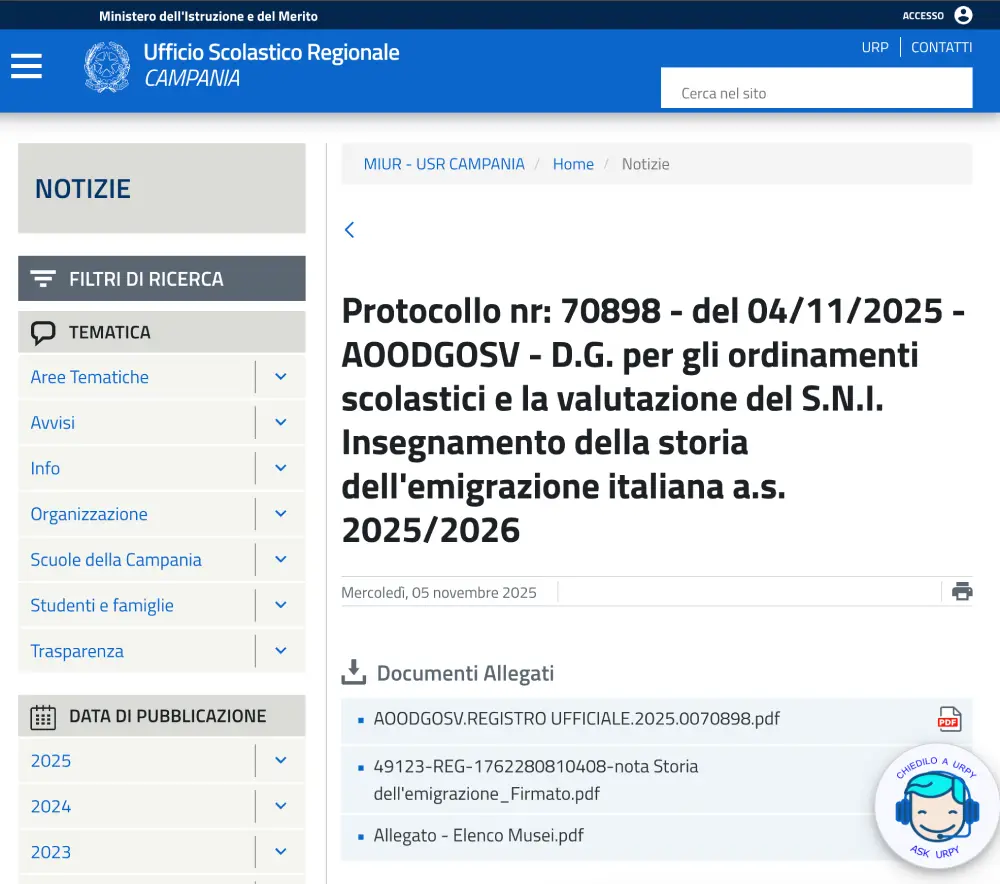
The history of Italian emigration will be part of the school curriculum starting in the 2025/2026 school year. decision no. 70898The initiative, officially launched on November 4th, is a joint effort between the Italian Ministry of Education and Merit and the Ministry of Foreign Affairs.
Advertise with us!
The proposal invites public and private schools to include the topic in their educational activities, respecting the autonomy of each institution. The idea is to lead students to reflect on the roots of Italian identity and the role of emigration in the formation of the country.
Although not mandatory, the proposal is recommended to all schools, both public and private, respecting the pedagogical autonomy of each institution.
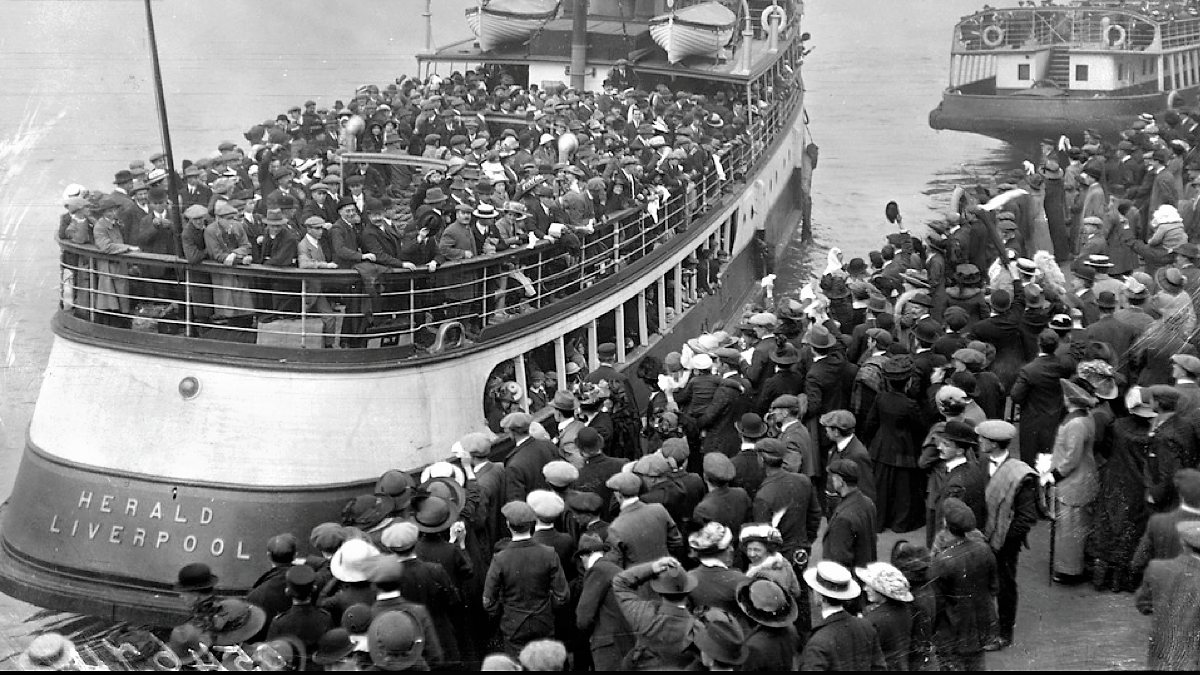
Millions of Italians crossed the ocean to the Americas.
The Italian migratory movement, which began in the 19th century, led millions of people to leave the country until the mid-20th century. Among the most sought-after destinations were Brazil, Argentina, and the United States, among others.
Advertise with us!
In Brazil, it is estimated that more than 1,5 million Italians arrived between 1870 and 1920. Many settled in the South and Southeast, working on coffee plantations and, later, contributing to the growth of industrial cities.
Argentina received another important influx: Buenos Aires became, at the beginning of the 20th century, the second largest "Italian" city in the world, after Rome. Italian immigrants helped shape the local culture, language, and politics.
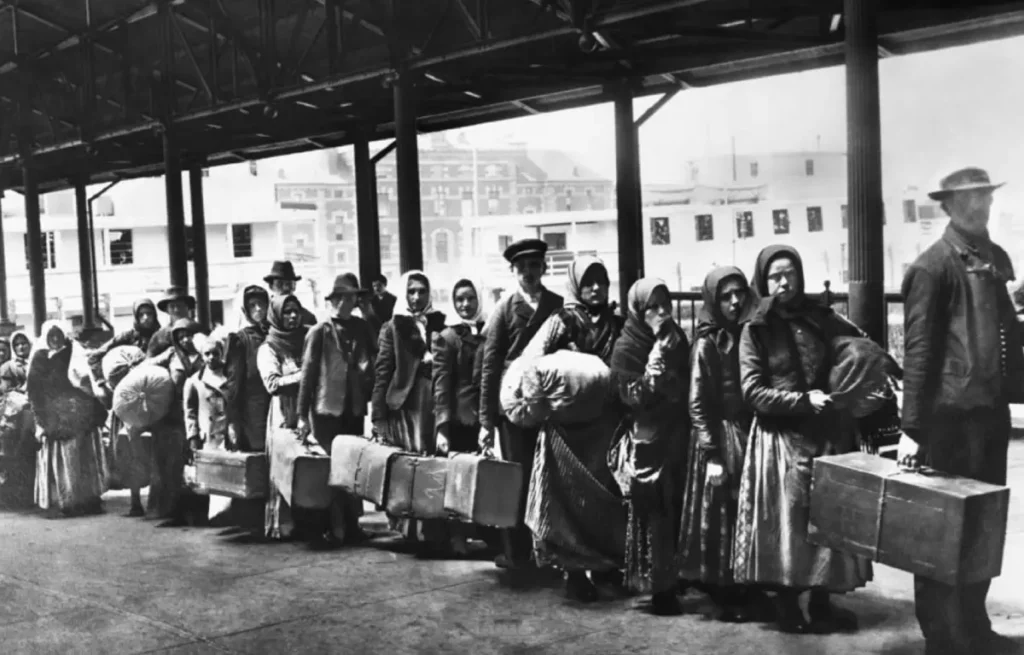
In the United States, millions arrived via Ellis and Liberty Islands in New York. They formed communities in the working-class neighborhoods of major cities, notably New York, Chicago, and Boston, and participated in the construction of railroads and industry.
The content will be interdisciplinary and focused on valuing origins.
The Ministry recommends that the topic be explored across different disciplines, such as History, Geography, Sociology, and Literature. Furthermore, it suggests the use of interactive methodologies and partnerships with museums, archives, libraries, and foundations related to emigration.

In elementary schools, the focus could be on the social and economic changes caused by migration. In high school, the curriculum should cover topics such as the agrarian crisis of the 19th century, the post-war period, and globalization.
A public history — which works with oral history, documents, and memory spaces — is cited as a teaching tool. The official statement also includes a list of recommended institutions for visits and partnerships, such as the National Museum of Italian Emigration and the Luccan Emigration Museum.
By including the topic in the curricula, the government seeks to reinforce the sense of belonging among young Italians and to reclaim the history of families who crossed oceans in search of opportunities, helping to build entire societies outside of Italy.
Museums and support centers for the education of Italian emigrants.
- Centro Studi Silvio Pellico ETS – Head of the Regional Museum of Emigration of the Piedmontese (Piedmont)
- Fondazione Genti d'Abruzzo Onlus – Responsible for the Museu delle Genti d'Abruzzo (Abruzzo)
- Museo Emigrazione Lucana – Centro Lucani in the World “Nico Calice” (Basilicata)
- Cognome Museum and “Joe Petrosino” Museum House (Campania)
- Casa dell'Emigrante Cilentano Museum (Campania)
- La Nave della Sila Interactive museum about the departure of emigrants (Calabria)
- Museo del Mare, dell'Agricoltura e delle Migrazioni (Calabria)
- Centro di Documentazione dell'Emigrazione Parmense, Bedonia (Emilia-Romagna)
- Museo Emigrazione Scalabrini – Affiliated with the Scalabrinian Missionaries congregation (Emilia-Romagna)
- National Museum of Italian Emigration (MEI) – Based in Genoa (Liguria)
- MuSel – Archeological Museum and City of Sestri Levante (Liguria)
- MEMA – Museo dell'Emigrazione Marchigiana (March)
- Museo dell'Emigrante – Research Center on Emigration, San Marino
- Museo Comunale delle Migrazioni, Vinchiaturo (Molise)
- Museo Emigrazione Molise – Focused on matches in the Molise region (Molise)
FOLLOW-US