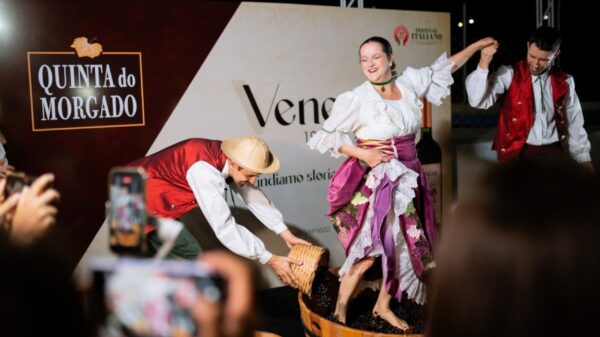

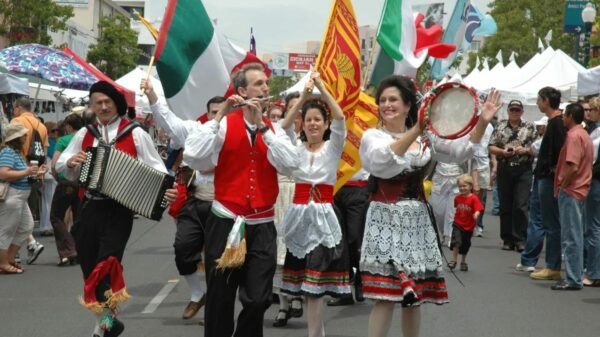













From the sbrando held in Piedmont to the Salentina pizzica in the Puglia, Italy has a series of folk dances that, in addition to keeping traditions alive, also provide a fun tourist itinerary to get to know the country.
On the occasion of International Dance Day, which will be celebrated on the 29th, the Campeggi portal selected six of the most significant dances to celebrate the date.
Piedmont
Sbrando, the ancient dance of the mountainous area of Langhe – which runs from the province of Cuneo to Asti – brings people together in a circle, hand in hand, with countless choreographic variations. Also called brando, this dance originates from Roero, where it is danced especially during popular festivals that involve the entire community.
Inherited from the medieval period, when courtship dancing was popular, sbrando eventually became a competition of endurance for the dancers, with a steadily increasing acceleration of the music.
Emilia Romagna and Lombardy
The tradition of bowed polka, in Italian “chinata”, has recently returned to its peak with “chinati”. The Bolognese dance of the early 1900s was exclusively male and was created during the period of migration to the city.
The main movement is the “frullone”, a passage in which two dancers hugging and bending over rotate on their own axis at the highest possible speed.
Toscana
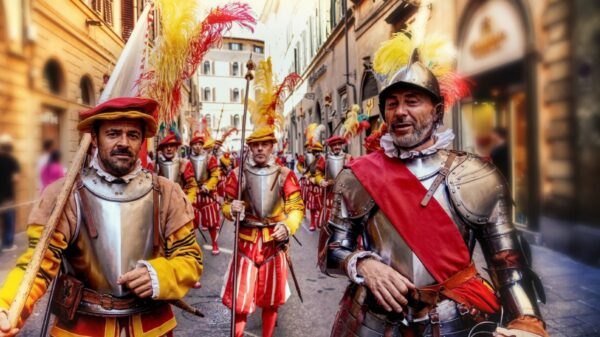
The trescone is an ancient dance mentioned in the works of Dante, Boccaccio and Collodi and is a Tuscan dance of medieval origin and has a controversial etymology. The term may derive from the German words thriskan (to hit) or dresken (to tread), in reference to the foot movements performed by dancers.
Today it is only performed on special holidays, such as Carnival, and is danced in small groups of men and women.
Lazio
The town of Amatrice, in Upper Lazio, not only gave the world one of Italy's most famous dishes, but also boasts a dance of pagan origin: the saltarello. Similar to a courtship with men and women gazing into each other's eyes, it takes its name from saltatio, the most reproduced dance of Ancient Rome, which originated in the 13th century.
Puglia
The marked rhythm, skin drums and small sudden sounds characterize pizzica pizzica (or just pizzica), in Salento, which is part of the tarantella family. The melody comes from another similar ancient dance, the pizzica tarantata, which was done with the aim of “curing” women who had been bitten by a spider (taranta or tarantola).
In the European summer, each year, Salento fills with music, giving new life to this tradition, including the so-called "Taranta Nights," which mix pizzica with contemporary music.
Sicilia
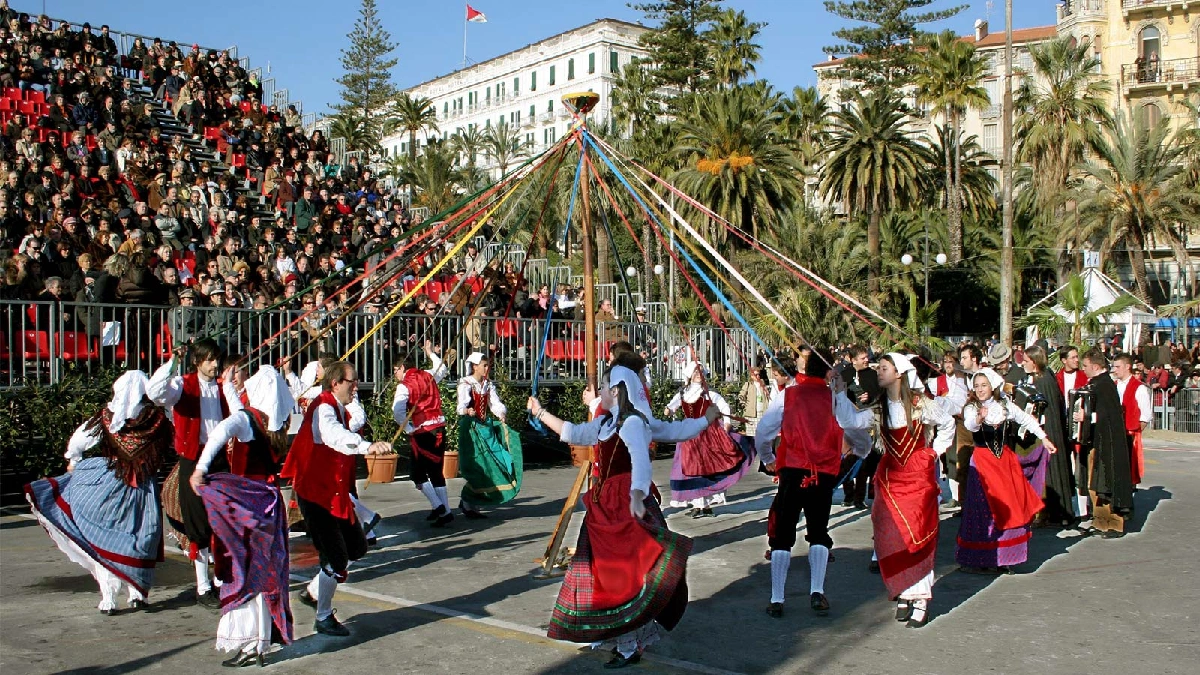
Born as a pagan rhythm to thank nature and adapted with the advent of Christianity, the “Ballo della cordella” (Dance of the Rope), typical of Petralia Sottana, in Palermo, became a dance in honor of Our Lady, especially , in the celebration of August 15th.
The dance is done by 12 couples, one for each month of the year, who are around a pole about two meters high, decorated with grains and ropes of different colors. Once in position, the dancers intertwine the threads with each other, reminiscent of the movements of the field — from sowing to harvesting. (Handle)
FOLLOW ITALIANISM