





















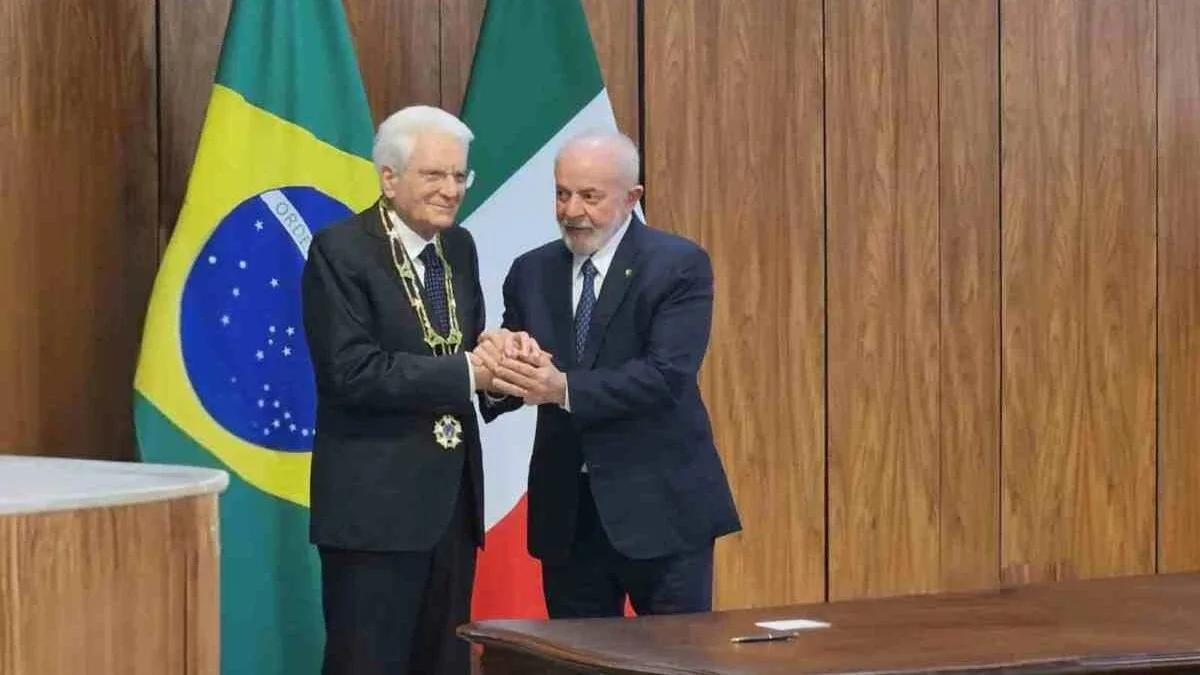
The agreement that allows the mutual conversion of driver's licenses between Brazil and Italy came into force on Monday, April 28. The treaty had been signed in July 2024, during the official visit of Italian President Sergio Mattarella to Brazil.
On that occasion, Mattarella signed a series of agreements with Brazilian authorities. Among them, this mobility pact, presented as a concrete step forward for communities in both countries.
The news was greeted enthusiastically by Italian diplomats. “This is a real and practical benefit for many,” said Ambassador Alessandro Cortese, highlighting the “two-year commitment” to making the process possible.
So far, so good. Or almost.
The speed of bureaucracy
What is intriguing is the time it took between the signing and the entry into force: almost a year between the official handshake and the concrete chance for a Brazilian to drive legally in Milan without having to relearn how to park.
The slow pace of the process is no surprise to anyone familiar with the pace of binational procedures. But the case highlights the gap between the political announcement and the practical implementation. It is the typical “it’s already been resolved” followed by a silent wait.
One agreement, two realities
In practice, the agreement benefits Brazilians living in Italy and Italians living in Brazil. They will be able to convert their driver's licenses without having to retake theoretical or practical exams. This is a relief for those who faced the bureaucratic maze of the Detrans and their European equivalents.
But there is a curious detail: the agreement “came into force”, but it still needs to be formally promulgated in Brasília. In other words, it is officially valid – but not really valid. In Brazil, the Italian driver, for now, must wait a little longer. After all, bureaucracy also has time zones.
a matter of direction
The pact itself is positive and brings direct benefits. But its slow implementation serves as a faithful portrait of relations between Brazil and Italy: affectionate, full of promises, but with a broken timer.
As in every good Italian-Brazilian soap opera, there is emotion, anticipation and a hint of irony. After all, to transform a simple driver's license into a symbol of integration, there is nothing better than eleven months of diplomatic suspense.