



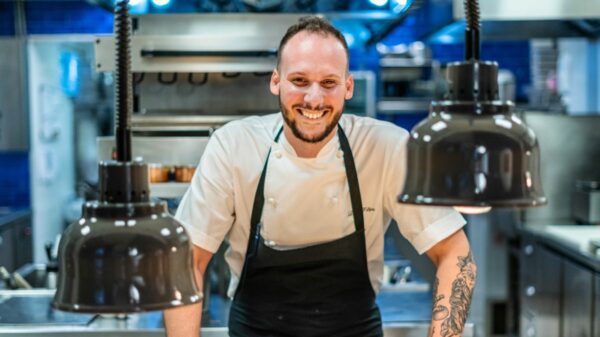






When he immigrated to Italy from Burkina Faso at age 12 Ibrahim Songne tried pizza for the first time and hated it.
“I had never heard of pizza before arriving in Italy. I took a bite and found it disgusting and completely tasteless,” she says.
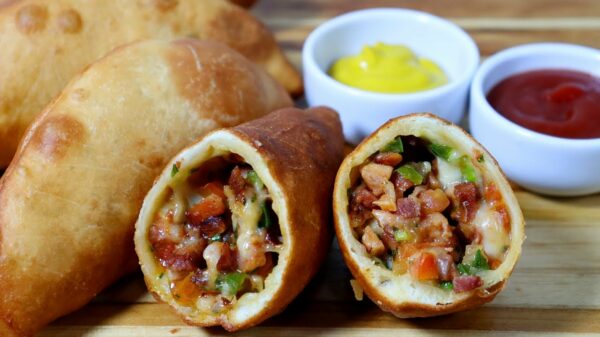
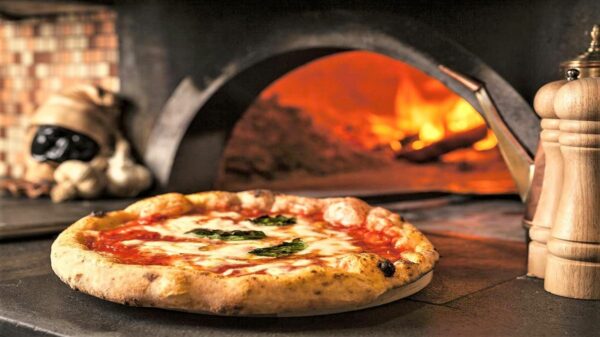
Despite this somewhat unfavorable start, Songne later took out a loan to open her pizzeria – and at the end of 2021 she was appointed one of the 50 best in Italy, in the “Best takeaway pizza” category, according to the guide 50TopPizza.it, who calls the dough “perfectly leavened, digestible and the toppings are delicious.”
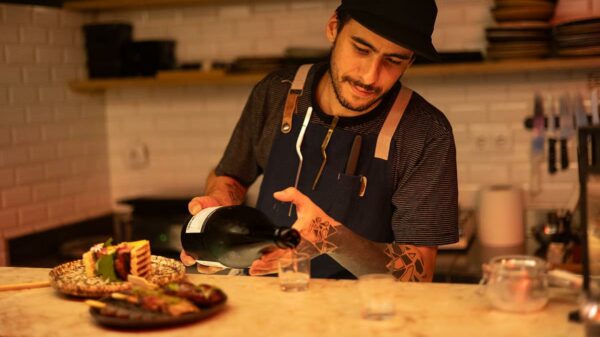
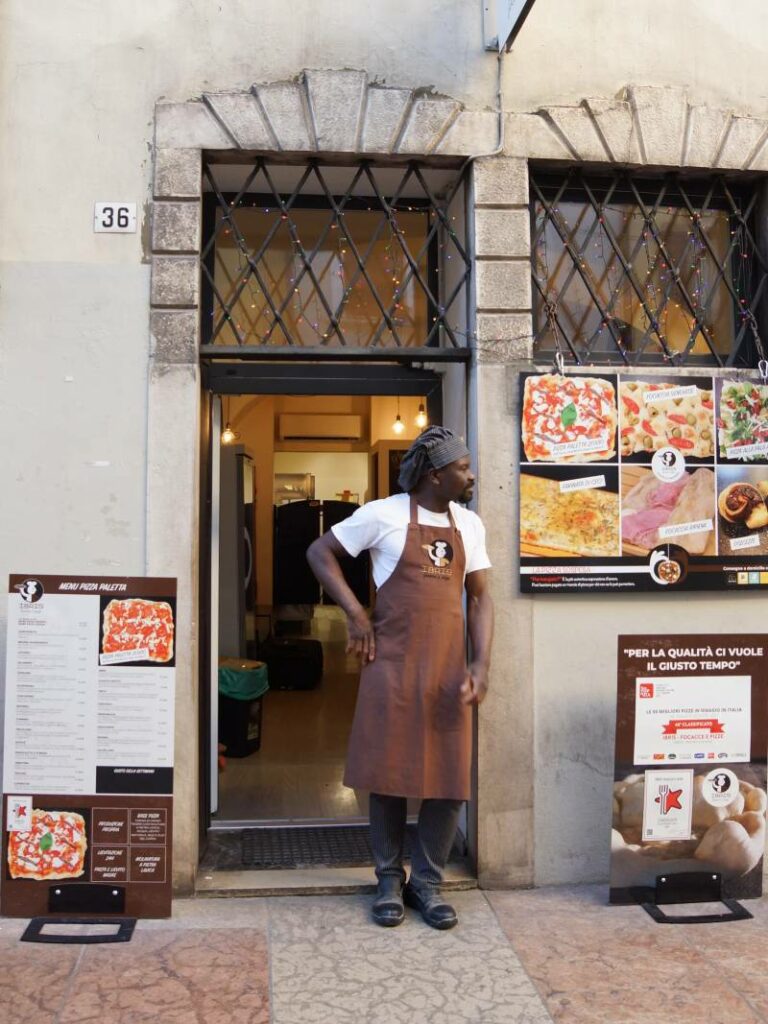
Ibrahim named his restaurant IBRIS – a hybrid of his first and last name in capital letters. Before opening the small store in the center of Trento three years ago, he says residents warned him: “A black man behind the counter will drive away all customers".
On the first day of opening, Ibrahim stood behind the counter and a middle-aged couple entered. Silently, the pair inspected the pizza on display, probably assuming someone of African descent didn't speak Italian, and commented, “The pizza is amazing. It’s a shame they let black people work here.” And they left.
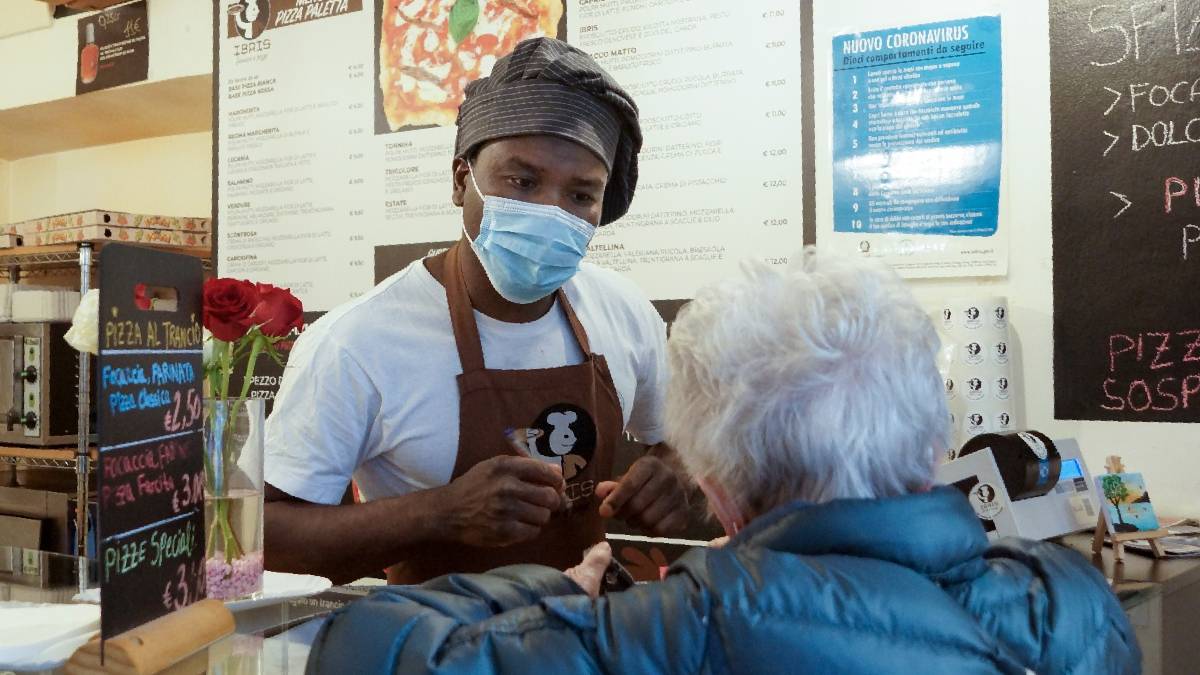
In 2022, the story changed. With just three small benches to sit on, lunchtime customers crowd IBRIS's narrow storefront, shouting orders to the soundtrack of the afrobeats.
“Once they taste my pizza, all judgment disappears,” says Ibrahim.
A recipe for success
Ibrahim's success is hardly due to a lack of competition. Two other pizzerias are on the same block and another seven are within a few minutes' walk.
He says his pizza stands out for its “intensity, texture and sense of experimentation”.
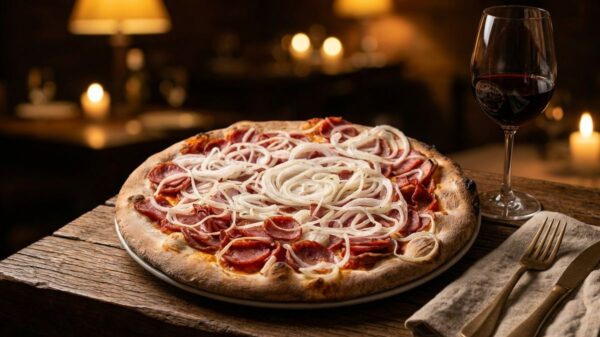
In the last decade, “crispy pizza” has become a trend in northeastern Italy – it usually has a light but multi-layered dough and makes a loud noise when bitten. Ibrahim created a more subtle version of this crunch.
As for the experimental toppings, they reflect Songne's belief in zero kilometer gastronomic movement in Italy, using fresh, locally and seasonally available ingredients whenever possible. Working side by side with his younger brother, Issouf, he changes the pizza menu daily and includes non-traditional ingredients like purple potato cream, saffron and chickpeas, for example.
A difficult start to a new Italian life
Today, Ibrahim lives in the picturesque cobbled center of Trento, one of the country's wealthiest cities and is often ranked high for quality of life.
Ibrahim and his parents lived without electricity or running water in a village four hours' drive from Ouagadougou, the capital of Burkina Faso. In search of work, Ibrahim's father immigrated to Italy; the family later followed.
Upon arriving in Italy's mountainous north in 2004, Ibrahim says it was the only black student at school and became even more isolated due to his stuttering.
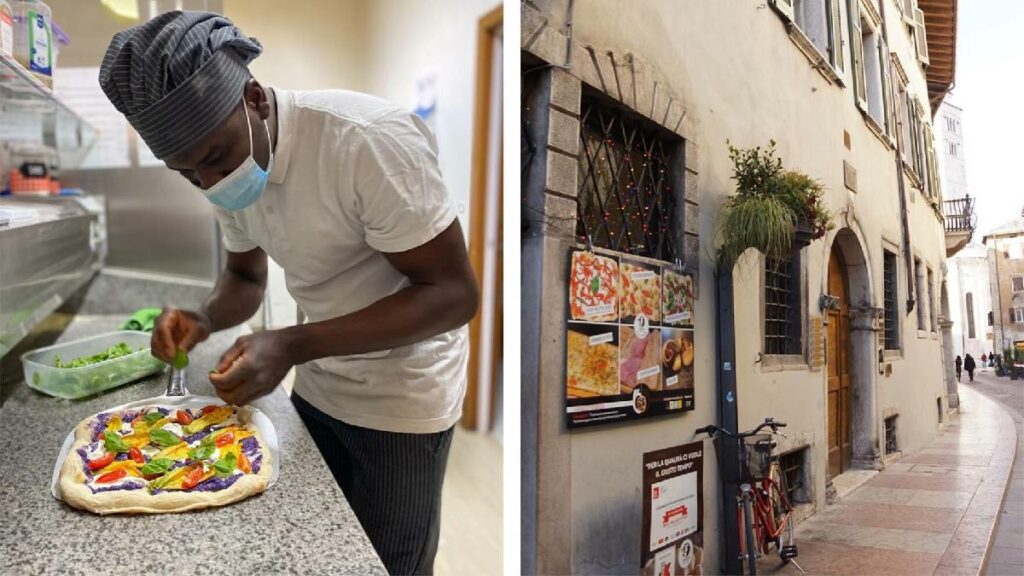
His desire to undergo speech therapy encouraged him to take on part-time jobs as a teenager, a path that led him to work in a candy store. It was there that he developed his passion for baking..
Over the next few years, Ibrahim taught himself how to make pizza. Having worked in the confectionery, he got tired of sweets and decided to look for savory flavors. His roommate served as his “guinea pig” and Ibrahim became “obsessed” with developing the consummate pizza dough recipe. Ibrahim uses the same mother yeast (with mother yeast) for more than five years.
Today, Ibrahim defines himself as 100% Italian and Burkinabé, “but above all, I am resilient”.
“Once I overcame my stutter, I was free. After that, I knew I could face anything.”
Helping others with “suspended pizza”
He has not forgotten his roots. On his way to the airport, the day Ibrahim left Burkina Faso for Italy, he entered the city for the first time and saw a little boy naked, begging in the streets. A Burkinabé businessman passing by threw a sweet on the ground “as if the boy were a dog” and the child ran after the sweet. At that moment, Ibrahim says he decided that one day he would dedicate himself to helping the hungry.
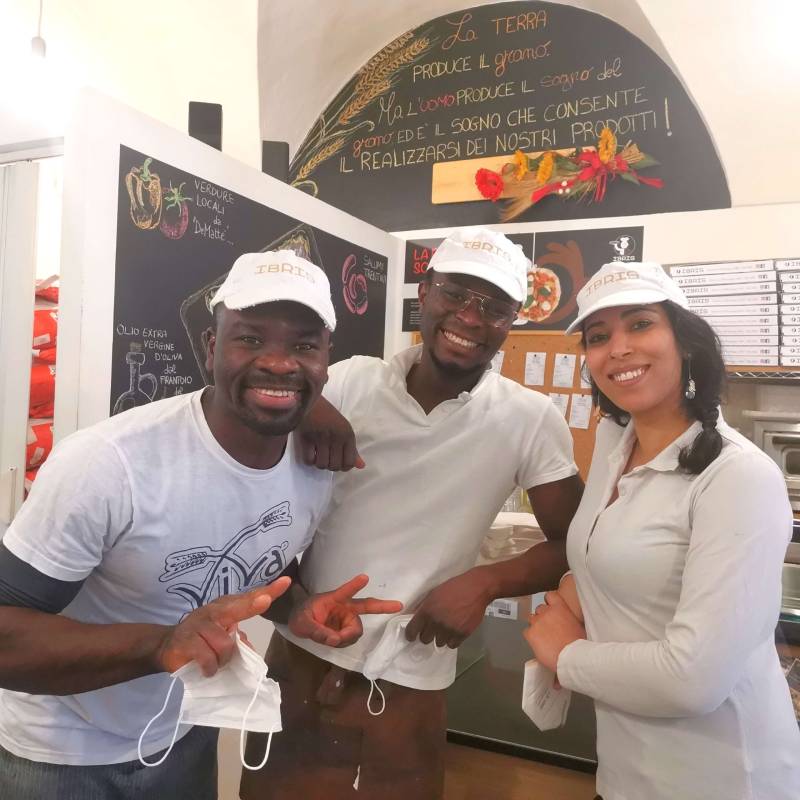
After witnessing so many people struggling to survive during the pandemic lockdown, pizza and Songne's charitable wishes merged. Inspired by Neapolitan tradition of suspended coffee (“suspended coffee”) – where customers pay for additional coffee that bartenders then give anonymously to those in need – Ibrahim expanded the custom to pizza. Then, the suspended pizza it spread to restaurants across Italy.
“Great things start small,” says Ibrahim. “If given enough attention and value, food can change the world. It’s a bridge between people – a way to experience something new with pleasure. This experience can lead to greater tolerance and understanding,” he concludes.NPR)
FOLLOW-US