





















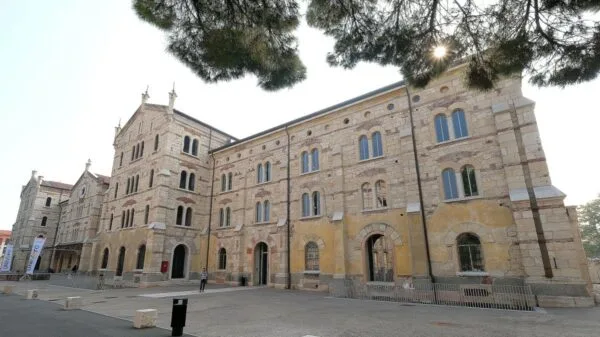





Even after the Tajani decree-law came into effect, which limits the recognition of Italian citizenship to children and grandchildren of Italians, the demand from descendants remains high. According to report from Corriere del Veneto, published this Monday (1st), between March and September 2025, the Venice Court received 10.660 new citizenship actions jus sanguinis.
The survey only considers the period of validity of the new legislation until the end of September, excluding data from October and November, which had not yet been accounted for at the time of publication. The article points out that the rate of application submissions remains high, even with the new legal restriction in effect for more than six months.
According to the newspaper, linked to Corriere della SeraThe total number of cases stalled in the court reached 31.456 by the end of September. Each case usually involves family groups, leading to an estimate of more than 320 people interested in recognition.
"This data is sufficient to explain how the thousands of requests are putting the functioning of the judicial system to the test," he notes. CourierIn Venice, seven out of ten civil cases are related to the recognition of Italian citizenship by descent.
"Burden on the Judiciary"
The report highlights the overload faced by the Venetian court compared to other major cities in the country. "During the same period, Milan had 2.200 pending cases; Naples, 2.300; Rome, 1.600. Venice, however, had more than 30," the former president of the local court, Salvatore Laganà, told the newspaper.
To address the delays and meet the goals of the National Recovery and Resilience Plan (PNRR), A task force was created with 22 assistant judges., who work both in person and remotely, in support of the 15 permanent magistrates of the immigration section.

"Measures did not curb demand"
Despite the creation of the task force and the imposition of a €600 fee per applicant, introduced by the government in 2024, the number of new applications remains high.
"The Court, with the reinforcement of magistrates, managed to send more requests to the municipalities, but the registry offices remain overloaded," he points out. CourierIn addition to their daily work, employees need to reconstruct family trees and locate centuries-old birth and marriage records.
"Municipalities under threat"
According to the newspaper, delays in the municipalities have already resulted in legal sanctions. In Castagnaro, a town of 3.500 inhabitants in the province of Verona, the Court ruled... A daily fine of 100 euros for delays in three proceedings.The decision is the result of a previous ruling by the Court of Rome in December 2023, which recognized citizenship for descendants of a local emigrant.
The Mayor of Val di Zoldo, Camillo De PellegrinHe told the newspaper: "If this trend continues, it's just as well that the government commissions the registry offices." Mayors fear that rulings like Castagnaro's will create jurisprudence and trigger a chain reaction in small municipalities.
The Constitutional Court will analyze the law.
O Corriere del Veneto It also reported that the Constitutional Court must rule on the legitimacy of the Tajani decree-law by the spring of 2026. (read here: The hearing was scheduled for March 10, 2026.The decision could redefine the limits of recognition of Italian citizenship through the courts, with a direct impact on millions of descendants worldwide.
Meanwhile, people of Italian descent, mainly from Brazil and Argentina, continue to seek in the Italian courts the passport they consider a symbol of belonging and a gateway to Europe.

FOLLOW-US






MARCO AURELIO TONIOLO
December 2, 2025 at 01:09 am
Grazie a tutti e buon lavoro.
LEONARDO PIRES
December 2, 2025 at 22:27 am
There is considerable effort to bar people who are demonstrably of Italian descent, but the same effort is not seen in trying to stop illegal African and Middle Eastern immigrants, who continue to arrive in Lampedusa by the thousands.