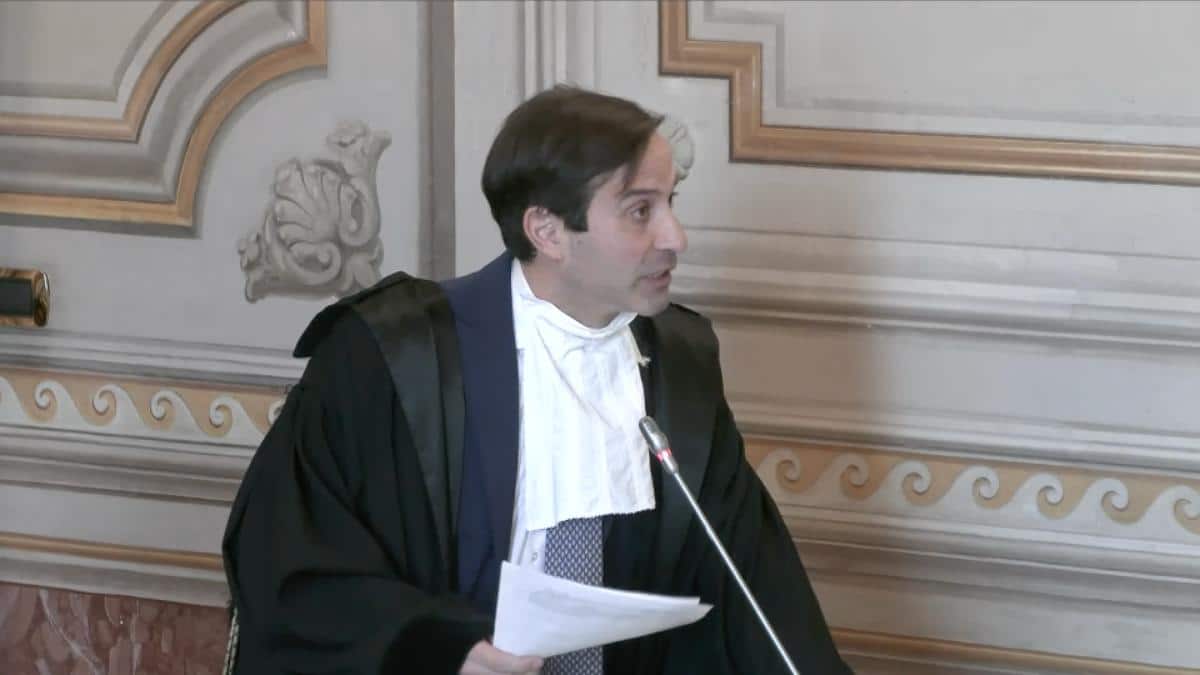
Durante a audiência realizada na Corte Constitucional italiana, o advogado Corrado Caruso fez uma das críticas mais duras ao chamado Decreto Tajani. Na sustentação oral, ele classificou a norma como um “perfetto pasticcio all’italiana”, em tradução livre, “uma perfeita confusão à italiana”, ou uma “uma perfeita bagunça à italiana”.
A expressão foi usada ao final da intervenção para resumir a avaliação jurídica apresentada ao tribunal.

O julgamento analisa a constitucionalidade das mudanças introduzidas pelo Decreto-Lei nº 36 de 2025, posteriormente convertido na Lei nº 74 de 2025, que alterou de forma significativa as regras de reconhecimento da cidadania italiana por descendência.
Crítica à posição da defesa do Estado
Durante a sustentação, Caruso, que é membro do Departamento de Estudos Jurídicos da Universidade de Bologna, criticou diretamente a posição apresentada pela Advocacia do Estado italiano.
Segundo ele, a própria defesa estatal acabou reconhecendo que os descendentes não seriam titulares da cidadania, mas apenas de uma expectativa jurídica ligada ao início de um processo administrativo ou judicial.
O advogado agradeceu ironicamente essa formulação e afirmou que ela revela a real natureza do argumento apresentado pelo Estado.
“Sou muito grato à Advocacia do Estado, porque essas afirmações constituem um momento emblemático de franqueza que acaba revelando a verdadeira dimensão da norma contestada”, disse o advogado.
Conflito com a jurisprudência italiana
Caruso argumentou que essa interpretação entra em conflito direto com o entendimento consolidado dos tribunais italianos.
Segundo ele, a jurisprudência da Corte de Cassação e da própria Corte Constitucional afirma há décadas que a cidadania transmitida por descendência constitui um direito subjetivo perfeito e imprescritível.
“O direito à cidadania e à sua transmissão foi reconstruído pela jurisprudência como um direito subjetivo perfeito, que não depende de decisões discricionárias da administração”, falou Caruso.
Nessa lógica, o procedimento administrativo não cria o direito. Ele apenas reconhece juridicamente uma situação já existente.
Crítica à retroatividade da norma
Outro ponto central da sustentação foi a crítica à aplicação retroativa da nova disciplina.
Caruso afirmou que a própria defesa do Estado admite que existe uma expectativa jurídica ao reconhecimento da cidadania. Para o advogado, isso corresponde ao princípio do legítimo confiança.
“O que é uma expectativa jurídica senão a expressão subjetiva do princípio do legítimo confiança?”, questionou.
Ele destacou que esse princípio foi construído ao longo de mais de um século de legislação e decisões judiciais que reconheceram a transmissão automática da cidadania italiana.
Crítica à atuação administrativa
Durante a sustentação, Caruso também criticou práticas administrativas adotadas por consulados italianos ao longo dos anos.
Segundo ele, muitos pedidos de reconhecimento de cidadania ficaram presos em listas de espera, sem resposta das autoridades consulares.
Para o advogado, essas situações deveriam ser consideradas como pedidos válidos de reconhecimento.
“A solicitação de um agendamento ignorada pela administração não é já um pedido de reconhecimento?”, questionou novamente.
Ele também citou problemas recorrentes nos sistemas digitais e suspensões de agendamentos que, segundo sua argumentação, acabaram impedindo a análise de milhares de pedidos.
Crítica ao legislador
Na parte final da sustentação, Caruso afirmou que o legislador adotou a solução mais dura possível para lidar com o tema.
Segundo ele, havia alternativas jurídicas menos restritivas, como regras de transição ou a preservação de pedidos já apresentados.
Nenhuma dessas soluções foi adotada. “O legislador escolheu a solução mais desproporcional possível”, disse.
Ao concluir a intervenção, o advogado resumiu sua crítica em uma frase dirigida à Corte.
“O legislador criou um perfeito pasticcio all’italiana, ao qual esta Corte é agora chamada a pôr remédio”, finalizou.
Newsletter
Últimas do Italianismo
Todo dia, às 18h, um resumo do que aconteceu na Itália direto no seu e-mail.
É gratuito e você cancela quando quiser.

















Sempre tranquilo com a ciencia d eestar do lado da verdade, da esperanca. do justo e do certo! Sonno tranquilo di andare insimeme il giusto e della verita. Fratelli, hermano, brothers e irmaos. Siammo piu grande del paese, insieme siammo gl`italiani, ogoglioso de essere uno, uno, trale piu grande popolazione del mondo.