































In Brazil, the left insists that the extradition of Cesare Battisti is a political case. In Italy he is treated as a terrorist
Considered a fugitive by the Brazilian Federal Police after his arrest was determined by Minister Luiz Fux, of the Federal Supreme Court (STF), the former activist arouses similar opinions among different sides of the Italian political spectrum. This Friday, President Michel Temer signed Battisti's extradition decree.
Sentenced to life imprisonment in his home country for terrorism, accused of involvement in four murders in the late 1970s, Battisti has been evading Italy's request for him to be handed over by other countries for over thirty years. With Brazil alone, the imbroglio has lasted almost twelve years.
Since then, Italian politicians from the center-left (such as Romano Prodi) to the extreme right (such as the current Interior Minister, Matteo Salvini) have mobilized for Battisti to be extradited and serve the sentence for crimes committed in one of the most troubled periods in history. Italian.
“This is not a partisan issue. Battisti has been convicted for over thirty years, and the political pressure for his imprisonment has existed for all these years. It is a matter for the Italian judiciary, which is completely independent,” Professor of International Law Claudio Zanghi, who taught for over 40 years at Sapienza University in Rome, told BBC News Brazil.

The new law will now be reviewed by the European Union's courts. And there are European precedents that strengthen the defense of descendants.
- New legal front opened
- Processes can still be filed.
- Individual analysis of your case.
For Zanghi, saying that Battisti should not be extradited for taking risks in Italy due to his political opinion – as considered by the government of Luiz Inácio Lula da Silva in the decision to grant him refuge in 2010 – is a “fanciful motivation”, which disregards not only the independence of the Judiciary, but the democratic rule of law itself.
Therefore, he says, the issue mobilizes politicians from across the political spectrum, in addition to being a reparation for one of the moments of greatest violence in the history of Italian politics – which affected parties of different ideologies.
Between the end of the 1960s and the beginning of the 1980s, Italy experienced a period that became known as the “years of lead”, marked by violent acts carried out by far-left and far-right groups, and also by state repression. .
A decisive episode was the kidnapping and consequent murder of Aldo Moro, who had been prime minister, by the Red Brigades (Brigate Rosse, in Italian, a paramilitary communist guerrilla organization), in May 1978.
Battisti was part of a peripheral group that fought alongside the brigadistas, the Armed Proletarians for Communism (PAC). His conviction – like that of several others involved in crimes of the period – relied on a plea bargain. In Battisti's case, the process was based on statements from a former groupmate, who had his sentence reduced after his collaboration. This is one of the convict’s arguments to allege alleged political persecution.
Twists
The new arrest request requested by the STF minister and the consequent disappearance of Battisti made headlines on the internet and on Italian TV channels. And they also mobilized politicians again.
Even the opposition Democratic Party, center-left and currently experiencing a representation crisis, spoke out on its news website, recalling the efforts made during its government to have the criminal extradited.
Matteo Renzi, who was prime minister, made several requests for the extradition of Battisti, who was living in the municipality of Cananeia, on the south coast of São Paulo, between 2014 and 2016.
An exponent of the far right and a strongman of the populist government that has just completed six months, Salvini asked President-elect Jair Bolsonaro on Twitter for help so that Italy can get justice. According to him, a person sentenced to life imprisonment cannot “enjoy life on Brazilian beaches”.
Bolsonaro, who had already defended Battisti's extradition on other occasions, said he will help send the “murderous terrorist defended by Brazilian comrades with the same ideals” to Italy. Salvini stressed that, if necessary, he will “take the first flight” to pick up his compatriot and take him to an Italian prison.
Escape from Justice
When first convicted in the early 1980s, Battisti had already fled Italy. His case was processed in different instances of Italian justice and also passed through the European Court of Human Rights without there being any consideration that he was politically persecuted – his crimes were considered common.
First a refugee in Mexico, Battisti settled in France in the 1990s as a political refugee, a status granted by the government of François Mitterrand. Jacques Chirac's government changed this understanding in 2004, which left the Italian subject to extradition. Therefore, he fled to Brazil, being detained in 2007.
At the time, the then left-wing Italian Prime Minister Romano Prodi celebrated the arrest of the man convicted of terrorism and demanded his extradition. The case dragged on, with Battisti gaining freedom and the right to remain in Brazil, even though the Federal Supreme Court recognized that he was not politically persecuted.

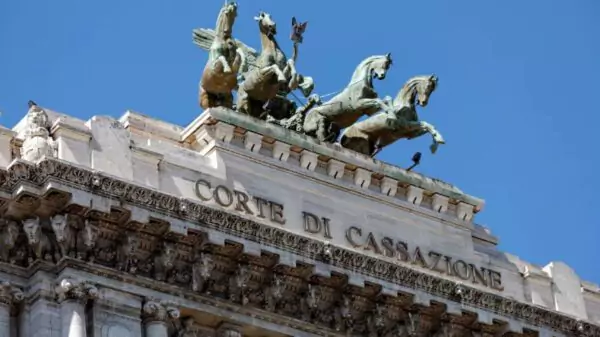
The Constitutional Court's decision changed the landscape. The new citizenship law will now be reviewed by the European Union's courts of justice.
The court, however, gave the last word in the case to the Executive. The decision was made by then president Lula, who on his last day at Palácio do Planalto (in December 2010) announced that the Italian would remain in Brazil.
Lula said that, if he returned to Italy, Battisti could suffer persecution for his “political opinion”. The former president accepted the understanding of the Federal Attorney General's Office, which considered that there were “considerable reasons to assume that the extradited person would be subjected to a worsening of his situation, given his past marked by political activity”.
The episode provoked outrage among Italians. The government's prime minister at the time was again center-right Silvio Berlusconi, who was tough: he asked Lula to explain the “unacceptable and incomprehensible” decision to Italians and the families of the victims.
“Lula’s statement was quite heavy. We have problems, but we are not Burundi”, replied professor Claudio Zanghi, still anxious about the outcome of the case – “will he be able to escape again?”, he asks. “This is a sad, old and very political story.”