












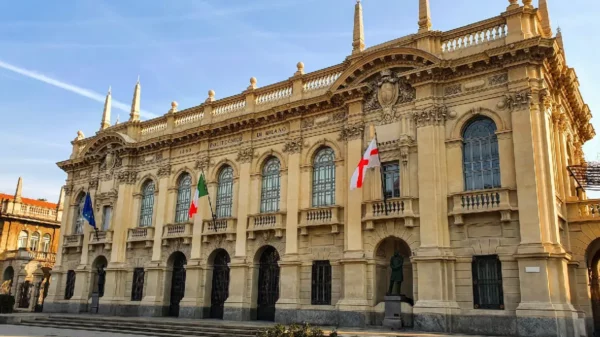

Carnival in Italy brings color and fun to the month of February. The festivities are not limited to Venice. Although the city of canals is famous for its masked balls, other regions have their own traditions with parades and local cuisine.
In Offida, in the Marche region, Carnival is marked by red and white costumes. Meanwhile, in Oristano, Sardinia, the highlight is the Sa Sartiglia horse race. Check out the main events of 2026:
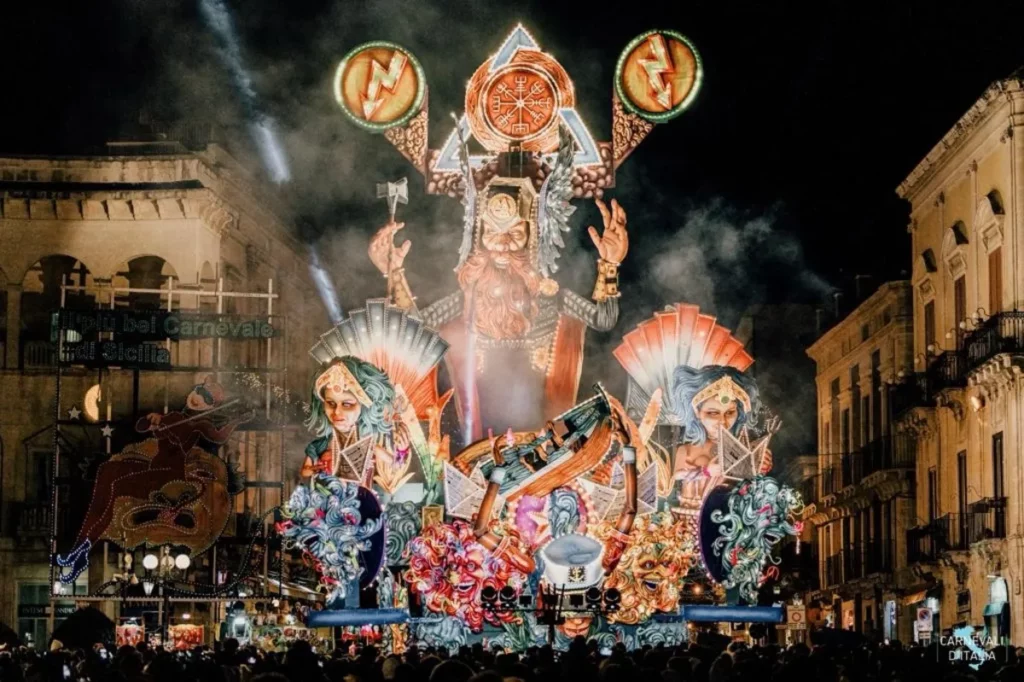
Acireale (Catania) It takes place between January 31st and February 17th. The Sicilian city is known for its papier-mâché floats and flower and light displays. The event usually returns between July and August.

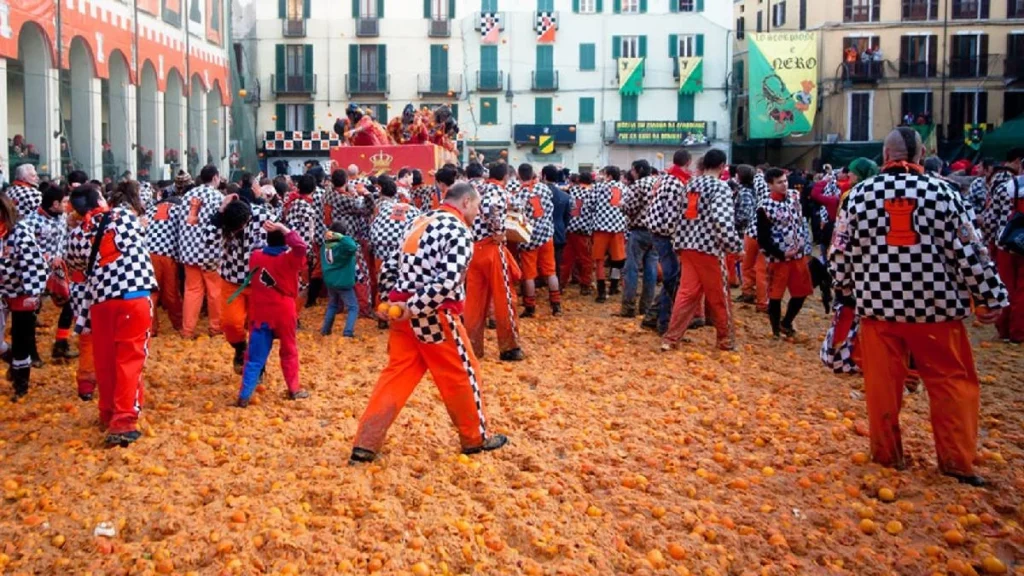
Ivrea (Turin) The highlight is the Battle of the Oranges, which takes place from February 15th to 17th. The contest symbolizes the people's struggle against tyranny. Participants throw fruit at each other in a historical reenactment.
Offida (Ascoli Piceno) A folk festival with over 500 years of history. Participants wear the "guazzarò," a white costume with red details. The main events include a mock bullfight and a bonfire.
Ronciglione (Viterbo) Voted the most beautiful village in Italy in 2023. The parade features giant papier-mâché floats, folk bands, and typical Carnival food.
Putignano (Bari) One of the longest carnivals in Europe. It officially begins on December 26th and ends on Shrove Tuesday with the burning of a papier-mâché pig.
Viareggio (Lucca) Famous for its floats, some up to 20 meters tall, that parade along the Tuscan coast. The figures often satirize political and social aspects of public figures.
Tempio Pausania (Sassari) The “Carrasciali Timpiesu” lasts six days. It begins with the entrance of King George, a straw effigy that is judged and burned at the stake on Shrove Tuesday.
Cento (Ferrara) Held in February and March, the festival is twinned with the Rio de Janeiro Carnival. A local tradition is the throwing of toys and inflatable objects from the floats into the audience.
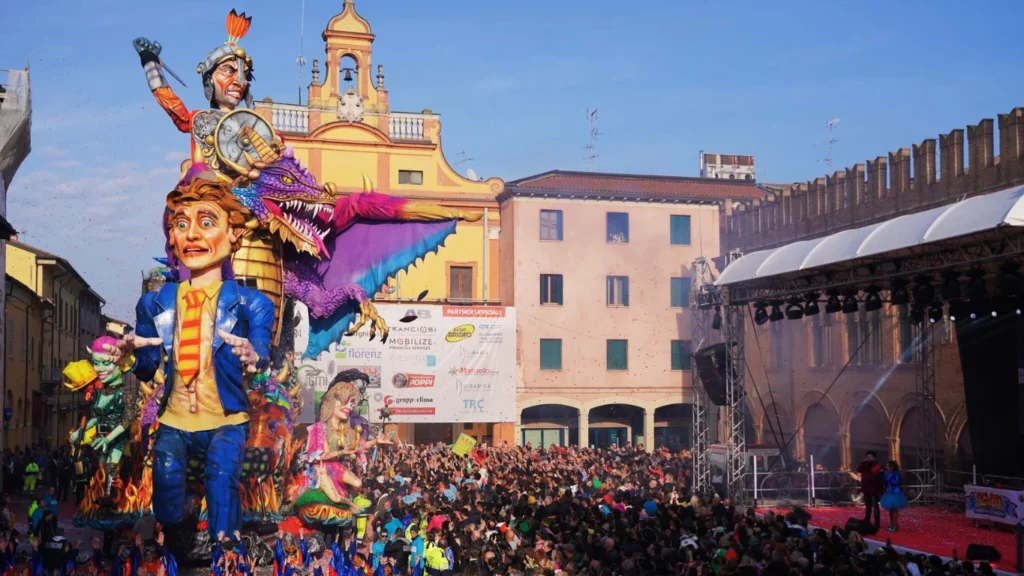
Santhià (Vercelli) The event features around 2.000 participants and 10 floats. A must-see attraction is the Colossale Fagiuolata, where dishes of beans with salami are served to the public.
Verona Known as the "Gnocchi Bacchanal," the main parade takes place on the Friday before Lent, with free gnocchi being distributed to the public.
Sciacca (Agrigento) Sicilian festival with dances and parades. The celebration ends with the burning of the float of Peppe Nappa, the king of the local Carnival, in the main square.
Imola (Bologna) Focused on sustainability, the Fantaveicoli Carnival encourages the creation of floats made with recycled mechanical parts and powered by solar energy or pedaling.
Maiori (Salerno) Located on the Amalfi Coast, the Gran Carnevale Maiorese will reach its 52nd edition in 2026. This year's theme is "The Dream".
Fano (Pesaro and Urbino) Considered one of the oldest in Italy, dating back to 1347. Its unique feature is the throwing of chocolates and sugared almonds to the spectators during the parades.
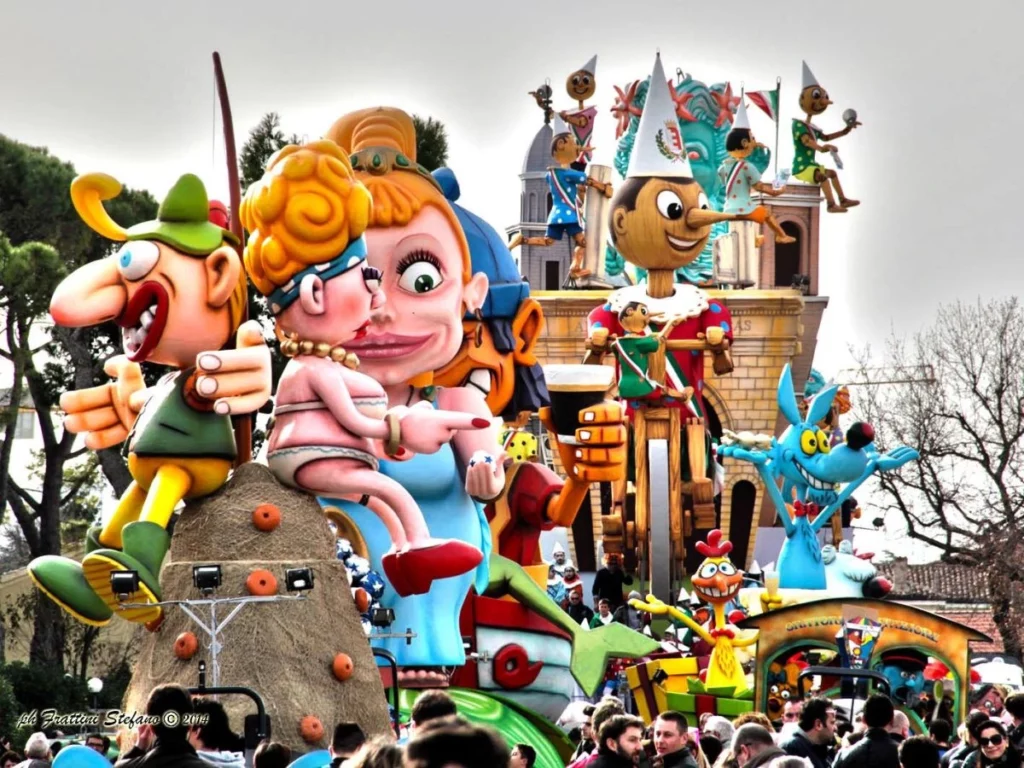
Mamoiada (Nuoro) Unlike the colorful parades, it features mysterious figures such as the Mamuthones, who wear black sheepskins and dark masks, carrying heavy bells.
Oristano Sa Sartiglia is a horse race of Spanish origin. Masked riders attempt to hit a suspended star with their swords while galloping.
FOLLOW-US