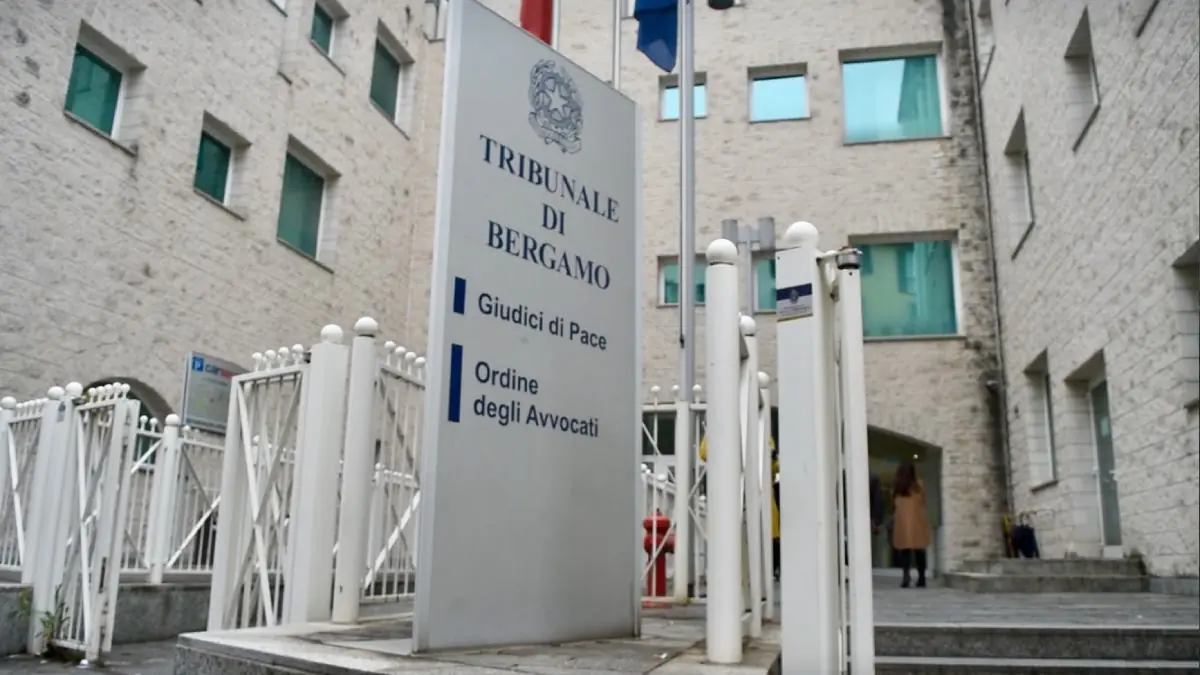
A question that remained unresolved after the Italian citizenship reform has reached the Constitutional Court. The Tribunal de Bergamo wants to know whether the protection afforded by the previous legislation should also extend to the minor children of people who filed lawsuits seeking recognition of citizenship iure sanguinis before March 27, 2025, but obtained a favorable ruling only after that date.
In an ordinanza signed on November 13, 2026, the judges suspended a case and ordered that the question be referred to the Constitutional Court. The issue involves Article 3-bis of Law 91/1992, introduced by Decree-Law 36/2025 and converted into Law 74/2025.
The central issue is whether minor children may be harmed by the fact that judicial recognition of one parent’s citizenship occurred after the reform took effect, even when the lawsuit was filed before the legislative change.
Case involves child born before the reform
The case originated in an appeal filed by the parents of a girl against the refusal by the comune of Alzano Lombardo to transcribe her birth in the Italian civil registry.
The child was born on March 2, 2024. Her mother had also filed a lawsuit in 2024 with the Brescia court seeking recognition of Italian citizenship by descent. The request was granted on June 5, 2025, and the ruling became final on July 7 of that year.
Because the mother’s citizenship was judicially recognized only after Law 74/2025 took effect, the comune concluded that the requirements introduced by the reform had not been met and refused to transcribe the birth.
Court points to possible constitutional violation
In reviewing the appeal, the Bergamo court found that applying the new legislation to the case could violate Articles 3 and 29 of the Italian Constitution.
Article 3 establishes the principle of equality. According to the judges, children in equivalent legal situations should not receive different treatment solely because their parents’ court cases were concluded on different dates, a difference that may stem only from the time it takes to process the cases.
Article 29 concerns the protection of the family. The ruling cites Constitutional Court decision 30/1983, which recognized each parent’s legally relevant interest in passing on their own status civitatis to their children. The court’s argument is also related to the unity of nationality within the family unit.
In the court’s assessment, the sequence of events shows that if the mother’s lawsuit had been decided before Decree-Law 36/2025 took effect, the daughter would have been recognized as an Italian citizen by birth because she was the child of a citizen mother.
Attorney highlights situation of minor children
Attorney Maria Stella La Malfa, who is handling the defense in the case, argues that the discussion should take into account the minor children of people who had already turned to the courts before the reform, even when the children did not originally participate in their parents’ citizenship recognition case.
According to the defense, minors should not suffer the consequences of judicial delays when the father’s or mother’s request was filed under the previous legislation and later granted.
Commenting on the continuation of her work defending children, La Malfa said: “My fight for minors is not over.”
Relationship to the Court of Cassation’s Joint Sections ruling
The Bergamo question must also be analyzed in light of ruling 24045/2026, issued by the Joint Sections of the Court of Cassation on July 26, 2026. In that decision, the Court of Cassation established that citizenship recognition lawsuits filed before March 27, 2025, remain subject to the previous legislation.
The Bergamo case presents an additional question: The lawsuit predating the reform was filed by the mother, while the daughter was not originally part of that case. The court wants to know whether the protection of the previous legislation should also extend to minor children when the parent’s lawsuit seeking citizenship recognition was filed before the legislative change and subsequently granted.
The Court of Cassation’s ruling provides important legal context, but it does not automatically resolve the specific situation referred by the Bergamo court to the Constitutional Court.

What could happen now?
The court found the question relevant to resolving the appeal and not manifestly unfounded. It therefore suspended the case and ordered the documents to be sent to the Constitutional Court, in addition to the notifications required by law.
The Constitutional Court must examine the legitimacy of Article 3-bis of Law 91/1992 on this point: the lack of protection under the previous legislation for minor children when the parent’s lawsuit was filed before the reform and granted afterward.
If the question is accepted, the decision could have repercussions for families in similar situations, especially when the children were born before the legislative change and recognition of their parents’ citizenship occurred afterward.
This does not mean that all minors in this situation will have their citizenship automatically recognized. The scope of any decision will depend on the grounds adopted by the Constitutional Court and the circumstances of each case.
The issue is especially relevant for families whose cases were filed before the reform but concluded in court only after March 27, 2025.
View decision:
Newsletter
Últimas do Italianismo
Todo dia, às 18h, um resumo do que aconteceu na Itália direto no seu e-mail.
É gratuito e você cancela quando quiser.