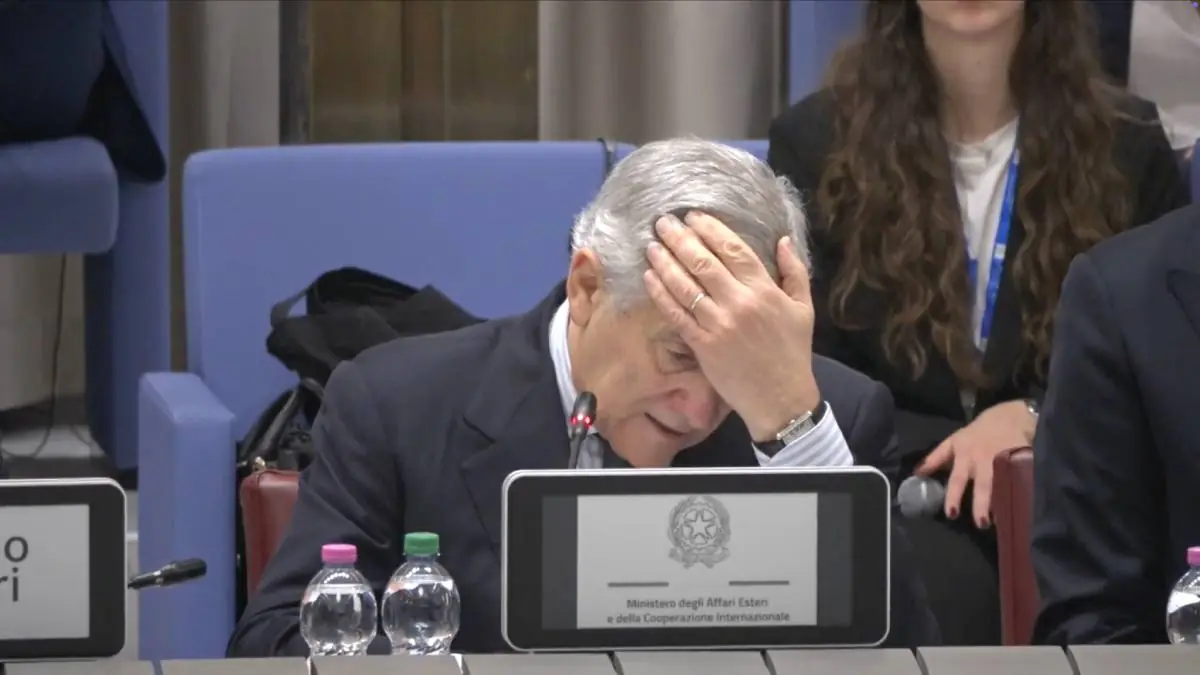
Tajani acknowledges adjustments to Italian citizenship law and says government is monitoring implementation of reform
Antonio Tajani says the Italian government is closely monitoring the implementation of the citizenship reform and acknowledges possible adjustments to the rules.
Italy’s deputy prime minister and foreign minister, Antonio Tajani, acknowledged that the government may make adjustments to the implementation of the Italian citizenship reform, in force since March 2025. The minister, who authored the decree-law that restricted the transmission of citizenship by descent, also mentioned measures under consideration to allow the children of dual nationals to automatically obtain Italian citizenship in Balkan communities.
The statements were made Wednesday (25) during the opening of the Plenary Assembly of the General Council of Italians Abroad (CGIE), held at the Farnesina headquarters in Rome.
Defending the reform, Tajani said that Italian citizenship must be based on an effective connection with the country.
“Citizenship must be based on belonging, on an authentic connection with Italy,” he said.
According to the minister, the legislative measure approved by the government restored “dignity and meaning” to the right to citizenship.
Government acknowledges possible adjustments to reform
Tajani said the Foreign Ministry is monitoring the implementation of the new rules and may propose improvements if necessary.
Advertisement
The minister said the government is monitoring the implementation of the reform “closely” in order to anticipate possible “implementation adjustments.”
The statement indicates that the legislation remains under review by the Italian government. Tajani, however, did not announce a proposal for changes or provide a timeline for any potential modifications.
The reform was introduced by Decree-Law No. 36/2025, converted into Law No. 74 of May 23, 2025. The legislation added restrictions on citizenship recognition by descent for people born abroad who hold another nationality.
Tajani discusses automatic transmission to children
One of the most relevant parts of the speech was the reference to Italian communities in the Balkans.
Tajani said the government is working to clarify the situation of citizens in these communities, especially those who hold dual nationality.
“For those with dual citizenship, we are working to ensure that their children can also have it automatically, precisely to keep this presence alive,” he said.
The statement points to a specific concern over the continuity of Italian citizenship transmission across generations in these communities.
The minister, however, did not explain what legal mechanism would make the measure possible or provide details on its potential implementation.
Advertisement
There was also no announcement of a general change to the rules for transmitting citizenship to all descendants of Italians born abroad.
Minister cites Italian court rulings
During the speech, Tajani also mentioned rulings by the Constitutional Court and the Court of Cassation.
Regarding the Constitutional Court, the minister said the ruling confirmed the position defended by the government. The reference is related to Judgment No. 63/2026, which examined challenges to provisions of the 2025 reform.
The ruling had different outcomes depending on the grounds presented. The court declared some issues inadmissible due to insufficient grounds and found others unfounded. Therefore, this is not an unrestricted validation of all aspects of the reform. The proceedings were suspended in Italy until the European Court issues its ruling.
Tajani also mentioned Judgment No. 24045/2026 by the United Sections of the Court of Cassation, published in July.
The ruling clarified the situation of minors born abroad who acquired Italian citizenship by descent and another nationality under the principle of ius soli.
Advertisement
The court established that, under the conditions examined, these minors retain Italian citizenship even when the Italian parent loses or renounces nationality, subject to the circumstances provided for by law.
The ruling also clarified the application of Articles 7 and 12 of the former Law No. 555/1912 and equal treatment between mothers and fathers.
The ruling did not repeal the 2025 reform. Its scope is related to the specific legal situations examined by the court.
Bergamo Court questions restrictions on the transmission of Italian citizenship to minor children; two other cases from Avellino are awaiting judgment.
From Giorgia Meloni to Elly Schlein, meet the leading figures in Italian politics, their positions on the economy, immigration, citizenship and civil rights, and...
Attorney Luigi Minari questions the 2025 reform, pointing to retroactive effects, the absence of transitional rules and the risk of statelessness, as well as...