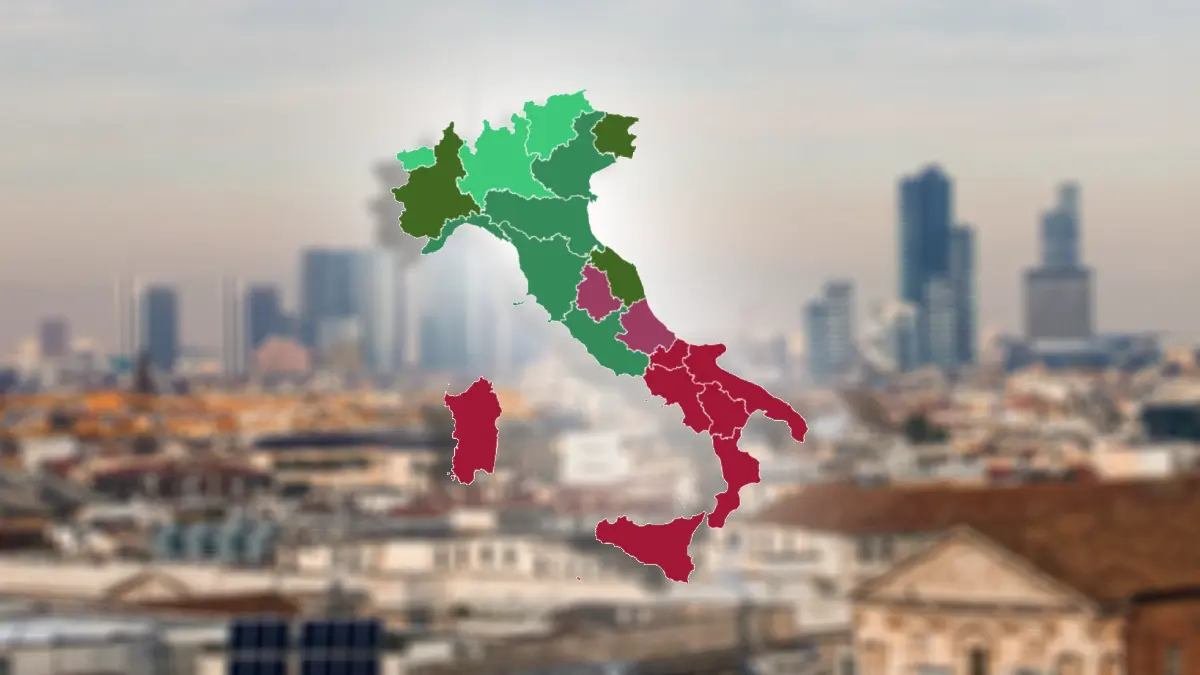
A Itália, terceira maior economia da União Europeia, tem um PIB superior ao da Rússia, mas com apenas 60 milhões de habitantes. O resultado é um PIB per capita muito alto, cerca de € 46 mil por ano – cerca de R$ 260 mil–, embora muito desigualmente distribuído pelo mapa da Itália, com um enorme contraste norte-sul.
Enquanto no norte e na província urbana de Milão o PIB per capita atingiu cerca de € 55.800 em 2019 (semelhante à média do PIB per capita na Austrália, Islândia ou Finlândia), no sul, na província rural siciliana de Agrigento, mal atingiram € 15.700 (paralelo ao do Irã ou da Albânia). Diferença de cerca de 40 mil euros, 3,5 vezes mais entre o extremo norte e o sul do país.

Da mesma forma que existe uma diferença marcante de PIB per capita entre o norte e o sul do mapa da Itália, também existe uma diferença entre áreas urbanas e rurais.
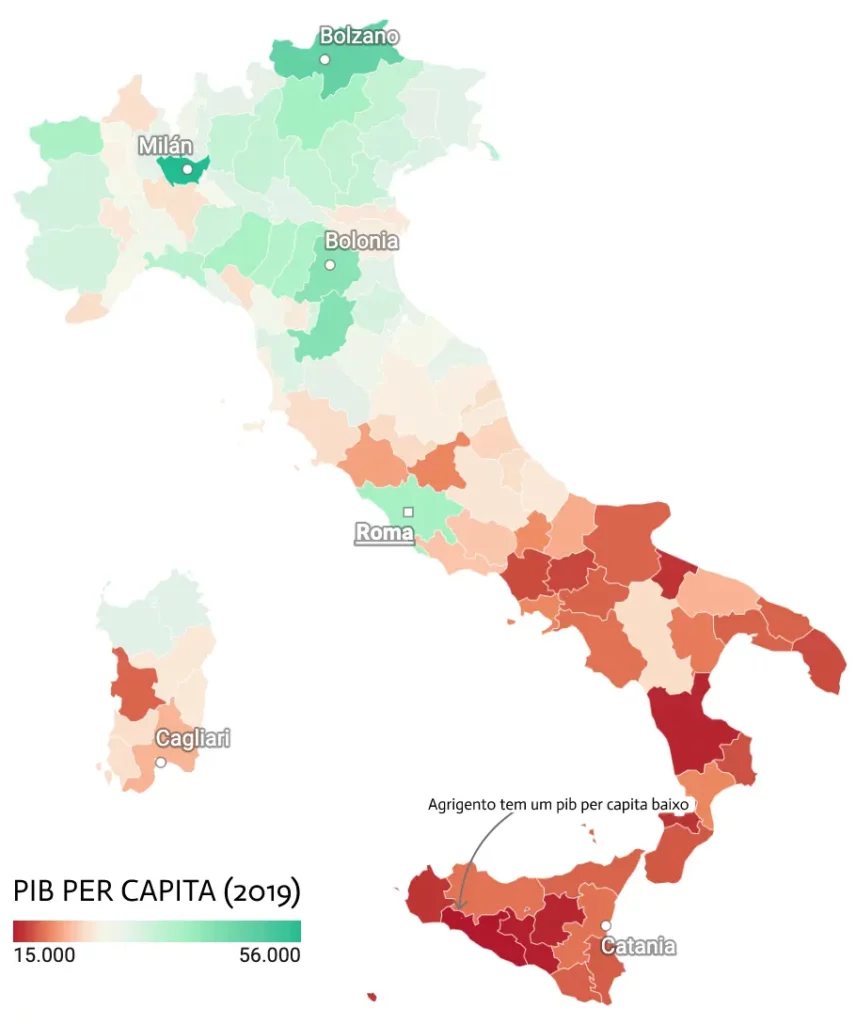
E o norte é muito mais urbano que o sul. Assim, as grandes províncias urbanas do norte (juntamente com a província autônoma de Bolzano) são as regiões mais ricas do país (Milão, Bolonha ou Florença), enquanto as regiões mais rurais do sul são as mais pobres.
Esta divisão segue as fronteiras que já existiam antes da unificação italiana, onde as muitas pequenas cidades-estados do norte, voltadas para o comércio e a inovação para sobreviver, evoluíram para formar os distritos industriais italianos, um dos mais inovadores e competitivos do mundo e quase imune a crises econômicas.
No sul, o antigo reino agrícola das Duas Sicílias ficou para trás, com um peso agrícola muito alto e poucas grandes cidades que estimulam a atividade econômica.
O antigo reino das Duas Sicílias ocupa 40% do mapa da atual Itália, mas seu PIB mal chega a 23% da riqueza do país.
No outro extremo, as regiões do Vale do Pó (Padania, que se estende entre os Apeninos e os Alpes) respondem por metade do PIB da Itália.
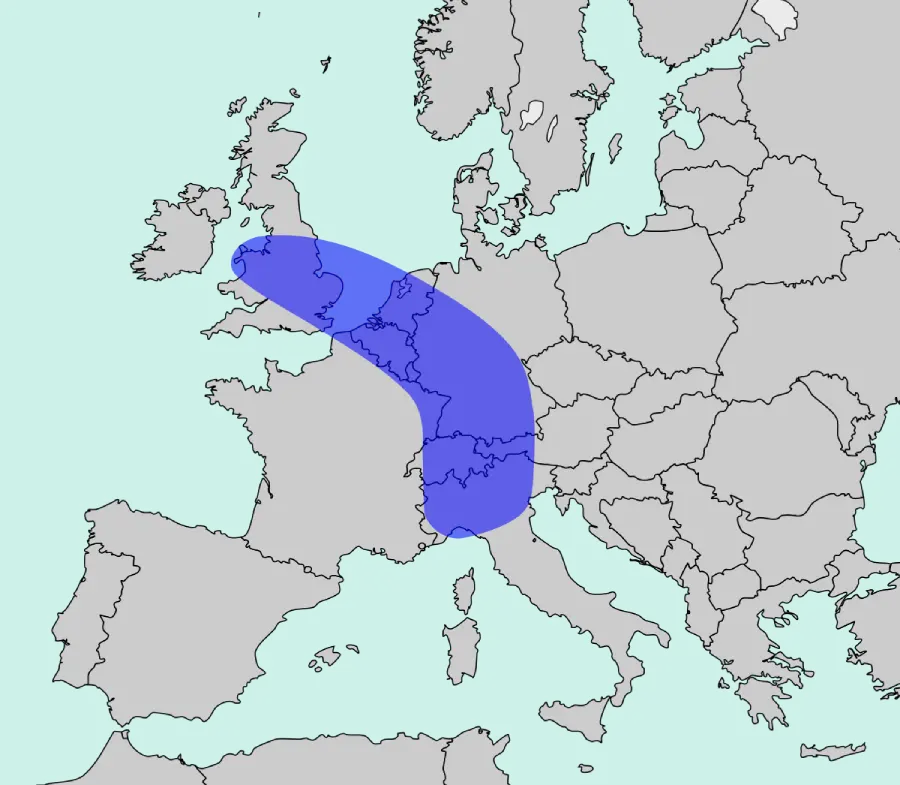
Além disso, as províncias do norte estão próximas de outros centros econômicos da Europa e fazem parte da banana azul europeia, enquanto as do sul fazem parte da periferia econômica da União Europeia.
No meio desse grande fosso que divide o país ao meio estaria a província de Roma, com um PIB per capita ligeiramente superior à média italiana, mas cercada no mapa por outras províncias notadamente abaixo dela.
Esse imenso contraste do PIB per capita no mapa da Itália também se traduz, como causa e consequência, em muitas outras variáveis socioeconômicas.
O sul abriga a Camorra (Campânia), a Cosa Nostra (Sicília), a Sacra Corona Unita (Apúlia) ou a ‘Ndrangheta (Calábria), as máfias italianas, que controlam múltiplos setores econômicos por meio de extorsão e corrupção e alimentam muitos dos problemas socioeconômicos da região.
O contraste entre o norte e o sul é também visível no mapa do desemprego, do insucesso escolar, dos jovens que não estudam nem trabalham, no valor da hora de trabalho, no investimento em Pesquisa, Desenvolvimento e Inovação ou no recepção da ajuda europeia.
Newsletter
Últimas do Italianismo
Todo dia, às 18h, um resumo do que aconteceu na Itália direto no seu e-mail.
É gratuito e você cancela quando quiser.