


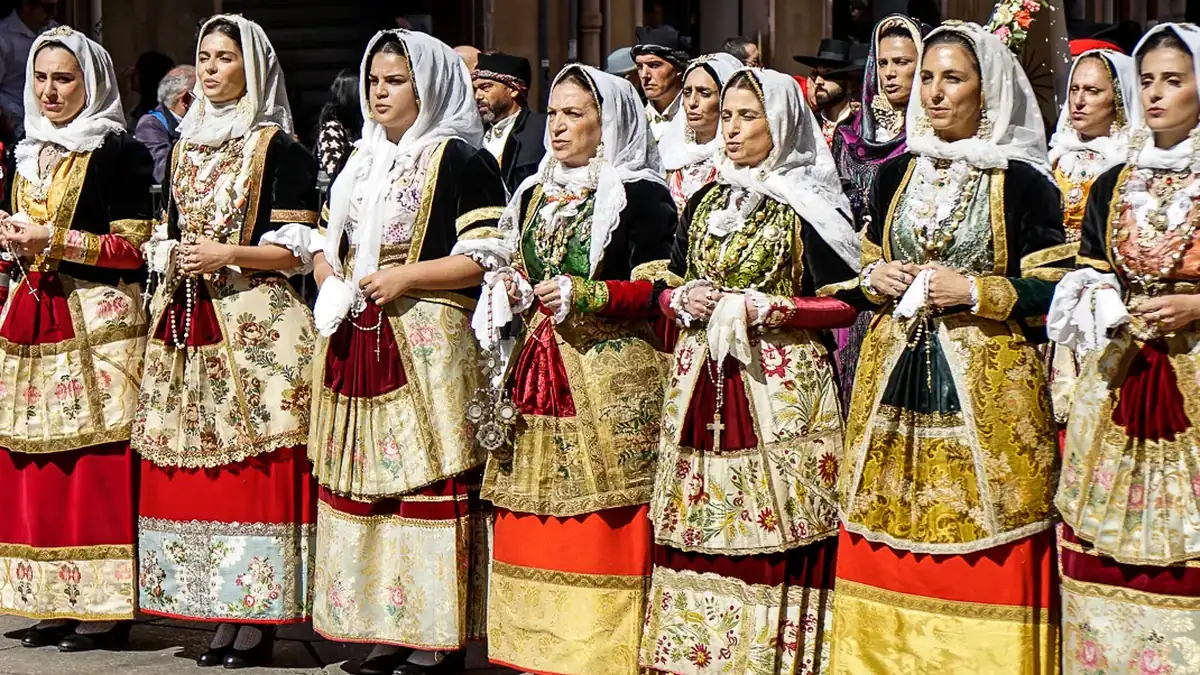
Italy has launched a national program with more than 110 initiatives dedicated to historical costumes and the country’s cultural traditions. The celebration began on November 11, 2026, and has been extended: the Tourism Ministry is now accepting events scheduled through January 6, 2027.
The initiative, called L’Italia vestita di storia (Italy dressed in history), brings together municipalities, museums, cultural associations and artisan workshops in a national calendar. The goal is to preserve garments that represent the history of Italian communities and highlight the work of professionals involved in producing and preserving these pieces.
The program was announced during the second edition of the National Day of Historical Costumes, celebrated on November 11.
Traditions that span generations
Italian historical costumes reveal cultural differences among the country’s regions. Embroidered dresses from Sardinia, traditional clothing of the Arbëreshë communities of Albanian origin, and garments associated with the former Republic of Venice are among the examples of this heritage.
In Sicily, ornamental fabrics and references to the Baroque period are also part of the historical clothing tradition.
More than just garments, these costumes preserve sewing, embroidery and weaving techniques passed down through generations. Many are associated with religious festivals, popular celebrations and historical events, such as Italy’s traditional carnivals and Italian folk dances.

Parades, exhibitions and workshops
The national calendar includes different ways of presenting historical costumes.
Planned activities include parades through the streets of historic centers, museum exhibitions, demonstrations of how the clothing was worn, and embroidery, weaving and sewing workshops.
The initiatives may also involve schools and young people, with activities aimed at passing on artisanal knowledge.
The Tourism Ministry encourages the participation of small municipalities and traditional workshops, as well as experiences that allow visitors to learn about the techniques used to make the garments. The proposal joins a broad calendar of cultural events in Italy.

Government expands calendar after municipalities join
Initially, the program was scheduled to run from November 11 to December 11.
In a statement released on November 12, the Tourism Ministry announced an extension of the deadline for including new initiatives, in response to interest from organizations in different Italian regions.
With the change, events held through January 6, 2027, may be included in the calendar.
Municipalities, civic museums, cultural associations, local promotion organizations and educational institutions may submit proposals through December 1.
The extension allows new activities to be incorporated into the program originally announced. Other seasonal events, such as food festivals in small Italian municipalities, also help keep local traditions alive.
2025 law recognized the cultural importance of costumes
The National Day of Historical Costumes was established by Law No. 59 of April 15, 2025, published in Italy’s Official Gazette on April 29 of that year.
Article 5 of the law establishes November 11 as the national date dedicated to promoting historical garments, artisans and cultural events related to the sector.
The law also recognizes the importance of these traditions for cultural heritage and tourism development.
With the L’Italia vestita di storia calendar, the government intends to increase the visibility of these events, especially in small municipalities and destinations less familiar to international visitors. The preservation of traditions is also present in diaspora initiatives, such as the documentation of the legacy of Venetian immigration in Brazil.
Newsletter
Últimas do Italianismo
Todo dia, às 18h, um resumo do que aconteceu na Itália direto no seu e-mail.
É gratuito e você cancela quando quiser.
