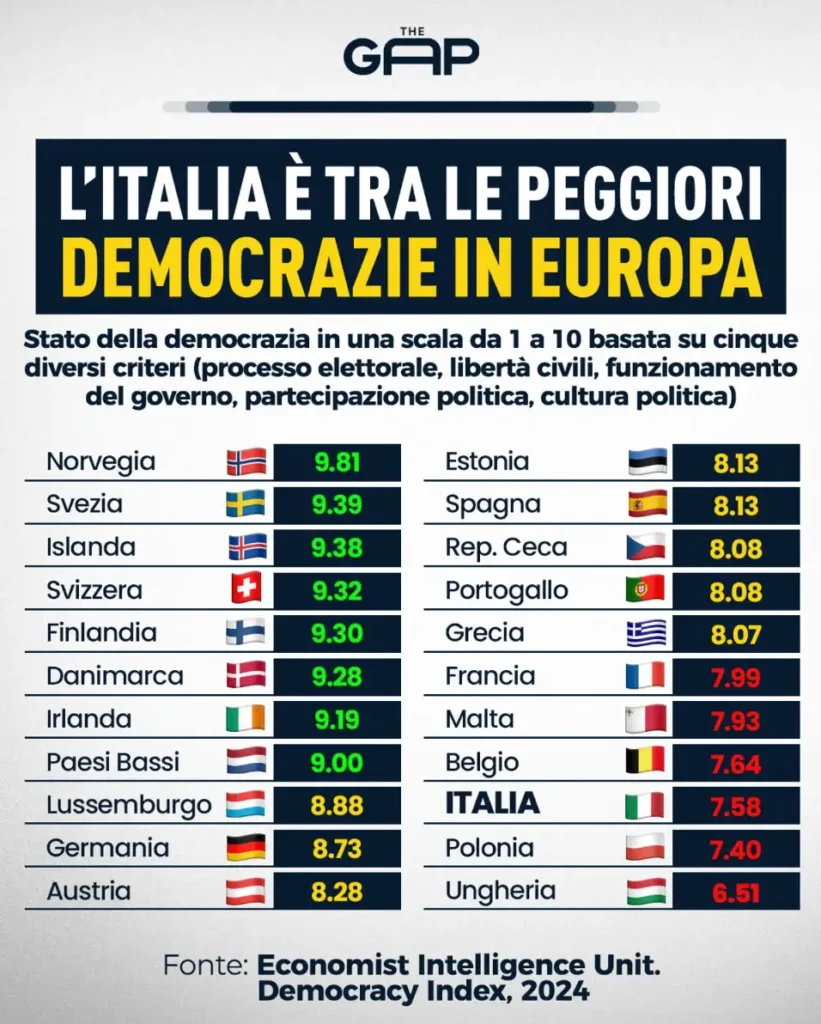



































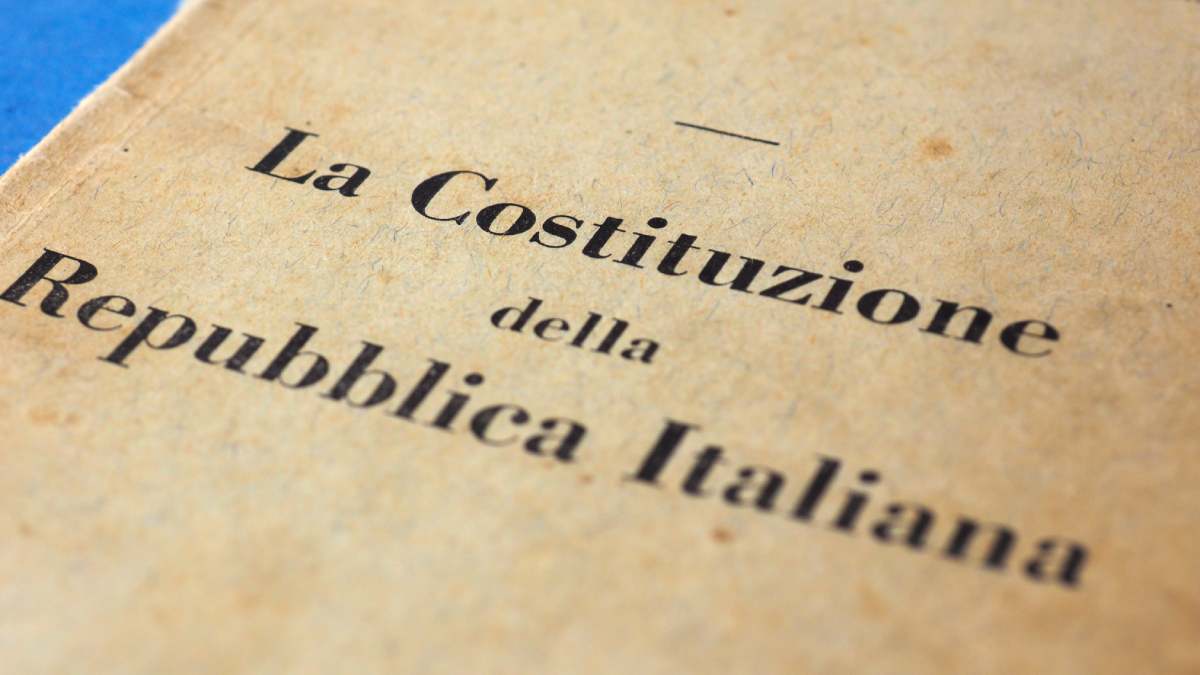
Italy has been ranked as one of the most fragile democracies in Europe, according to the Democracy Index 2024, published by Economist Intelligence Unit. The country received a grade 7,58 on a scale of 0 to 10, which places it in the category of “imperfect democracy”.
Despite the negative result, the blame does not fall solely on Giorgia Meloni's government. In 2014, a decade earlier, Italy — then under the leadership of Matteo Renzi of the Democratic Party — had obtained a score of 7,71.
For comparison purposes, the Brazil had note 6,96 in 2014 and fell to 6,49 in the 2024 edition of the same index.
The report assesses five dimensions: electoral process and pluralism, functioning of government, political participation, political culture and civil liberties.
The current score puts Italy behind 19 European countries, including Norway (9,81), Sweden (9,39), Switzerland (9,32) e Germany (8,73).
Among the main problems identified in Italy are: low trust in public institutions, limited political participation and the widespread perception of government inefficiency. Ideological polarization and difficulties in combating corruption also contributed to the poor performance.
This data aligns with what the report shows “Liberties Rule of Law Report 2025“, by the NGO Civil Liberties Union for Europe, released on March 17. The document points out that Italy is among the European Union countries that “systematically violate the rule of law”.
The report also denounces political interference in the judiciary, threats to freedom of expression and repression of the right to protest. He also criticizes Bill 1660, known as the “Security Package”, for its potential to criminalize dissent and impact vulnerable groups.
While countries like Denmark, Ireland and Estonia continue to demonstrate high democratic standards, Italy shows signs of backsliding. According to analysts, the strengthening of populist parties and the frequent use of accelerated legislative measures are weakening control mechanisms and political plurality.
The warning is clear: if the current trend continues, Italian democracy risks deteriorating further, affecting fundamental rights and compromising the full functioning of institutions.