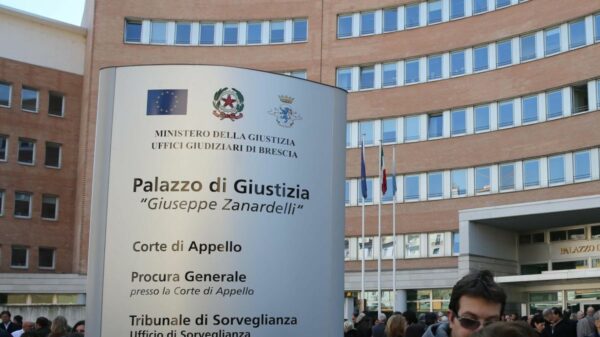





























A Supreme Court of Cassation The court has scheduled for April 14, 2026, the hearing regarding the loss of Italian citizenship due to the father's naturalization while the son was a minor.

The hearing will take place before the United Sections, the highest body for standardizing case law in the Italian judicial system.
The case discusses whether the voluntary naturalization of an Italian emigrant abroad, when the child was still a minor, could imply the automatic loss of Italian citizenship for the descendant.

Context in the United States
This situation is more frequent in cases involving immigrants who have become naturalized citizens in the United States.
During certain historical periods, U.S. law required that a foreigner, upon becoming a naturalized citizen, take a formal oath renouncing any previous allegiance.
The legal system of the time did not fully recognize the coexistence of two citizenships as a legally stable situation.
In practice, many Italians who became naturalized citizens in the US declared that they had renounced their original citizenship in order to obtain American citizenship.
The controversy arises when this naturalization occurred while the children were still minors. It is debated whether the father's loss of citizenship automatically extended to his children.
The trial involves two cases sponsored by the lawyer. Marco Mellone and a third one conducted by the lawyer Monica Restanio.
Italian legal basis
The debate is linked to the interpretation of article 12, paragraph 2, of Law No. 555 of 1912.

Italian-American families are challenging historical interpretations that suggest the father's naturalization automatically implies the loss of citizenship for minor children.
Since the case will be reviewed by the Sezioni Unite (United Sections), the decision could establish principles of law that are binding on lower courts and influence administrative practice.

The adopted interpretation could affect thousands of judicial and administrative proceedings related to the recognition of Italian citizenship by descent.
This is not about the judgment regarding the Tajani Decree.
The hearing scheduled for April 14, which was originally scheduled for January 11, 2026, This should not be confused with the case scheduled for March 11th.when the Constitutional Court will have to analyze the constitutionality of the so-called Tajani Decree.
These are distinct processes at different stages.
The trial in the Sezioni Unite concerns the historical interpretation of the rules regarding the loss of citizenship due to the father's naturalization while the child is a minor.
The case of March 11th involves the constitutionality of recent legislation.
FOLLOW-US