



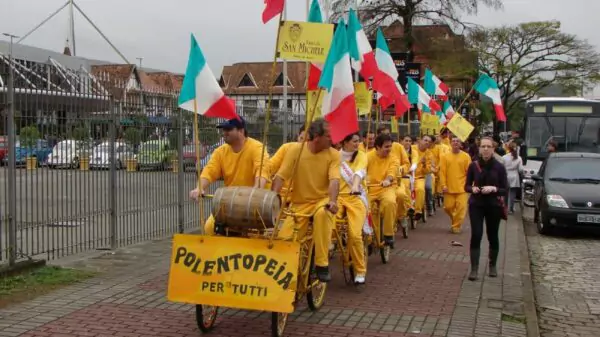































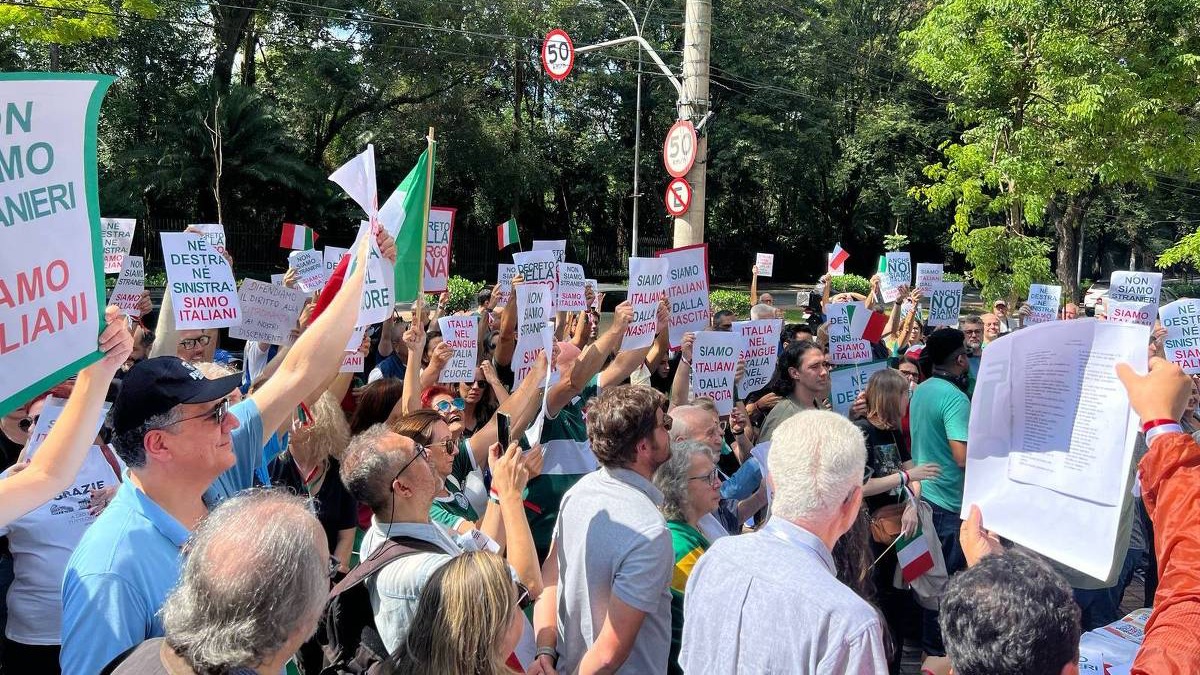
The Italian community in São Paulo protested on the morning of Saturday, April 26, in the Cidade de Milão square, close to Ibirapuera park, in the west of the capital, against the decree-law which limits the right to Italian citizenship by descent (ius sanguinis).
About 200 people took part in the demonstration, according to organizers. Among them were Daniel Taddone, advisor at CGIE (Consiglio Generale degli Italiani all'Estero), and Fabio Porta, deputy in the Italian Parliament.


Approved in March by Italy's Council of Ministers, the measure — dubbed the “Decree of Shame” — restricts citizenship to children and grandchildren of Italians. The decree must be enacted into law by Parliament by the end of May to remain valid.
Cultural and legal impact
The initiative was criticized by experts and members of the Italian-Brazilian community, who point to a threat to the cultural identity and historical ties between Brazil and Italy. “The decree breaks a tradition that began even before the unification of Italy in 1846, and was incorporated into the 1948 Constitution, which is still in full force,” said the jurist. Walter Fanganiello Maierovitch, one of the organizers.
According to Maierovitch, the principle of jus sanguinis — the transmission of citizenship by blood — is the legal and emotional link that binds Italy to its descendants abroad. For him, the justification of Giorgia Meloni’s government, which talks about combating a “passport industry”, does not hold up. “Crimes are fought with the police and the Public Prosecutor’s Office — not with the elimination of rights,” he declared.

Economic losses and international mobilization
Maierovitch estimates that around 40 million Brazilians of Italian origin could be affected. In addition to the loss of cultural ties, he warns of economic impacts: “With the death of Italianness, the profits that Italy makes from ‘made in Italy’ products will be affected. They are killing the goose that lays the golden eggs.”
Among the alternatives defended by the jurist are the requirement of knowledge of the Italian language, history and culture, instead of the proposed generational cut.
“Citizenship imposes obligations, but it cannot become a short-term hereditary privilege. By restricting it, the Italian state turns descendants into foreigners in the land of their ancestors,” Maierovitch said.
The protest is part of an international mobilization that criticizes the decree as populist and demagogic. “We will not be strangers in the land of our ancestors” was the motto chosen by the protesters in São Paulo.