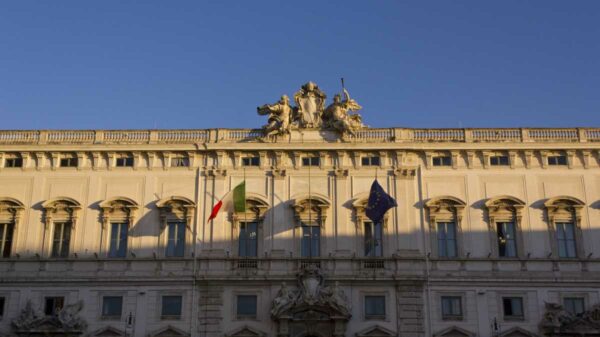





































While in Brazil the debate focuses on the nominations of the so-called “Friends of the King” protocols for Supreme Court (STF), in Italy, the members of the Constitutional Court They are selected through a strictly regulated process that includes the participation of Parliament, the President of the Republic and the country's highest courts.
The Italian Parliament appoints three members of the Court, representing each of the three main political forces in the Câmara dos Deputados and in the Senate. The President of the Republic contributes three other nominees, while the higher courts nominate the last five.

The requirements to be nominated are clear: be an Italian citizen, be at least 40 years old and have at least 25 years of professional experience in law. Once chosen, members of the Constitutional Court enjoy a nine-year term, with no chance of reappointment.
This intricate process is governed by the Fundamental Law of the Italian Republic, dated 1948. In short, the choice of members of the Italian Constitutional Court unfolds as follows:
- Italian Parliament: appoints three members, one for each of the three main political forces represented in the Chamber of Deputies and the Senate.
- President of the Republic: indicates three members.
- Superior courts in the country: indicate five members.
Requirements to be appointed to the Constitutional Court of Italy:
- Be an Italian citizen.
- Be at least 40 years of age.
- Have at least 25 years of professional experience in law.
Mandate:
- Nine years, with no possibility of reappointment.
What is it like in Portugal
The Constitutional Court of Portugal is made up of 13 judges, ten elected by the Assembly of the Republic (Portuguese Parliament) and three chosen by the Court itself, for a nine-year term, with reappointment prohibited.
Of the 13 members, at least six must be chosen from among judges from other Portuguese courts. The rest, jurists.
There are no minimum and maximum age limits or mandatory retirement.